


International community condemned Thailand on Thursday for deporting dozens of Uyghurs to China, where rights groups and foreign governments warned they could face severe persecution.
US Secretary of State Marco Rubio issued a forceful statement, condemning Thailand, a close ally, for forcibly returning at least 40 Uyghurs to China.
He warned that the deported group was at risk of grave human rights abuses.
"We condemn in the strongest possible terms Thailand's forced return of at least 40 Uyghurs to China, where they lack due process rights and where Uyghurs have faced persecution, forced labor, and torture," Rubio said.
British Foreign Secretary David Lammy echoed similar concerns, stating that the UK "disagrees in the strongest terms" with Thailand's decision.
"The UK calls for the human rights of this group to be upheld," Lammy emphasized, urging Thailand to reconsider its approach to handling Uyghur asylum seekers.
Germany's foreign ministry also denounced the deportations, saying the individuals faced "serious human rights violations" upon their return to China.
A spokesperson called on Beijing to uphold the rights of those deported and urged Thai authorities to monitor their well-being and ensure their protection.
The European Union joined the criticism, stating that it "deeply regrets" Thailand's decision, calling it a "breach" of international law.
EU spokesperson Anouar El Anouni urged China to respect the human rights of the returned Uyghurs and abide by its obligations under both national and international law.
UN rights chief Volker Turk said, “There is a complete prohibition in cases where there is a real risk of torture, ill-treatment, or other irreparable harm upon their return.”
Rights groups have long raised concerns over the treatment of Uyghurs in China, where the Muslim minority has been subjected to mass detentions, forced labor, and repressive measures.
The deportation of Uyghurs from Thailand has drawn international condemnation in the past, with governments and activists warning that those sent back to China often disappear or face severe punishment.
Yesterday Thailand deported dozens of Uyghurs to China on Thursday despite warnings from human rights groups that they would face persecution on their return, drawing swift condemnation from the United Nations.
They said the Uyghurs fled China more than a decade ago and lived in constant fear of being sent back.
Thai national police chief Kitrat Phanphet confirmed the deportations on Thursday, saying Beijing had requested the return of 40 Uyghurs.
"The Chinese government wrote to the Thai government expressing sincerity and their intention to take care of Uyghurs, promising in the letter that they will be looked after, and guaranteed their accommodation and their safety," Kitrat told reporters.
“The handover went smoothly and the Uyghurs did not resist.”
Thailand forcibly deported 109 Uyghurs to China in 2015, drawing a stern rebuke from Washington and the UN, but had repeatedly denied the existence of plans for a new round of deportations.
- 'Concrete measure of cooperation' -
China's public security ministry said 40 Chinese "illegal migrants" had been deported from Thailand in accordance with international law.
Asked whether the group included Uyghur detainees, Beijing's foreign ministry said only that they had "Chinese nationality".
"The repatriations... were a concrete measure of cooperation between (China and Thailand) in combating cross-border crimes," ministry spokesman Lin Jian told a regular news briefing.
"The legitimate rights and interests of the persons concerned were fully protected," Lin said. He declined to give further details.
Chinese public security officials said in a statement the deportees "were lured by criminal organisations into illegally leaving the country and remaining in Thailand".
"They and their families have suffered great harm, and their relatives have repeatedly requested that the Chinese government provide assistance so that they can return to the embrace of the motherland," the unidentified officials said.
Beijing and Bangkok are working closely to return thousands of Chinese workers from online scam compounds, with Thailand acting as a bridgehead for returns.
Most of those compounds are based in Myanmar, with few if any workers staying in Thailand for prolonged periods.
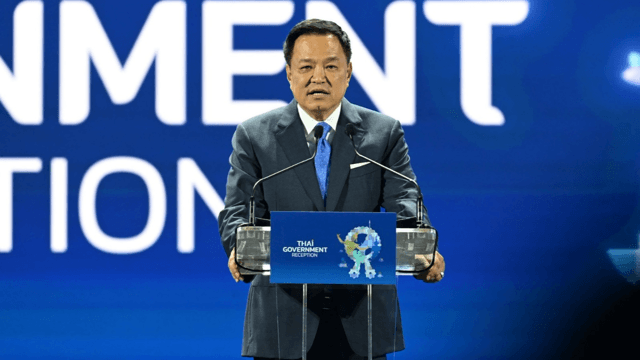
Deputy Prime Minister Phumtham Wechayachai told a news conference on Thursday that the handover had been "carefully considered", and that the Thai government is "confident that this group of Uyghurs will not face the problem everyone is concerned about."