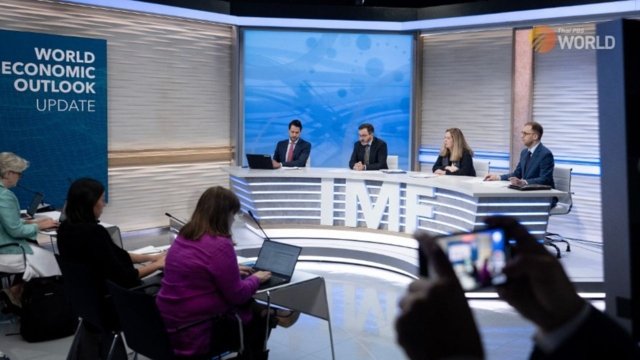


Thailand will host the annual meetings of the International Monetary Fund (IMF) and the World Bank Group from 12 to 18 of this month, marking the second time the kingdom has staged the landmark event since 1991.
The 1991 gathering signalled Thailand's readiness for global manufacturing and export investments, triggering massive capital inflows from Japan and Western nations.
World Bank figures show that, since 1991, Thailand created nearly 11 million formal jobs, while GDP per capita rose from approximately 57,400 baht to 261,800 baht in 2025, pushing national GDP to 18.75 trillion baht with net foreign direct investment (FDI) reaching 618.7 billion baht, or 3.3% of GDP.
Thailand is one of only three countries, alongside Japan and Türkiye, and one of 191 member states to host the IMF-World Bank Board of Governors meetings twice.
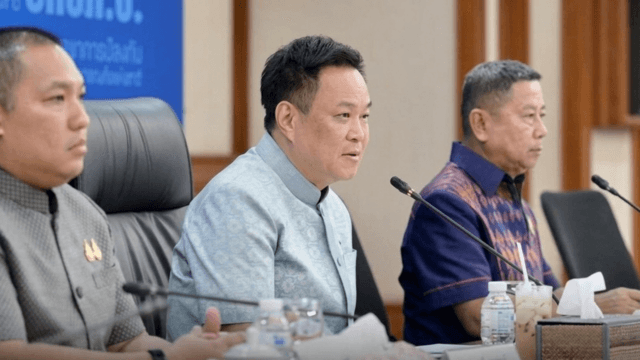
In an exclusive interview with Thai PBS, Thailand’s Finance Minister Ekniti Nitithanprapas stated that the upcoming gathering will serve as an economic turning point, by connecting global CEOs with Thai businesses to integrate local small and medium-sized enterprises (SMEs) into global supply chains.
He added that the government will push the "Bangkok Blueprint" on Digital Public Infrastructure to reinforce Thailand's position as an ASEAN financial and economic hub, while hoping to attract international capital and technology transfers.
The main objective of hosting the gathering is to generate concrete economic results by setting two key conditions for incoming foreign investment, specifically technology transfer and upskilling in advanced fields like AI, alongside local supply chain integration for domestic SMEs.
The event will showcase creative economy products and regional goods from Thai SMEs to over 15,000 attendees, driving commercial partnerships and distributing revenue directly to grassroots communities, rather than concentrating gains among large conglomerates.
Under the "Bangkok Blueprint”, Thailand will present lessons learned from joint research conducted by the IMF, the Bank of Thailand and the Ministry of Finance to establish safe and inclusive digital financial infrastructure.
Thailand plans to share its experience with systems like ‘PromptPay’, ‘Paotang’ and ‘Tungngern’, alongside security measures against mule accounts, online scam transfers and deepfake threats.
Furthermore, AI applications used by small vendors, such as the ‘Nok Krasip’, featured in the ‘Tungngern’ app, will be presented as case studies for customer analytics, sales planning and e-commerce expansion.
Positioning Thailand, Ekniti emphasised that the nation’s status as a neutral, non-aligned middle power allows it to bridge competing economic blocs.
As global investors prioritise geopolitical stability and risk mitigation over low operational costs, Thailand offers competitive strengths in food security, agri-business processing, medical wellness and transport infrastructure.
As host, Thailand will set the global discussion agenda around three main themes:
· Entering New Horizons to navigate geopolitical conflict, trade protectionism, tariffs, and energy volatility
· Empowering People through upskilling for global economic shifts
· Building Resilience against natural disasters, floods, droughts, and climate change
In collaboration with the World Bank, Thailand will also push water resource management and clean energy projects, supported by technical assistance and loans for industrial wastewater drainage and recycling, alongside the low carbon city initiative to expand solar power and reduce reliance on fossil fuels.
Dubbed the "Financial Olympics," the summit will bring together heads of state, finance ministers, central bank governors, leading economists and corporate executives in Thailand.
Ekniti has framed the meetings as an unprecedented opportunity to display Thailand’s economic capability, infrastructure, tourism, healthcare and human resources.
The event will also feature a special "Royal Pavilion" exhibition, showcasing the nation's development model, including the philosophy of ‘sufficiency economy’, royal water management initiatives and sustainable development practices applicable to international partners.
Thailand is expected to welcome 15,000 delegates and leaders from 191 nations, aiming to secure new capital investments, advanced technical skills, expanded export markets, SME supply chain integration and long-term financing for future infrastructure.