


Judging from statements from the prime minister down to the army generals and the country’s top diplomat, it’s quite clear that Thailand is unlikely to ease up on its military operation against Cambodia any time soon as fighting along several border areas continues for the fourth day today.
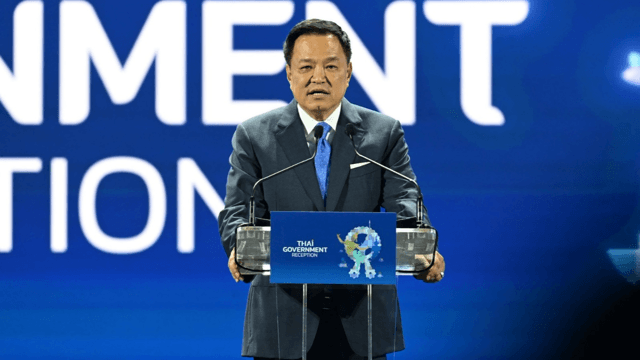
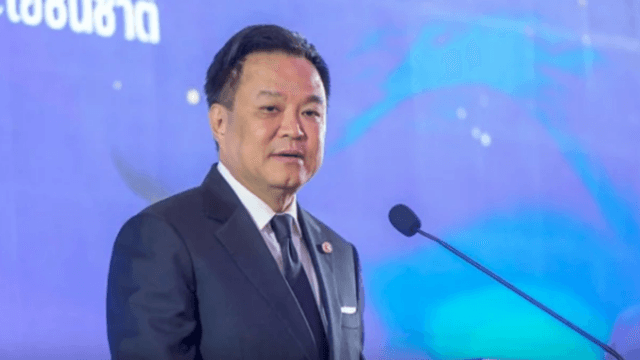
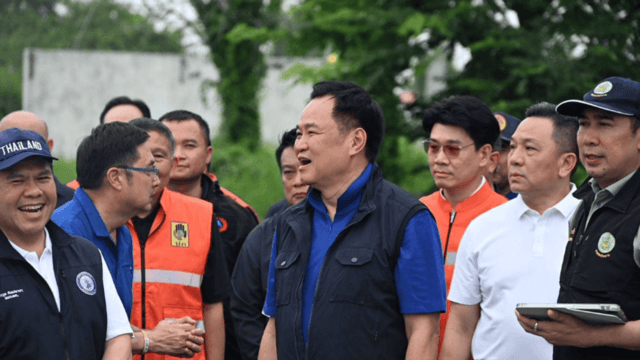
Prime Minister Anutin Charnvirakul on Tuesday reaffirmed that his government fully supports the armed forces in their operation in response to Cambodian aggression.
“There is no stopping now. We have pledged our full support for the armed forces to proceed with their operation,” he said in response to a reporter’s question about whether his government might agree to a pause in the military operation as the last government did at the height of the previous round of border skirmishes in late July.
Anutin, in response to another question, indicated that the Thai military operation will end only after Cambodia’s military capabilities have been neutralized.
“We are doing what we should do. We have demonstrated what Thailand is like to those who harbour ill intentions toward us,” he said.
On Monday, the Thai leader said talks with Cambodia would take place only after it meets Thailand’s conditions. He did not elaborate but is understood to be referring to Thailand’s demand that Cambodia strictly abide by the peace accord by refraining from threatening Thailand’s sovereignty.
“With what they have done to us, there will not be any negotiations,” said Anutin after presiding over an emergency meeting of the National Security Council on Monday, which resolved to have Thai armed forces respond militarily to what is considered to be Cambodian aggression against Thai sovereignty.
Army Chief-of-Staff Gen Chaiyapruek Duangprapat, meanwhile, reiterated the Thai army’s tough stance toward Cambodia. So far, at least four Thai soldiers have been killed in the fighting.
Asked how much longer he expected the border fighting to last, he said: “It will take considerable time because we need to take into account the safety of our people.”
“We promise to do our best to prevent the border problems from recurring in the future. This time around, we need to curb their (Cambodian military) capability… to stop them from encroaching on our territory like they did in various forms,” said the general after visiting Thai soldiers wounded in fighting with Cambodia in Ubon Ratchathani.
He said how the Thai army is dealing with Cambodia “will be far different from the clashes that occurred in 2011.”
Gen Chaiyapruek was referring to the fighting between the two countries over the disputed areas around the Preah Vihear temple in 2011.
The tough-talking general on Monday said the aim of the Thai army is to disable Cambodia’s military capabilities “for a long time to come for the sake of our children’s safety.”
On the ground, field commanders said they have been instructed to be fully prepared to respond to any aggression.
“Our territory must not be encroached upon. There is no room for hesitancy. We only have our duty to carry out with honour for the country,” said Lt Gen Virayuth Raksilp, commander of the Second Army Region, which oversees security in the northeastern areas bordering Cambodia.
Even Thailand’s top diplomat, Foreign Minister Sihasak Phuangketkeow, doesn’t seem to be ready for any dialogue to put a stop to the fighting.
On Tuesday, UN Secretary-General António Guterres joined governments of several countries in expressing concerns over the continuing armed clashes and calling for a dialogue between Thailand and Cambodia.
“What will a dialogue be about if Cambodia is not ready to negotiate, and keeps letting the same old problems reoccur?” Sihasak said when asked to respond to the UN chief’s statement.
Sihasak was apparently referring to charges that Cambodian armed forces have been violating the peace accord with frequent breaches of Thai sovereignty and territorial integrity.
“We have had agreements but Cambodia has never honoured them. Therefore, for the time being, we need to continue with military actions until it is genuinely ready to negotiate,” Sihasak said.
Thailand and Cambodia agreed to a ceasefire during a peace talk held in Malaysia in late July before signing a peace accord brokered by Malaysian Prime Minister Anwar Ibrahim and US President Donald Trump in October.
Thailand, however, has accused Cambodia of frequent violations of the terms of the peace accord, especially with the laying of new anti-personnel landmines inside Thai territory. Cambodia, however, has repeatedly denied the charges.