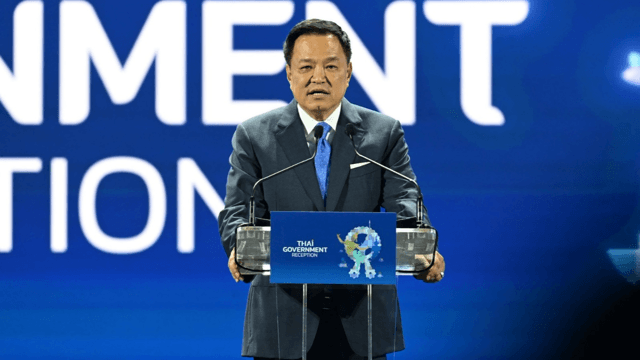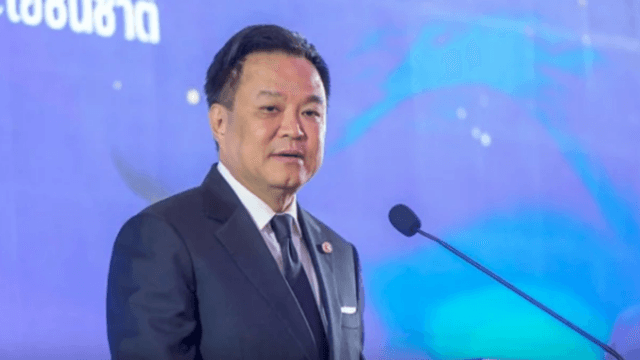



Thailand and Cambodia have agreed on a three-phase withdrawal of heavy weaponry from border areas over six weeks, with the first symbolic withdrawal taking place last Sunday night. The move follows the signing of the joint declaration on the sidelines of the ASEAN Summit in Kuala Lumpur, said Defence Minister Gen Nattaphon Nakpanich today.
He disclosed that, after the first phase of withdrawal on Sunday, the second phase will follow within three weeks and the third is to be completed within six weeks, adding that details of the weapons to be withdrawn in each phase are subject to discussions between the two armies.
General Nattaphon said he would like Cambodia to withdraw the BM-21 multiple rocket systems from the border quickly, because they pose a serious threat to Thai people.
Regarding the ASEAN Observer Team (AOT), the defence minister said that they will have about three months to perform their duty of observing and monitoring the withdrawals, but its term can be extended if necessary.
As for the ongoing demining efforts in Ban Nong Chan and Ban Nong Ya Kaew in Sa Kaeo province, he said that the mission is expected to be completed by December 17th, in parallel with similar missions in areas under the jurisdiction of the Second Army Region.
Meanwhile Cambodia claimed that it has begun withdrawing heavy weaponry from its shared border with Thailand, marking the first phase of the historic peace agreement signed in Kuala Lumpur and paving the way for efforts to restore peace and normalise relations.
The Khmer Times reported that the move, witnessed by the AOT, began on Sunday, hours after the accord was signed by Prime Minister Hun Manet of Cambodia and Thailand’s Prime Minister Anutin Charnvirakul, with US President Donald Trump and Malaysian Prime Minister Datuk Seri Anwar Ibrahim as witnesses.
The removal of tanks, armoured personnel carriers, and military trucks from the border was broadcast live on the National Television of Cambodia (TVK).
Calling the signed document as the peace deal the Times said it has garnered strong international support, with Japan, the European Union, the United Kingdom, Australia, South Korea, Vietnam, and Laos praising the agreement as a milestone for regional stability.
Leaders of these countries welcomed the commitment of both nations to peaceful resolution, humanitarian protection, and long-term security along the border, while ASEAN Chair Malaysia and the US were hailed for facilitating the accord.
Lieutenant General Maly Socheata, spokeswoman for the National Defence Ministry, said that at 11am yesterday, the ministry’s Observer Coordination Team, in cooperation with the AOT, conducted an inspection of armoured vehicles that had returned to their base in Banteay Srei district, Siem Reap province.
The vehicles were removed from the border area in Thamacheat village, Sra Em commune, Choam Ksan district, Preah Vihear province, at 9pm on Sunday, shortly after the peace pact was signed in Kuala Lumpur.