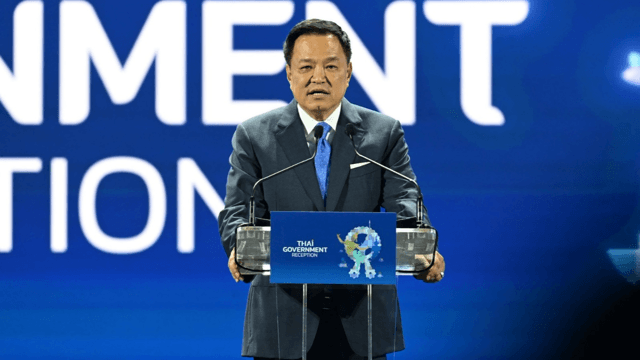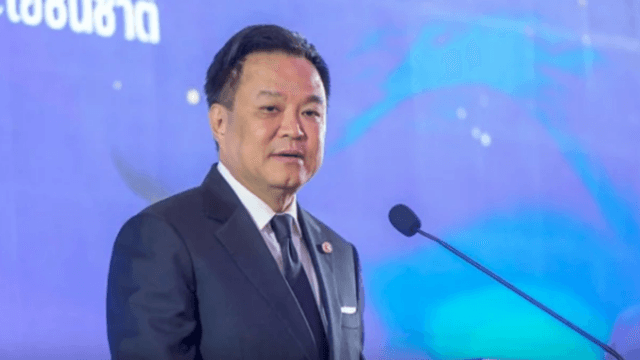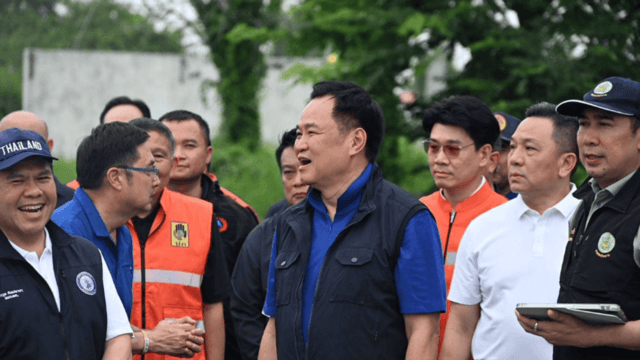



Cambodia seems to have agreed to the preconditions set by Thailand for both countries to move forward with talks on a peace plan.
Thai Foreign Minister Sihasak Phuangketkeow and his Cambodian counterpart, Prak Sokhonn, attended a four-party meeting in Kuala Lumpur to discuss solutions to the ongoing conflict, despite having signed a ceasefire agreement.
Thai prime minister, Anutin Charnvirakul, had earlier set four preconditions, to which Cambodia must agree before Thailand would proceed with discussions on the peace plan. These are the withdrawal of heavy weaponry, joint demining efforts, combating transnational crime, and cooperation in border area management.
Prak Sokhonn told the meeting that, to ease tensions, both nations had agreed on priority tasks to end hostilities and strengthen cooperation.

Cambodia's Foreign Minister Prak Sukhonn (C)//Photo by Khmer Times
"These include the removal of heavy and destructive weapons, humanitarian demining, combating transnational crimes, managing civilian settlements in border areas and countering false information and fake news,” he was quoted by the Khmer Times as saying.
He reconfirmed Cambodia’s commitment to working with Thailand as “permanent neighbours in fulfilling our shared responsibilities to restore normality, peace, stability and prosperity between the two nations and peoples.”
He added that “Cambodia has consistently stood for the peaceful resolution of disputes, in full conformity with international law. We harbour no desire to take what is not ours but, at the same time, we will not accept losing what rightfully belongs to us. What we seek is a fair, just, impartial and rules-based solution. A solution that can ensure lasting peace for our peoples.”
Also attending the meeting were Malaysia’s interior minister, Saifuddin Ismail, and a US representative.

Photo by Khmer Times

Photo by Khmer Times
Sihasak told those at the meeting that the consultations included discussions on outstanding issues, steps to de-escalate tensions and ways to ensure tangible progress in implementing the ceasefire agreement.
He stressed the importance of bilateral mechanisms, which have enabled notable progress in recent months, and the need to advance issues agreed upon by both sides.