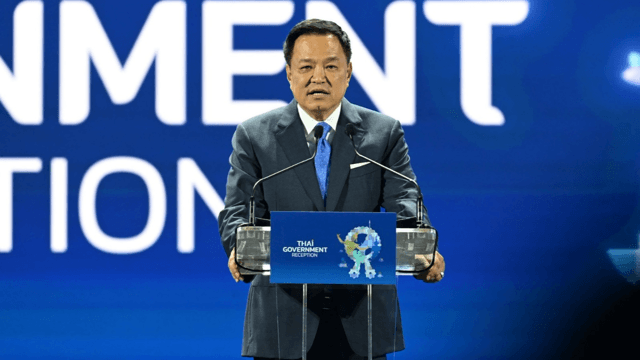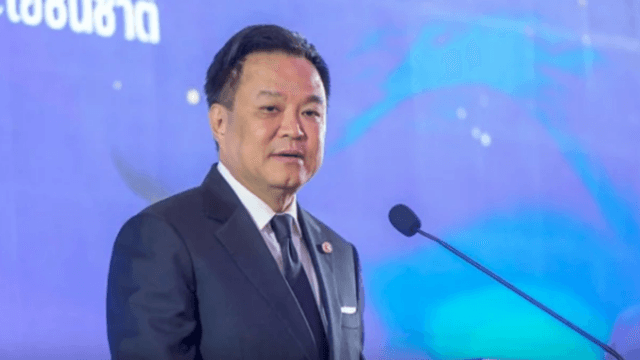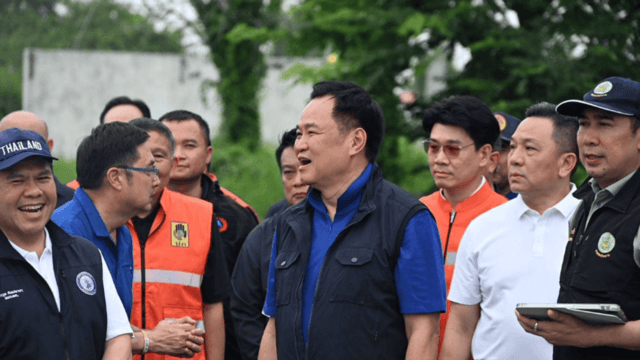



Foreign Minister Maris Sangiampongsa finds himself in the spotlight as Thai relations with Cambodia crumble amid deadly armed clashes along the border.
Fighting broke out along the Thai-Cambodian frontier on Thursday (July 24), a day after Bangkok recalled its ambassador and expelled his Cambodian counterpart.
The diplomatic downgrade came after Thailand accused Cambodian forces of planting landmines that wounded several Thai border troops. Cambodia has denied the accusation.
Meanwhile Maris, 66, is being criticised in Thailand for what many perceive as his slow and indecisive response to Cambodian moves.
Critics say the Foreign Ministry has waited days before lodging official protests in response to Cambodia’s recent violations of international law.
Early this week, Maris reiterated Thailand’s “unwavering commitment” to peaceful resolution of international disputes during high-level UN Security Council talks – though he did not mention the ongoing border conflict.
However, speaking at UN headquarters in New York on Thursday, he condemned Cambodia for opening fire first and targeting civilian areas.
Thaksin’s shadow
Critics accuse Maris of serving the agenda of former PM Thaksin Shinawatra, whose influence over the increasingly fragile ruling coalition led by his daughter, Paetongtarn Shinawatra, appears to be growing.
Last month, former foreign minister Kasit Piromya slammed Maris for acting like “Thaksin’s lackey” and urged him to start carrying out his duties as foreign minister “with dignity”.
Kasit spoke before Paetongtarn was suspended as PM on July 1 over a leaked phone call with Cambodian strongman Hun Sen.
In the recorded call, posted on Hun Sen’s social media in mid-June, Paetongtarn is heard deferring to the Cambodian leader while criticising the Thai military commander overseeing border security.
Thaksin publicly rebuked his former ally Hun Sen for leaking the recording – prompting the Cambodian strongman to threaten the release of “damaging secrets” about Thaksin.
Critics suspect Bangkok’s slow response to Phnom Penh’s moves could be linked to the threats made by Thaksin’s friend-turned-foe.
The two former leaders – close allies for three decades – have retained influence over their respective countries’ governments, with both of their children now at the helm.
Hun Sen is the father of Cambodia’s Prime Minister Hun Manet. Thaksin is the patriarch of the ruling Pheu Thai Party, officially led by Paetongtarn.
Critics say his grip on both the party and government has tightened since the Constitutional Court suspended his daughter while it considers accusations that she breached ethical standards and compromised national security.
Across the border, Hun Sen remains widely regarded as Cambodia’s de facto leader despite handing the reins to his son in 2023 after three decades in power.
He now serves as president of both the ruling Cambodian People’s Party (CPP) and the Senate.
Veteran diplomat
Maris, a diplomat for over three decades before becoming foreign minister, entered the Shinawatra orbit when Thaksin served as foreign minister from 1994 to 1995 in the Chuan Leekpai government.
After retiring as a diplomat in 2019, Maris served as adviser to his Foreign Ministry predecessor, Parnpree Bahiddha-Nukara, under the Pheu Thai-led government of Srettha Thavisin. Maris took over when Parnpree stepped down after losing his parallel post as deputy PM in a Cabinet reshuffle.
Born on November 19, 1958, Maris earned a bachelor’s degree in political science from Ramkhamhaeng University and a master’s in international relations from Ohio University in the United States.
He joined the Foreign Ministry in 1986 as an attaché in the Department of International Organisations, before being promoted to third secretary a year later.
His first overseas assignment came in 1989, when he was posted to the Thai embassy in Belgium’s capital, Brussels, where he quickly earned promotion to first secretary.
He shifted to the Department of ASEAN Affairs in 1991, then to the Department of Economic Affairs in 1993. In 2001, he was appointed minister-counsellor at the Thai embassy in Vientiane.
Between 2004 and 2007, Maris served as diplomatic minister in Berlin, before taking the same role in Paris in 2009. Later that year, he was named Thai ambassador to Nepal.
From 2011, he led the Thai missions in Australia, followed by New Zealand, and then Canada in 2018, before his mandatory retirement in 2019.