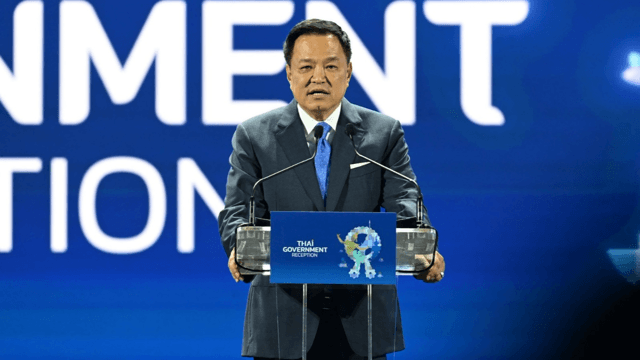
Unfortunately, the newly elected Prime Minister Paetongtarn Shinawatra chose not to attend the 79th UN General Assembly.
This year is particularly significant as the 193-member UN is working on the Pact for the Future, aiming to ensure that the world we live in will be healthy and safe for all citizens—in short, the sustainability of our planet.
Foreign Minister Maris Sagiampongse will represent Thailand in New York City. He has a herculean task in conveying Thailand’s messages to the world at the UNGA. During his visit, he will focus on the role of Thai diplomacy in driving sustainable development and maintaining peace and inclusivity.
The Summit for the Future will provide a platform for all countries and stakeholders to accelerate the implementation of the Sustainable Development Goals by 2030. The planned Pact contains 60 actions and strengthens cooperation to address present and future challenges.
The summit has also identified five thematic areas: peace and security, economic development and sustainable development, science and technology and innovation, youth and future generations, and global governance.
For the past decades, Thailand has been active in assisting and forming partnerships with developing countries in the Global South on these various themes under the rubric of sustainable development.
Furthermore, universal health coverage is another key issue that UN members are interested in, as the post-pandemic world is still plagued by contagious diseases in various parts of the globe.
Since its inception in 2002, all Thai citizens have been entitled to essential preventive and curative health services at all stages of life.
Thailand should be proud of its strong record of public health services. Various international organizations, including UN-related agencies, have recognized Thailand’s unique health system, which could serve as a model for other developing countries.
Thailand’s new prime minister could have used this opportunity at the UNGA to further promote the country’s public health coverage system and to learn from the country’s experience.
It is a missed opportunity as her government has also pursued an active policy of transforming Thailand into a wellness and medical hub.
Another challenge is Thailand’s candidacy for the UN Human Rights Council. Last year at the UNGA, former Prime Minister Srettha Thavisin announced Thailand’s bid for a seat on the UNHRC from 2025-2027.
The Thai government is committed to advancing democracy and human rights. It also pledges to promote and protect civil and political rights while ensuring the progressive realization of economic, social, and cultural rights, especially for vulnerable people.
Civil society organizations have often challenged the Thai government’s version of human rights protection.
As a UNHRC member, Thailand could help steer global human rights discourse and norms, shape policy, and maximize the impact of the HRC’s work on the ground.
Finally, as the neighbor that shares the longest border with Myanmar, it is imperative that Thailand emphasizes the supremacy of diplomatic efforts over military actions.
The conflicting parties in Myanmar continue to fight with direct or indirect assistance from their allies. Without political dialogue, the massive loss of innocent civilian lives will continue unabated. It is time for all concerned countries to play constructive roles in bringing peace to war-torn Myanmar.
As a founding member of ASEAN, Thailand’s bilateral efforts on Myanmar complement the Five-Point Consensus. In December,
Bangkok will host the ASEAN Troika Plus meeting to consolidate further action plans to provide humanitarian assistance to affected villagers through ASEAN-led and UN-led organizations. It is hoped that this process will lead to political dialogues in search of a peaceful and permanent solution.
Apart from the current, past and future chairs of Asean, other dialogue partners, especially those with common borders with Myanmar would be included.