


As a founding member of the Asia-Pacific Economic Cooperation (APEC) in 1989, Thailand sought to strengthen regional cooperation and promote sustainability and inclusivity. At that time, the Thai economy was booming, and its economic voice was influential.
Today, however, it is a different ball game — and a more challenging one. Thailand’s economic performance over the past decade has been unimpressive compared with that of its neighboring countries.
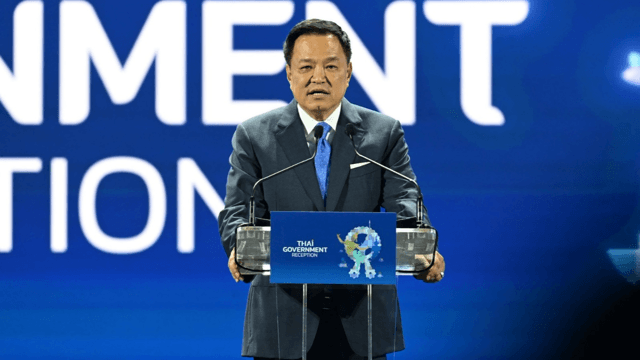
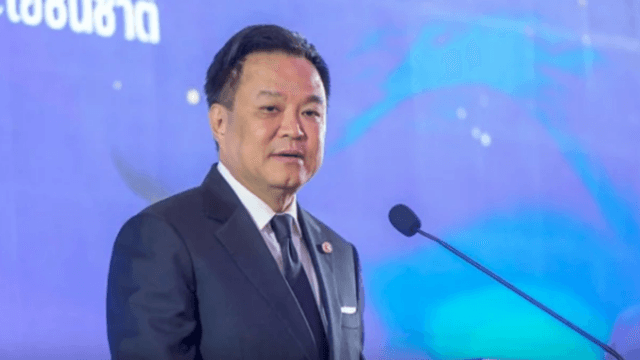
Nevertheless, Thailand’s approach to economic cooperation and development remains unchanged. Prime Minister Anutin Charnvirakul joins the APEC Leaders’ Meeting in Gyeongju with renewed commitment to strengthening regional cooperation and promoting sustainable, inclusive, and innovative growth across the broader region.
The Asia-Pacific continues to enjoy strong economic growth, accounting for nearly half of world trade and over 60 percent of global GDP.
This year’s APEC theme, “Building a Sustainable Tomorrow: Connect. Innovate. Prosper.”, under South Korea’s leadership, is highly relevant. The world now faces growing economic disruptions, climate challenges, and technological shifts.
Seoul has called on all members to join hands to ensure prosperity that benefits everyone. Bangkok believes the region’s future depends on sustained collective action and practical cooperation.
Lest we forget, Thailand has left a successful legacy through the Bangkok Goals on the Bio-Circular-Green (BCG) Economy.
In 2022, APEC leaders endorsed this new economic model during Thailand’s chairmanship. It is not an overstatement to say that the BCG has become a cornerstone of APEC’s sustainability agenda.
It offers a balanced approach that aligns economic growth with environmental responsibility and social inclusion.
Furthermore, Thailand succeeded in securing consensus on both the APEC Ministerial Statement and the APEC Leaders’ Declaration 2022, despite challenging geopolitical tensions.
Since then, Bangkok has continued to promote BCG-related initiatives. One tangible outcome has been the APEC BCG Award, initiated by Thailand.
The award showcases successful projects and innovators from member economies and covers three key areas: women, youth, and micro, small, and medium enterprises (MSMEs). Thai officials involved in the selection process told The Bangkok Post that these awards demonstrate how APEC’s vision can improve livelihoods and inspire local communities.
For instance, in 2023, Hernán Asto from Peru won the MSME award. He is the founder and CEO of Grupo Alinti S.A.C., a start-up that developed technology enabling rural communities to generate electricity using plants and micro-organisms in soil — without batteries.
Last year, Muh. Agung Saputra, CEO of Surplus, received the award. His company is Indonesia’s first “food rescue app,” created to combat food waste. The app has rescued over 350 tons of food, preventing around 5,000 tons of carbon dioxide emissions. It now has half a million users and 4,000 partner food businesses and farms.
Given the current geopolitical situation, Thailand has reiterated that the region’s economic cooperation must continue. The Russia–Ukraine conflict and other global disputes must not overshadow APEC’s overall efforts. After all, APEC’s fundamental mission is to promote free and open trade, strengthen multilateralism, and improve people’s living standards.
South Korea has been successful in carrying out its role as host. Two decades after its first chairmanship, Seoul has again demonstrated leadership in regional economic governance.
To protect the Asia-Pacific’s economic health, APEC must remain a non-political, consensus-driven platform that fosters dialogue, trust, and cooperation.
As ASEAN’s second-largest economy, Thailand’s growth depends on open markets and resilient supply chains. At the Leaders’ Meeting, all 21 economies must work together to enhance connectivity, digital inclusion, and the transition to green industries.
In this context, Thailand stands ready to contribute to APEC’s work on digital economic development. Currently, Thailand chairs the ASEAN negotiation framework for the ASEAN Digital Economy Framework Agreement (DEFA), which is expected to be concluded next year.
Bangkok is advancing its own digital transformation agenda, promoting green technologies, and preparing its workforce for the future economy.
Moreover, Thailand seeks to deepen people-to-people connectivity. Through programs that empower women, nurture youth innovation, and support MSMEs, Thailand aims to bring APEC closer to the people.
As the APEC leaders gather in Gyeongju, Bangkok hopes that discussions will continue to build on the Bangkok Goals on BCG and embrace the theme of “Building a Sustainable Tomorrow.” APEC can demonstrate that it remains one of the most powerful tools for shaping a better future.