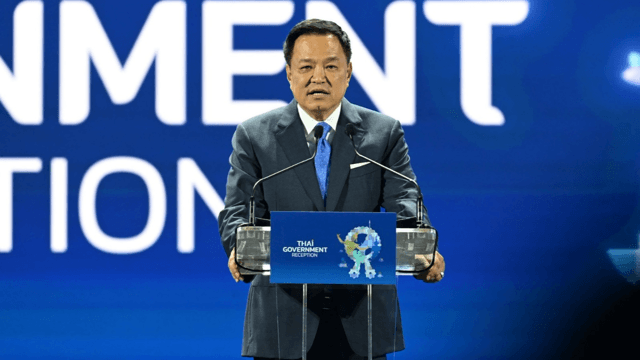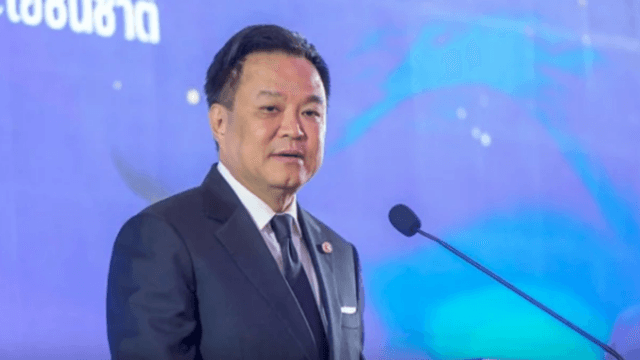



Prime Minister Anutin Charnvirakul’s prepared policy statement to parliament Monday promised handsomely, including debt relief, SME support, reskilling, and clean energy, among others.
Truth be told, the newly established government will be successful only when there is peace and stability at the borders—Cambodia and the South. Although Myanmar is not included in the policy, it remains a volatile frontier.
Altogether, these three arenas will decide Thailand’s stability. Obviously, the Cambodian dispute carries the greatest urgency on the eastern flank, as Phnom Penh has often exposed Thai weaknesses to its advantage.
Encroachments, landmine incidents, and staged civilian protests have rattled Thai border villages in the past weeks after the ceasefire agreement. Cambodia knows how to raise eyebrows across the border.
For too long, Thailand has stayed silent and looked unprepared and weak. When Thai soldiers respond with force or rhetoric, it quickly hands Phnom Penh the victim card.
Then it propagates Thailand’s defensive actions as aggression. They must show restraint, especially during the current United Nations General Assembly.
In his prepared policy speech, Anutin promised peaceful resolution while safeguarding sovereignty. He also proposed a national referendum on the long-standing memorandum of understanding between the two countries, popularly known as MOU44.
One caveat is in order: unless the government acts in unison with all concerned authorities, Cambodia will continue to outplay Thailand.
The key is civil–military coordination and unity. For too long, both civilian leaders and generals have given mixed signals, allowing adversaries to exploit the situation.
As Prime Minister and Interior Minister, Anutin can ensure that local administration aligns with security operations and also keeps the armed forces following orders under clear political direction. It entails one command and one center.
Lest we forget, kudos must go to the armed forces for maintaining restraint despite constant provocation across the border. It is strength, not weakness, as some local media influencers would like to portray.
Thailand must never be the first party to fire on the other side. At this critical period, Thailand must hold its fire and document all violations. It is the only way Bangkok can show the world what is going on and win diplomatic support.
Notably, since disputes broke out, Cambodia has baited Thai troops before and then rushed to play the victim internationally. That cycle must end.
The remedy is evidence for all to see. Incidents must be filmed, mapped, and released quickly in two languages with forensic detail. After all, Thailand is the adult in the room.
Since the ceasefire, Cambodia has yet to meet its promises. Mine clearance is incomplete, encroachments remain, and crowds are still mobilized near the line. Now that the Anutin government is fully functioning, Thailand should call this out factually and loudly.
This government has already linked border checkpoint reopening to verifiable benchmarks, especially demining certified by neutral agencies, including removal of structures as well as a ban on armed escorts during protests. Missed benchmarks should trigger automatic pauses, not angry mudslinging.
After all, Cambodia’s economy leans on cross-border trade and casinos. Thailand can calibrate customs checks or money flow monitoring.
At the same time, incentives for compliance should be offered through smoother logistics and cross-border amenities when there is tangible progress. This type of pressure and reward is more effective than military threats.
To efficiently engage with Cambodia, Thai civilian–military relations remain the foundation. Political leaders must support soldiers who follow orders to show restraint.
Protecting the country’s sovereignty is demonstrated through control without firing a shot. The same logic applies in the three southern provinces.
The Anutin government effectively links security with development. But the military needs active cooperation in all social domains from local stakeholders; otherwise, there will be no buy-in.
Indeed, Myanmar adds another layer of security challenge. The planned election in Myanmar later this year will not be inclusive, free, or fair. Ironically, the outcome will probably be accepted by weary neighbors, including Thailand. The post-election situation there is highly unpredictable.
It is interesting to note that Cambodia has replaced Myanmar as an existential threat to Thailand’s security. However, Thailand could still face an influx of refugees and more insurgent activity if crackdowns continue after the election.
The Thai authorities must remind Naypyidaw that the policy statement’s omission does not mean acquiescence. Bangkok must prepare humanitarian corridors and coordinate with ASEAN partners.
It is a preventive measure in case instability spills further across the frontier.
Cambodia, the South, and Myanmar are three security fronts that will determine the economic trajectory in this critical period.
Potential investors will not risk their money if border clashes dominate headlines. Tourism and other service industries would suffer if fighting erupted along the frontier.
Peace at the borders could be achieved through unity, facts, and perseverance. If the government can deliver, Thailand will emerge stronger. Otherwise, all bets on Anutin’s promises are off and the frontiers will remain flashpoints. His carefully crafted legacy will also quickly vanish.