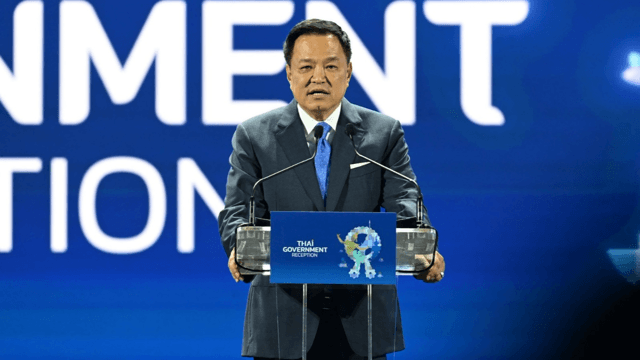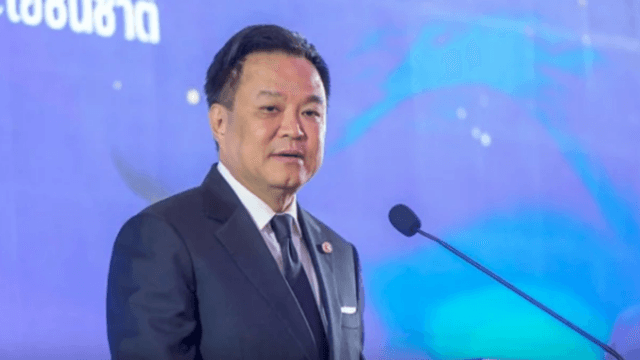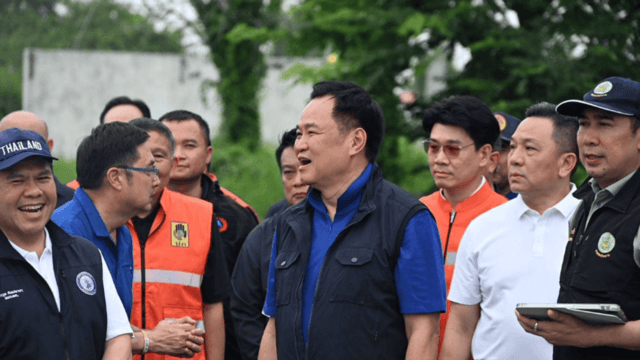



While Paetongtarn Shinawatra is now the prime minister, political instability in Thailand could further affect the country’s already sluggish economic growth. Malaysia’s Minister of Investment, Trade and Industry, Tengku Zafrul Aziz, has expressed concerns, noting that investors are monitoring the political situation in the country closely.
In an interview with Thai PBS World, the minister said that the collaboration between the two countries is, however, likely to continue, as Malaysia maintains a close relationship with the Pheu Thai-led government.
Minister Aziz was on a trade mission to Thailand last week, his first official visit to Bangkok. In meeting with 16 Thai businesses interested in the Malaysian market, the minister aims to increase trade between the two countries to US$30 billion by 2027, following the signing of a joint statement with his Thai counterpart.
The minister explained that one of the strategies to enhance trade would be to restart the Joint Trade Committee, to negotiate trade agreements in the Deep South.
“Malaysia and Thailand have not negotiated through this platform for the past nine years. Making cross-border trade easier between the three provinces in southern Thailand and the three states in northern Malaysia is significant,” the minister opined.
Malaysia’s ASEAN Chairmanship in 2025
ASEAN, as an economic bloc, generates nearly US$3.8 trillion in GDP and Malaysia plans to lead the bloc with young population and abundant labour force. The minister said ASEAN countries should collaborate in a situation in which multinational companies are de-risking and shifting supply chains to other regions.
“ASEAN has benefited from inflows of investment. Thailand, Malaysia, Singapore and Vietnam should work together. It is not a zero-sum game, so every country should cooperate and make ASEAN an attractive bloc,” the minister said.
To attract foreign direct investment to ASEAN, Minister Aziz identified three major trends which should be monitored closely.
Undeniable factors are geopolitical issues. The minister said conflict between superpowers could affect the global economy, as their combined GDPs accounts for almost 45 percent of the world’s total.
Additionally, the minister emphasised that ASEAN countries and companies should address climate change issues, given that Western markets and the EU are imposing standards to which corporations must adhere.
The minister added that individuals, companies and countries should prepare for the rapid expansion of digitalization and artificial intelligence to maintain competitiveness in the market.
ASEAN’s semiconductor hub
Malaysia has moved closer to becoming the semiconductor hub in ASEAN over the past 50 years, with a top European chipmaker opening its largest plant in the country. The minister said that the recently launched National Semiconductor Strategy could expedite this national agenda item.
With a budget of 25 billion Malaysian Ringgit, the minister stated that the plan will help Malaysia improve its capacity in semiconductors, while facing competition in the market. He added that his government is migrating from back-end and assembly services to integrated circuit design and advanced packaging.
Vietnam and Singapore are also implementing similar policies to develop their chip industries. Minister Aziz is optimistic about the rapid development in ASEAN, emphasising that a more secure and resilient ecosystem, capable of attracting foreign direct investment, will benefit the region's supply chain as a whole.
Uncertainty over Tesla investment
While Malaysia is opening its arms to investment by EV giant Tesla, Minister Aziz explained that Tesla has never committed to establishing a car assembly plant in the country. While Indonesia and Thailand are making efforts to attract Tesla, the minister remains confident in Malaysia’s chip production capabilities.
As Malaysia is one of the largest contributors to the supply of automotive chips, the minister said that the country can offer multiple advantages to Tesla. He said that Tesla's plan will be clearer after his meeting with the company's executives this week.
By Franc Han Shih, Thai PBS World
6-min highlight: