


Kept safe since its initial display and showcased at various exhibitions, Louise Bourgeois's “Hold Me Close,” her moving memorial to the 2004 tsunami, is set to return to Thailand’s south at the end of the year where it will be permanently on show in Krabi province.
The monument will be officially reopened on December 26, 2025, marking the 21st anniversary of the disaster.
The plan to revitalise this priceless sculpture, previously displayed at the memorial site in the pine forest of Nopparat Thara Beach, Ao Nang, Krabi, and currently away from public view, was unveiled at a recent discussion held by the Bangkok Art Biennale (BAB).
Titled “Revitalizing Louise Bourgeois Memorial Hold Me Close, Nopparat Thara, Krabi,” the discussion brought together key figures including Surapong Suebwonglee, Chairman of the National Soft Power Development Committee; Jerry Gorovoy, President of the Easton Foundation and trustee of the estate of Louise Bourgeois; Philip Larratt-Smith, curator at the Easton Foundation; architect Kulapat Yantrasast; and Prof. Dr. Apinan Poshyananda, Artistic Director of the Bangkok Art Biennale. Luckana Kunavihayanon, board member of the Bangkok Art and Cultural Centre, moderated the panel.

Panelists include (from right) Jerry, Philip, Prof. Dr Apinan, Kulapat and Luckana.
The event revisited the history and significance of “Hold Me Close.”
Originally installed as a tribute to Thailand in remembrance of the 2004 Indian Ocean earthquake and tsunami, the sculpture stood as a memorial before being relocated for major exhibitions and art festivals, including “Dreams of Peace” at the Bangkok Art and Culture Centre (2010) and the Thailand Biennale Korat (2021). Now under the custody of Krabi City Hall, the discussion explored how to revive and reinstate “Hold Me Close” as a living monument, ensuring its return to public view.
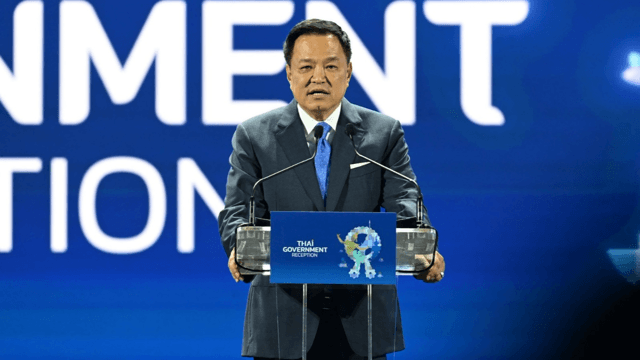
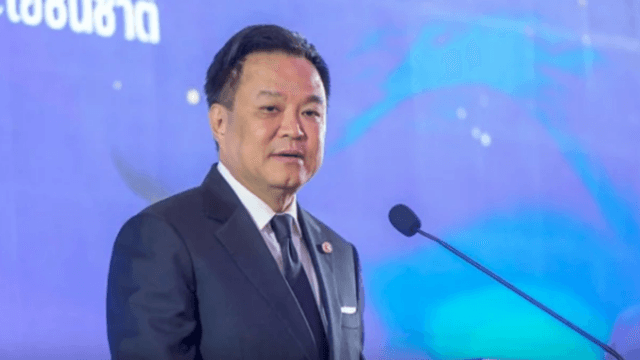
"Our goal is to reopen the memorial site on the 21st anniversary of the tsunami, this coming December 26. The Easton Foundation, along with community friends and the Bangkok Park and other foundations, are committed to revitalizing the sculpture for public display,” Surapong said.
He and the panelists agreed that the plan was ambitious, and the reconstruction of the site and display of the sculpture would require significant care and security to ensure its sustainability and longevity as part of Krabi province's legacy.
“Starting from the artist's mission, I cannot but help recognise her generosity. I think the sculpture needs to be alive and visitable and felt by everyone," said Kulapat Yantrasast, the architect tasked with designing the revitalization.

Kulapat Yantrasast, the architect tasked with designing the revitalization of "Hold Me Close"
He also emphasized the sustainability aspect, stating, “The revitalization of ‘Hold Me Close’ is not merely a restoration project; it's a community endeavor.
The sculpture, intended as a lasting memorial, requires a sustainable approach that integrates with the local environment and engages the people of Krabi.
The vision extends beyond a static monument, aiming to create a living memorial that resonates with both residents and visitors, fostering a sense of ownership and connection. To achieve this, the project emphasizes collaboration and community participation.
“The community, whether residents or visitors, has a role in nurturing this memorial, this living program. It’s not something that a central organization should dictate. We want to build something that elicits a response from the local community," Kulapat added.

Photo: Jerry Gorovoy (left), President, and Philip Larratt-Smith, Curator, both of the Easton Foundation, at a recent Bangkok Art Biennale panel.
Jerry Gorovoy explained that Louise Bourgeois's public sculptures, including her 2005 bronze piece 'Hold Me Close,' hold deep personal meaning for her.
The real world greatly influenced her artistic creations, and the tsunami tragedy profoundly affected her, resonating with her own feelings of abandonment.
Bourgeois once said that the tsunami tragedy was a reminder of life’s fragility—that in the face of such loss, there is little we can do beyond holding hands, staying close, and preserving our connections. This piece remains her only public sculpture in Southeast Asia.
The Easton Foundation is committed to preserving Bourgeois’s works, ensuring that her thoughts and emotions are not forgotten by future generations while offering opportunities to revive these memories.
Gorovoy explained that he had the chance to see the original artwork and visit the memorial site in the pine forest. By revitalizing this sculpture, he hopes audiences will once again experience its profound impact. This effort will require close collaboration with Thai architects to carefully design the space and reinstall the artwork.
The project began when Apinan Poshyananda met Bourgeois in 2005, and she agreed to create the artwork, which at that time was her only commission in Southeast Asia.
In 2005, Bourgeois donated 'Hold Me Close' to the Tsunami Sculpture Memorial Project at Nopparat Tara National Park in Krabi. Placed in a garden and pool surrounded by tall trees, the sculpture depicts two pairs of hands in a prayer-like pose and, separately, a single child’s hand. Together, they form a deeply emotional tribute.
The sculpture was initially a public monument before being removed due to concerns about erosion at the original seaside display point. Many also raised concerns about security, especially after the artist’s death increased the artwork's value.
Prof. Dr. Apinan Poshyananda said that the Bangkok Art Biennale Foundation, the Easton Foundation, and representatives from the French Embassy met with the Governor of Krabi to discuss this project.

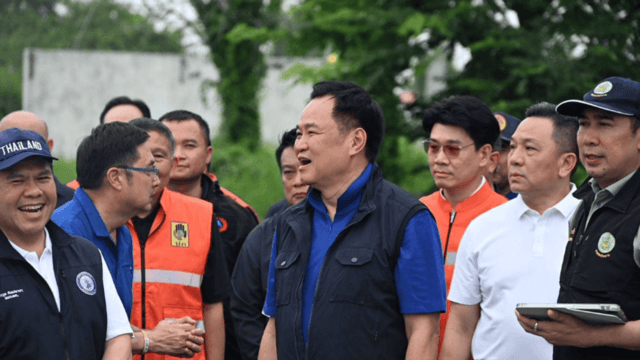
Photo: : Preparations underway: A recent site visit in Krabi for the revitalization of Louise Bourgeois's sculpture
The province has expressed strong support for reinstalling the original sculpture in a public space, as the artist originally intended—not in a museum. The goal is to complete the project and have the sculpture back on display by December 2025, marking 21 years since the tsunami.
For long-term preservation, it will be essential to involve the province and local communities in managing and protecting this significant artwork.
The Easton Foundation’s curator, Philip Larratt-Smith, explained that in “Hold Me Close,” Bourgeois used symbolic imagery through hands.
The embracing hands convey stability, protection, and care, while also representing a plea for help, an act of offering, or even the traditional Asian gesture of respect (wai gesture).
This work was also the first time the artist applied gold leaf to a sculpture’s surface. Additionally, a child’s handprint on stone symbolizes loneliness and loss, reflecting Bourgeois’ deep compassion for those affected by the devastating tsunami.
The community in Krabi holds the sculpture dear and has a strong attachment to the artwork. In the past, they have repeatedly voiced their desire through the province of Krabi to bring “Hold Me Close” back to the public and have it reinstalled properly.