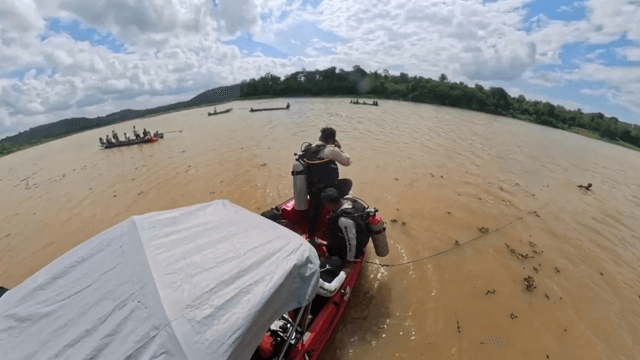
In less than a week, the Thai public have seen in high definition how much the Thai authorities can do, cannot do and will not do regarding the country’s borders.
On the one hand, the rescue of Chinese actor “Xingxing” is nothing short of miraculous. On the other hand, it’s ridiculous in many aspects.
What took the Thai security forces so much longer to “save” anybody else, more specifically Thai nationals detained in “legitimate” manners in neighbouring countries?
From social media posts, this seems to be the foremost question.
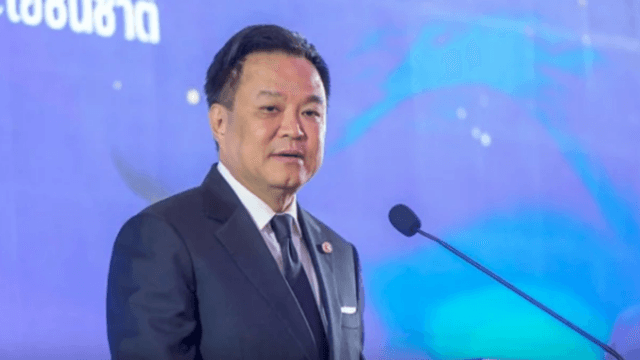
But another question deals with greater absurdity. According to Pol Gen Tatchai Pitaneelaboot, the police inspector general, Wang Xing, the Chinese actor also known as Xingxing, was the victim of human trafficking.
This information accompanied TV news footages showing the area where he had been kept.
It’s not a jungle hideout or isolated ramshackle house guarded by masked militia.
Apparently, this “victim of human trafficking” was put inside a modern structure in a fairly-developed neighbourhood just across the border.
In other words, one of the most locally and internationally infamous crimes are taking place where any Thai can easily see it with naked eyes.
The community across the border is one of the first things tour guides show their tourists once they arrive at the Thai side of the frontier.
Why has it been there, with nothing done by law enforcement officers, military officials, or diplomats of the two countries to ensure that the neighbourhood, which obviously is not under full control of either nation, is not that dangerous?
Some say the bad guys are “call center” racketeers. Others say they are abductors.
Whatever they are, and whether there are things the publics don’t know about, they are hiding in plain sight and this very fact should upset Thailand, Myanmar and any ethnic group overseeing the area.
The idea of allowing insurgents or rebels to set up “buffer zones” at borders’ seams used to be popular, particularly if hostile countries are close together.
Thailand, Laos, Vietnam, Malaysia, Myanmar and Cambodia had deep mistrust towards one another in the past, but their security problems have eased significantly.
Yet while their national disputes are tackled more and more diplomatically, the “buffer zones” have evolved into something that is harder to get rid of. In some
cases, human rights are involved.
In others, military vested interests prevent decisive action. Or these factors can intertwine.
That Xingxing was rescued so quickly means that the Thai authorities know how to get him back.
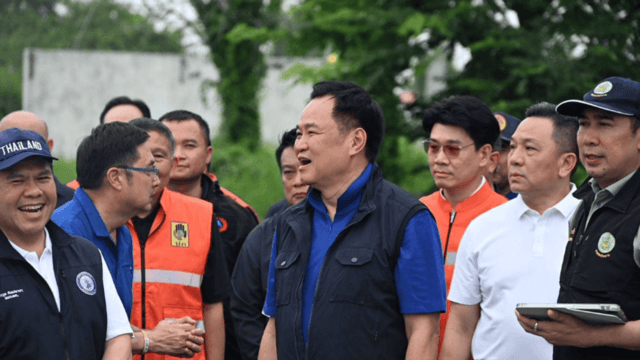
That Thaksin Shinawatra suggested he knew how to wipe out call-centre gangsters within days also showed that the Thai leadership knows where they are.
The Xingxing case confirms that it’s not a question of where. It’s a question of “dare”.
When well-known lawyer Sittra Biabangkerd was arrested near the eastern border, a few news networks knew exactly where to send their reporters to do scoops on famous “escape routes” used by fleeing high-profile figures. If news people know it, there’s no way the authorities don’t know it.
(Sittra strongly denied that he was trying to escape. He said he and his wife, who was arrested together with him, were heading for a temple for merit making.)
An ironic development concerning Xingxing is that Thailand from top to bottom is so concerned about its image. Prime Minister Paetongtarn Shinawatra and police officials are all saying how safe the country is, and either playing down or ignoring the fact that he came here before crossing a very narrow river and disappearing.
Do they realise that the swift manner in which Xingxing was “rescued” also reflects badly on national policy as well as implementation?
Other questions are swirling around. If a call-centre racket was behind this, what an elaborate and risky way to “recruit”.
If it was a ransom plot, why was he returned practically on a plate without a single shot being fired? If he had been frightened to death, he hid it well in front of Thai news cameras.
While everyone smiles, the mystery has thickened.
The issue of “grey” Chinese businesses is getting revived again. So, apart from Thailand, Myanmar and ethnic leaders, the Chinese government should say something.
They all should say something about the area that everyone seems to know about but has done so little about.