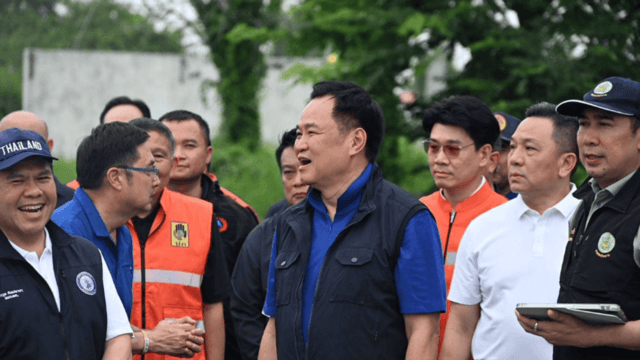
Flooding is a disaster, but it also brings out the ultimate human spirit. Thais are genuinely worried about their compatriots, trying to help them without wanting anything in return, and any difference or disagreement have been diluted, temporarily at least.
What northern Thais are going through is being felt and sympathized with wholeheartedly. It is shown in the faces of mainstream TV newscasters, YouTube influencers and Bangkok mall shoppers who rushed to bank branches to inquire about donation channels. Social media messages discussed ways to assist.
Some actors, actresses and celebrities are going to flooded neighborhoods to help stranded people, behind cameras in many cases. Those who are busy or not strong enough are using Instagram posts to encourage relief and heroism.
What’s happening calls to mind the bittersweet experience of 2011, when, overall, flooding wreaked havoc on more than 10 million people, killing hundreds and closing down countless factories and forcing Bangkok car owners to park on the expressways every night.
That was against a backdrop of cutthroat politics, but the memory was not all bad. Volunteering was unprecedentedly abundant, involving a large percentage of unaffected Thais. The helpers were nervous themselves, but they knew they were lucky enough to still be able to panic.
Floods were roof-high in many provinces, several of which were also hit by cold spells. Millions went far beyond panic, and real struggles for survival and heroism were stories of the day.
There were tales of people fleeing floods from one place to another, and then to another and yet another.
At workplaces, employers and employees, from the most junior to the highest executive ranks, frantically tried to find safe sanctuary for their ill or old parents.
Often, people lost touch with relatives who left home before it was flooded and could not come back.
Office workers volunteered to pack relief bags after work. Big corporations acted as donation centres, and donated items were cascading in.
Free transport was provided. Professional rescuers worked tirelessly, assisted by strong men and women. State and private buildings were offered as shelters.
The togetherness was unreal. The “open” volunteering was backed by under-the-surface or indirect help. Scriptwriters of TV dramas produced work that promoted acts of sympathy.
Other artworks were geared toward the same goal. Journalists coordinated help and vigorously updated situations and warnings.
Soldiers, always a source of social strife, received praises for difficult assistance carried out in an effective, tireless and well-disciplined manner.
Military vehicles were utilised to alleviate hardships and applauded when they passed by. People giving bottled water and food to army personnel working in dirty clothes were a common sight.
Politically, the devastating floods took place under a yellow-versus-red atmosphere, which was largely overshadowed by the true human sufferings that forced lesser things to fade into the background. (That was as far as citizens were concerned, as politicians’ egos still managed to negatively influence certain things in Bangkok.)
In many ways, it was like when the “wild boar” boys were trapped in a flooded cave in Chiang Rai or when the killer earthquakes hit Turkey and Syria.
For a change, heavy equipment and machinery were mobilised to save lives, not destroy them; religious and political differences were briefly forgotten; and news headlines focused succinctly on joint efforts and sad truth, not divisiveness and well-constructed lies.
As tragic as the current flooding has been, it provides a great reminder of what humans can become. It’s not a totally-fresh reminder, however, because we have seen it occasionally. Before the “wild boars” we had the 2004 tsunami and so on.
When sufferings are real, flooding is not a blessing in disguise. It’s a challenge, no more and no less.
And humans are not being defied to “rebuild” after the flooding, because rebuilding and standing back up are what we do, time and again throughout history. We are more than capable of that.
The real challenge is not even about whether humans can help one another when big disasters strike. We also have proven time and again that it can happen.
The ultimate challenge has to do with the questions why it has to take a disaster like flooding for humans to show noble potentials; whether humans can reform the collective idea of what really matters; and whether the occasional glimpses of real virtue can stop being just glimpses and turn into everyone’s prevailing and long-lasting trait.