


While MoU44 may be able to sail through a foggy ideological environment, a surge of nationalism may just sink it.
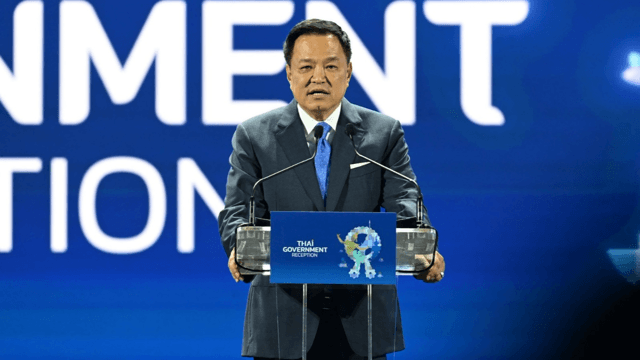
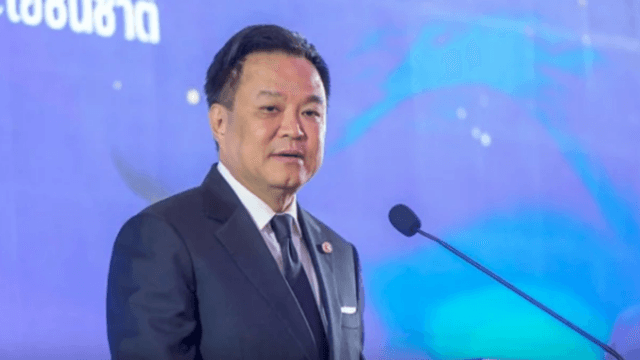
Prime Minister Paetongtarn Shinawatra has called for calm and her father Thaksin has practically challenged anyone opposed to MoU44 to a debate.
Also, another big Pheu Thai man, Defence Minister Phumtham Wechayachai, has brushed aside a veiled threat of mass protests.
The trio exudes the confidence of card players who have very good hands, although a political storm seems to be brewing over future negotiations with Cambodia over joint development of a disputed area in the Gulf of Thailand.
They are adamant that Thais should hold talks with the Cambodians under the framework of the controversial MoU 44, signed by both governments.
Sonthi Limthongkul, an executive of the Manager Group and a former leader of the now defunct People’s Alliance for Democracy (PAD), is leading an edgy anti-MoU 44 campaign that can either go dud or turn into a political dynamite which can blow the whole government away.
There are reasons for the three to be both optimistic and very afraid.
On the one hand, the current political atmosphere is in favour of Paetongtarn, Thaksin and Phumtham. They have powerful conservatives “allies”.
The leading opposition party will unlikely attack the MoU because that would be a very conservative thing to do. As for the Thai public, the issue is simply too hard to understand.
So, Sondhi’s campaign can fizzle out. His movement is showing every sign that it is aware of this. Yet on the other hand, the Preah Vihear Temple was equally, if not more, complicated and technical, but it eventually supercharged nationalism like no other issues. And when nationalism peaks, people forget about ancient demarcations or treaties.
This means that no matter how strong their hands are, Paetongtarn, Thaksin and Phumtham can still lose.
Throughout history, overlapping territorial claims led to wars, proponents of the MoU insist. Religiously or politically, innocent people always suffered when conflicting claimants clashed. Cue energy resources and/or tourism and the problem could multiply.
Until what was called Memorandum of Understanding comes to the rescue, that is. It’s a virtual “agree to disagree in the meantime” formula designed to guard against bloodshed and prevent a disputed area from becoming a totally-useless no man’s land.
This is the argument “for” the MoU44, which Thaksin was largely responsible for while being the prime minister. Argument “against” it has the document recognize the “unreasonable” Cambodian claim or territorial drawing methods more than Thailand should, thus allowing negotiations for things that Bangkok would never accept if its sovereignty stand is resolute.
Currently, the issue involves maps, ancient demarcation lines and treaties held dear by some and discarded by others.
Interpretation of legal language is also playing a big role regarding what could have been, should have been or would have been.
The Thai conservatives have their Cambodian counterparts, too, and the latter must be saying the exact same thing: The Kut island is ours. Nationalism must be loading across the border as well.
Problem for Sondhi and Co is that there is no way to explain to the Thai public how “bad” MoU44 is without addressing the highly-technical parts.
The campaigners have a tough job on their hands, because opinion polls have shown most Thais have no idea what the fuss is all about.
But Paetongtarn, Thaksin and Phumtham must keep in mind that while the conservatives managed to bear “digital wallet” and reversal of the cannabis policy, both issues are not quite at the core of the anti-Thaksin platform. “Sovereignty” is a big straw on the camel’s strained back.
Complicated and absolutely technical as it is, the MoU44 issue could be taken over by very simple and politically-dangerous rhetoric: The government is making Thais lose their land.
“Latthi Klang Chart” (or Cult of Mad Nationalism) has been one of the devaluing terms used to describe the Yellow political movement. The Red resorts to that label. And even now that their relationship with the Red side is stormy, the Orange has relied on it, too.
Good news is the Orange are waiting and seeing at the moment. Bad news is that the controversy does not quite need them.
Amid the on-going ideological fusion, MoU44 should be able to navigate the colour politics, or the Red-Yellow-Orange ocean to be exact.
It has to look out for that small, dark cloud called nationalism, though, because it has the potential to drastically balloon and engulf everything.