


If latest popularity surveys are truly reflective of the Thai political sentiment, many people will have sleepless nights.
In spite of previous opinion poll disasters, let’s assume that the new ones are reliably indicative. And let’s balloon their tiny sample sizes so we can have some fun with political predictions.
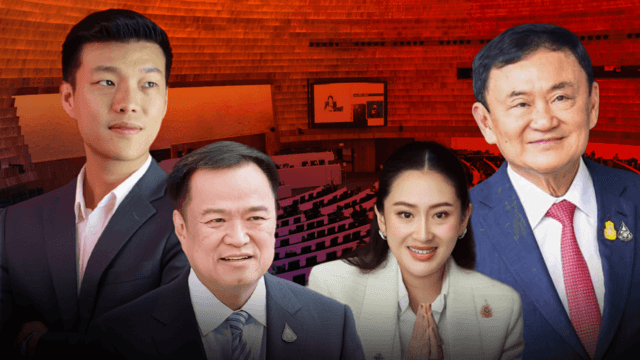
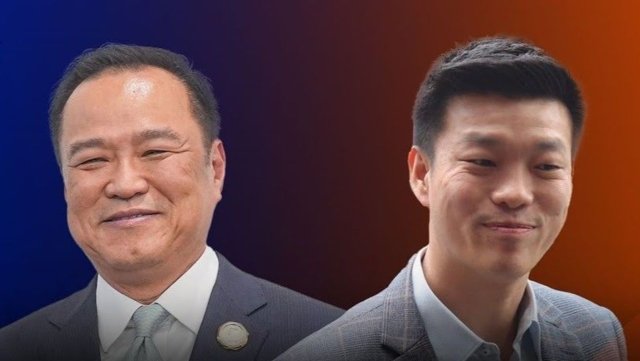
First, Anutin Charnvirakul, of course. While this is still too early and risky to say an Anutin fever is developing, even elementary Thai political students know that he is being helped in no small measure by the border situation and government attempts to revive the co-payment scheme, popular during the Covid-19 pandemic.
The climbing of his popularity ratings is no surprise. One NIDA poll conducted at the end of last month covered 2,500 Thais, and 20.44% of them wanted him as the prime minister after the next election.
Based on the number of eligible voters in the 2023 election (more than 52.3 million), that is more than 10.6 million popular votes for the Bhumjaithai Party. The party got only slightly over 1.1 million party-list votes in that election, which translated into only three House seats.
The latest poll of NIDA would also mean Bhumjaithai would get almost as many popular votes as what Pheu Thai received in the last election (10.9 million votes). Move Forward, now the People’s Party, got 14.4 million votes.
The above does not take another key NIDA finding into the equation, the number of undecided voters, which is enormous.
NIDA found that more than 27% of Thais it surveyed were undecided, the biggest portion that topped even the People’s Party’s Nutthaphong Ruengpanyawut (22.8%) and Anutin.
Pheu Thai’s Chaikasem Nitisiri won just over 6.7% support. Good news is his popularity doesn’t reflect that of Pheu Thai. Bad news is that with Srettha Thavisin and Paetongtarn Shinawatra gone, the party has not come up with any big, magnetic name as the next prime ministerial candidate.
Nutthaphong, meanwhile, is having Anutin breathing down his neck. If his NIDA popularity reflects that of the People’s Party, it will get fewer popular votes than the last time (or around 11.9 million this time compared with 14.4 million in 2023).
As we can see, Anutin, Nutthaphong and whoever leads the charge for the Pheu Thai Party will fight it out for the biggest portion of the undecided votes. More than 14 million votes are at stake.
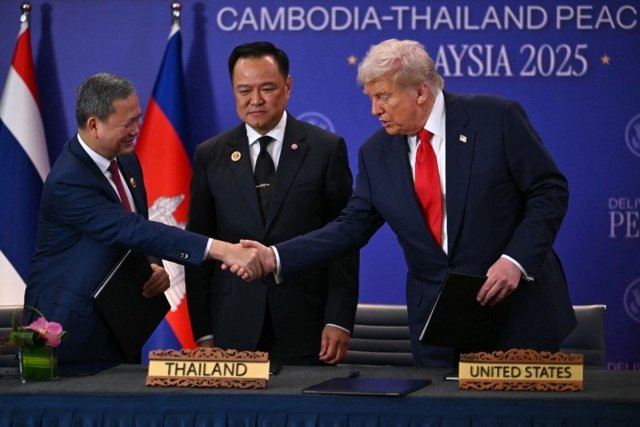
The majority of analysts are backing Anutin, who, however, will have to race against time. He is having many things go his way and the problems with Cambodia will not go away anytime soon. In addition to that, he might be doing something unprecedentedly right by accident.
The inclusion of seemingly-qualified technocrats in his Cabinet was facilitated by the absence of cutthroat coalition or factional politics that usually forced the hands of the ones handpicking ministers.
All of the above figures link personal popularities to the popular vote, a sensible to do in the context of today’s Thai politics. It will get a little bit different if we link popular vote to how Thais rate political parties.
The same NIDA poll has the People’s Party latest support at around 33%, the highest and higher than undecided respondents who accounted about 21.6%. Pheu Thai and Bhumjaithai are almost inseparable at 13.96% and 13.24% respectively.
The People’s Party can breathe a lot better if they think the 33% can translate into a bigger popular vote than Nutthaphong’s 22.8%. It will get more than 17.2 million popular votes, which are more than the last time, actually.
Something to worry about, though, is the considerable percentage of people not knowing which party to elect, 21.6%.
The number of people undecided about parties is crucial. If Bhumjaithai gets them all, it will surpass the People’s Party. The same will happen to Pheu Thai if they manage to sweep up this portion of the votes.
On the other hand, if the People’s Party can snatch even a small piece of that cake, it will be guaranteed a win. But even so, many analysts believe, it will unlikely be a big win.
The analysts point at the People’s Party’s noticeable decline in popularity. Not a big, alarming decline, but it’s noteworthy.
In another poll, carried out just in June this year with a few thousands questioned, Nutthaphong was undisputedly the most popular. At 31.4%, he was clearly above the undecided group (19.8%), Gen Prayut Chan-o-cha (12.7%), and Anutin (9.6%).
In that same poll, when asked which party they supported, 46% said the People’s Party, compared with 11.5% for Pheu Thai and 9.7% for Bhumjaithai.
“I don’t think the People’s Party will get bigger than the last election,” said Asst Prof Suvicha Pouaree, director of the NIDA poll. Apparently, he did not expect Bhumjaithai to cause a major upset but believed that Anutin’s party could gather more than 100 House seats this time (compared with just over 70 seats in 2023).
“It will be some kind of a race between the People’s Party and Bhumjaithai,” he said. “If you asked if I think that the People’s Party will get fewer seats than the last time, I would say it’s not impossible.”
He noted that the party did extremely well in Bangkok in the last election, and it will have to maintain that in order to keep a distance.
That analysis is based on the fact that Anutin’s rising popularity (now) will make the job easier for Bhumjaithai’s provincial election candidates, so it’s imperative that the People’s Party protects its Bangkok bastion, presumably out of Bhumjaithai’s reach.
To sum it up, Anutin is a lot closer to Nutthaphong now than just months ago, and Bhumjaithai and Pheu Thai are neck and neck at the moment with a gap of earlier this year disappearing.
So, who will toss and turn during the night? As of now, anyone but Anutin, who may be even thankful that his time is too short to slip up.
In fact, one politician has said the People’s Party is playing naïve politics by making a previously-harmless man look threatening now.
If the party had voted Chaikasem weeks ago, the next election could come considerably later, but the Orange could easily wait it out, and the biggest problem of Nutthaphong’s camp would be just an awkward working relationship with Anutin in the opposition bloc.