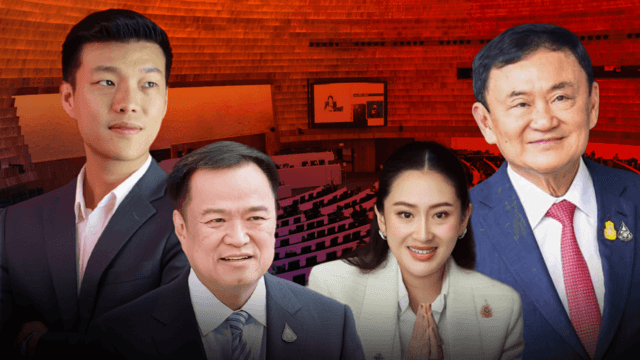
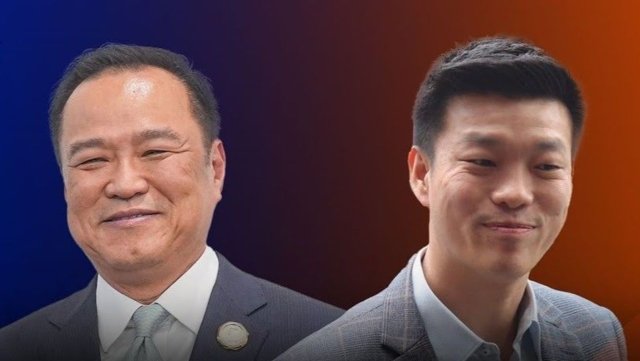
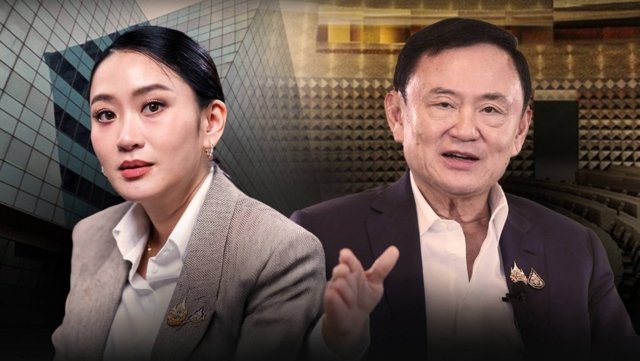
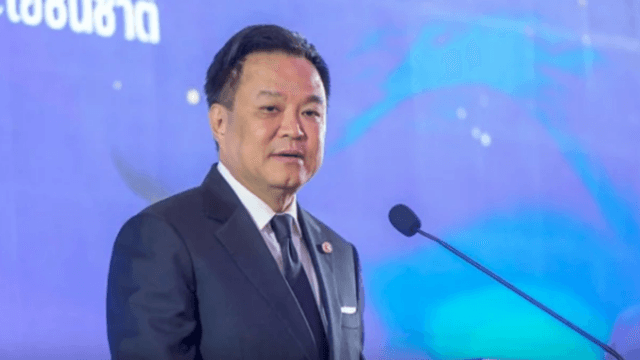
Will ‘peace’ with Cambodia help Anutin Charnvirakul? The new Thai prime minister has many conservative bricks thrown at him after Kuala Lumpur, but good news is that such criticism may not be exploited by the main opposition parties during the election campaign.
For ideological reasons, the People’s Party and the Pheu Thai Party cannot scream “He puts Thai sovereignty under threats” before Thais go to the polls next year. The two big parties will have to contend with other kinds of ammunition which are not easy to find given the time constraints.
The resignation of a deputy finance minister, Vorapak Tanyawong, can be used in the attack, but he promptly quit in a matter of days after the allegations about links with scamming racketeers came out. This means either Anutin can be accused of being rash in putting together his Cabinet line-up, or he can say the swift withdrawal underlined an intention to really form a functioning and reassuring government.
The prime minister must be hoping the “peace deal” with the Cambodians will not take away many conservative votes. His Bhumjaithai Party became the third biggest in Parliament after the People’s Party and Pheu Thai following the 2023 election thanks to the conservative fan base. If many are to abandon him, it will be impactful.
This fan base has been divided. One side is anti-Anutin, thinking that the Kuala Lumpur declaration that he signed would lessen the significance of the Thai map and give more importance to Cambodia’s France-influenced demarcation. Rare earths agreements with the United States that helped broker the deal also displease these conservatives.
The other side is pro-Anutin. They see him as the best hope in the ideological battle with the People’s Party and Pheu Thai. They believe that with the People’s Party unable to exploit the Cambodian issue in the election campaign and its relationship with Pheu Thai still bad, he has got a real chance.
The biggest problem is it remains unclear which group of conservatives is bigger. The arguably secondary question is whether and how the other conservative parties, facing all sorts of troubles themselves, can exploit the situation. Several analysts do not believe that anti-Anutin sentiment stemming from what happened in Kuala Lumpur will benefit the likes of Palang Pracharath or the United Thai Nation Party.
Another factor has to do with “undecided” voters, who number a lot according to latest surveys, even surpassing the support for Anutin and the People’s Party’s Nutthaphong Ruengpanyawut who were running neck and neck in terms of political fame. Are most of them happy with the “peace” no matter what, or are a substantial number of them conservative hardliners frowning at the Kuala Lumpur accord?
This reinforces a political phenomenon that is generating more shades of the “colours” than ever before. Formerly, Thailand has a straightforward battle between Yellow and Red. Not anymore.
It was the Orange that broke the pattern after Prayut Chan-o-cha’s coup. The camp denounced both “excessive” nationalism and corruption generated by the kind of democracy advocated by the red shirts. Then the Blue emerged to counter the Orange’s “too much liberalism” and pro-West stance.
But the Blue itself is not immune to being fractionalized. Some are seeing Anutin as the only hope, but several others are considering him to be an opportunist, and a dishonest one too. The rest is still not quite sure.
Thailand’s dispute with Cambodia has made some people “less Orange” and others “less Blue”, meaning the next election can be more unpredictable than in 2023 election. If a snap election was called immediately after Pheu Thai joined the conservatives to form a government, Move Forward (currently the People’s Party) would have won a landslide.
That is no longer the case. So much has changed since 2023. A surge of nationalism means the People’s Party can no longer dream to win the next election with one eye closed. Its support for the main Blue man, Anutin, when Parliament voted to elect a new prime minister weeks ago, has made it harder for the Orange party to maintain its popularity at the level seen before and immediately after the 2023 election.
But just when the road looked a lot more promising for the Blue, the “peace” signing in Kuala Lumpur sowed some seeds of doubt. Anutin alienated hardline conservatives who don’t want to give Cambodia even the smallest opening for its strong desire to activate the France-effected demarcation map, and who don’t want to help America in its desperate search for rare earths.
Hence cracks have appeared in the Blue part of Thailand. But the conservatives are not being fractured alone. New leadership and problems with the People’s Party will keep Pheu Thai in disarray. The Orange themselves are not as ideologically solidified as before, with divisive issues giving them dark, light and in-the-middle shades.
Political colours are mixing, or getting darker, or lighter, resulting in many new tones whose impact on the next election remains to be seen.
But the fun and heartache of political unpredictability will not stop at the election day. The unthinkable that took place in 2023 could be just the first of many steep drops in the Thai political roller coaster.