


Fish caught in the Kok River, in Chiang Rai province, are safe for consumption because the amount of arsenic they contain is within safe levels.
Nattharath Porndet-anan, the chief fisheries official in Chiang Rai, disclosed that recent lab tests on specimens of several species caught in the Kok River show the arsenic content averaging 0.13mg/kg, which is below the safe level of 2mg/kg. Cadmium, mercury and lead were not detected.
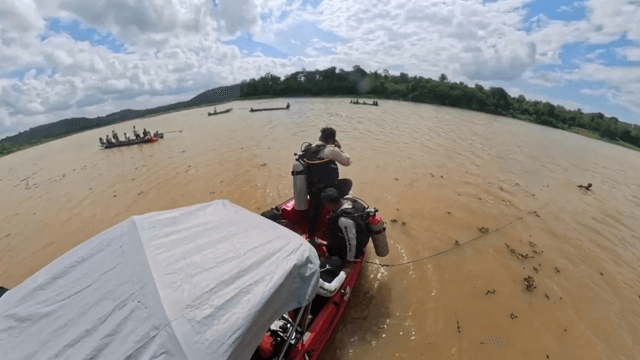
He admitted, however, that the number of fish in the river has declined and local fishermen are catching fewer fish because of the degradation of the ecological system, resulting in the murky river water all year round, affecting the food chain.
Nonetheless, he said that, when the river turns red during the rainy season, it means that the current has washed sediments and nutrients into the river, which benefit fish.
Massive mining activities by Chinese investors in Shan state of Myanmar, which is the source of the Kok and Sai rivers, have been blamed for contamination of the rivers with arsenic and other heavy metals. Discharges from the mining activities, which are not treated, flow directly into the rivers.
The Chiang Rai provincial administration has advised people not to use water from the Kok River for consumption, due to the arsenic contamination. Many tourism-related businesses along the river have closed down, due to a lack of customers concerned about the arsenic contamination.