Former prime minister Thaksin Shinawatra has recommended that the Bank of Thailand reduce the withholding tax collected from commercial banks by half, so that the banks will have more liquidity with which to extend more housing and car loans.
He also recommended the method used by his administration in 2001 to resolve the household debt problem.
They asked commercial banks, through the Thai Bankers Association, to ease restrictions on extending retail loans, with the government agreeing to buy the NPLs from the banks at 50% of their book value for management to help the debtors.
The two suggestions are part of his vision on how to resolve the chronic household debt problem in the country, 91% of which are mortgages and vehicle leasing.
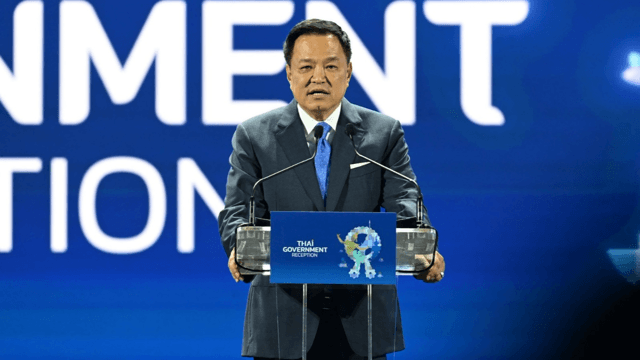
He was speaking last night at the “Dinner Talk Vision for Thailand 2024”, organised by Nation TV. It was Thaksin’s first public speech since his return to Thailand, about a year ago, from his 17 years of self-imposed exile.
The former prime minister said that, since his homecoming, he has noticed that most Thai people do not smile like they used to, probably because many are burdened with debt and are confronted by reduced economic opportunity. Many people have resorted to superstition as a redress, he added.
During his provincial travels, he said he observed that the towns and roads are not clean and buildings are being constructed without proper architectural designs.
Thaksin went on to say that he also found that the underground economy in Thailand has grown substantially, estimated at about 50% of the legitimate economy.
That were the underground economy to be legalised, it could be used to resolve the household debt problem.
Thailand’s industrial and agricultural technology lags behind many countries, making Thai products less competitive and Thailand less attractive to foreign investors, said Thaksin.
He hopes the new government will be able to solve this problem by designating people to take direct responsibility.
Thai bureaucracy is bloated, slow and unable to respond quickly to the needs of the people, he opined.