


The Thai government must investigate the sources of heavy metal and arsenic contamination in two rivers north; Sai and Kok, to ensure the safety of people in the area, said Pita Limjaroenrat, chief advisor to the Progressive Movement today.
He said that the government must act quickly and hold talks with the country suspected of being responsible for the contamination.
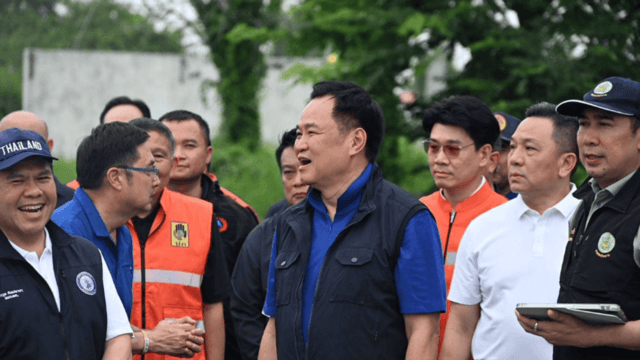
“It is not enough for the government and provincial authorities to simply test water from the Kok and Sai rivers or restrict its use. An urgent investigation is needed,” said Pita, former leader of the now-defunct Move Forward Party, speaking in Chiang Mai.
The Kok River is a tributary of the Mekong River, which flows through Chiang Rai and Chiang Mai provinces, while the Sai River forms the natural border between Thailand’s Mae Sai and Myanmar’s Tachileik.
The contamination is believed to stem from gold mining activities in Myanmar, according to a human rights organisation in the country. It claimed that four Chinese firms are operating open-pit gold mines near the Kok River in Mong Hsai and are discharging water into local sources without proper treatment.
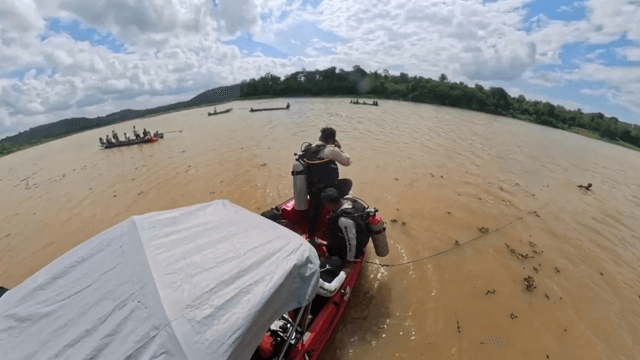
Meanwhile, a 45-year-old man in Chiang Mai’s Mae Ai district told Thai PBS that he is concerned about the contamination in the Kok River, saying “I run a restaurant near the Kok River and, during this month, the river is usually clear and not this murky. I assumed it might be due to natural causes.”
In March, though, after fishing in the river, he developed rashes. Normally, he said, rashes from the river go away in a few days but, this time, they lasted for more than a month.
A 14-year-old boy in the same district also developed rashes after entering the river. He went to see a doctor, but has not yet recovered.
Experts have warned that, if the problems are not solved quickly, the heavy metal residues, including arsenic, may remain in aquatic animals or vegetables irrigated with water from the rivers.