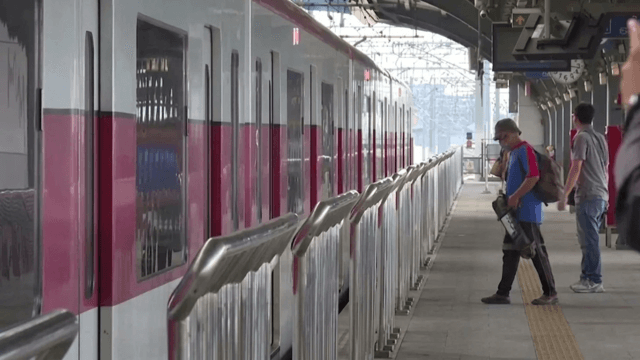



Backed by 450 organizations including the Thai Health Promotion Foundation (THPF) and the Thailand Consumers Council (TCC), the Child Welfare Policy Working Group is calling on the government to implement more stringent road safety measures to keep kids safer on the road, particularly in home-to-school travel by public transport.
“A lot of kids and students rely on public transport when travelling between home and school. They are among the most vulnerable road users and more at risk of road traffic accidents associated with the school journey. We need to do more to improve their safety,” said Sunee Chaiyarot, who leads the Working Group, citing a 2022 review by Rangsit University.

The review of the current situation, challenges and potential solutions for childcare provision to support women’s workforce participation in Thailand revealed that nearly half (around 2 million) of Thai children aged 0-6 (4.3 million) use public transport to go to school.
She added that some parents are too busy for school drop-offs and pick-ups while many villages in remote provinces don’t have a child development center or a kindergarten in the community.
“Children are at risk of road traffic injuries for a number of reasons. A school bus driver who is carrying students to school, for example, could become fatigued and lose focus. Reckless drivers who ignore traffic signals increase the risk of accidents involving children.
When drivers operate a poorly maintained vehicle, they are not only endangering their own life but also the lives of other road users including children. Young kids can get hurt when they are not fully supervised by adults.,” she said.
The demand came after a public seminar held in October that brought together experts on child welfare as well as child development, protection and promotion to discuss children and road safety.
The session was designed for participants to brainstorm and identify potential solutions to ensure children’s safety on public transport at the national and local levels and make roads safer for them.
It was attended by members of the Child Welfare Policy Working Group, organizations and associations including the THPF, the TCC, the government officers responsible for developing policies that guide decision-making and actions, and the media.
The meeting outcomes will be used as a reference point for formulating policies, rules and measures about children and road safety to be proposed to the government for consideration.
Ensuring child’s safety on public transport
Nattaya Boonpakdee, senior director of the THPF’s Child, Youth and Family Promotion Division, proposed that pro-active road safety measures be set up and implemented in a bid to promote safe journeys for children travelling to and from school.
Effective transport management system for school buses and coaches for field trips must be established to ensure that the services meet the highest safety standards and mandatory regulations and technologies must be used to monitor safety.
She also proposed pushing the wearing of safety helmets for kids and youth while using the roads and making the protective gear part of the social welfare program, as well as creation of a traffic and road safety culture in schools and empowering kids with knowledge about road and traffic safety.
“Thailand’s birth rates are dropping to a record low, putting prosperity of future generations at risk. The quality of children’s lives is important. Road safety affects the quality of their lives. Our children are victims of road accidents,” she said referring to statistics.
Nattaya has called on the government to take urgent action to enhance road safety and increase the quality of children’s lives. Thailand’s roads are the deadliest in Southeast Asia and among the worst in the world for vehicle accidents and fatalities.
In 2023, 17,498 road fatalities occurred across Thailand and there was an average of 48 deaths every day, according to a report by the Department of Disease Control. One-fifth of those who died in the accidents were children and young adults aged between 0 and 24.
The main causes of traffic accidents were not wearing a helmet (90.7%), drunk driving (38.3%), lack of seatbelt use (37.5%), unlicensed drivers (33.5%), and unfamiliarity with routes (17.3%).
Indeed, the most recent devastating event involving the school bus fire that killed at least 23, most of them primary school students, in October underlines the need for more stringent measures and road safety education for children.

Nattaya Boonpakdee, senior director of the Thai Health Promotion Foundation’s Child, Youth and Family Promotion Division
Nattaya noted that the THPF has worked with a child network and academics to develop models for childhood development centers that promote road safety. The centers serve as learning tools for local authorities and owners of childhood development centers who wish to learn about road safety in schools.
“They can apply what they learned from the models to centers under their supervision,” she said.
Today, Nattaya added, there are more than 100 childhood development centers that promote road safety across the country.
TCC secretary-general Saree Ongsomwang said the council has proposed a plan on development of curriculum for effective school bus management to the Ministry of Education. It aims to improve knowledge and grow a road safety culture among educational personnel, school bus drivers and parents.
It has also proposed that particular requirements for people who wish to apply for a school bus driver’s license be put in place.

Saree Ongsomwang, secretary-general of Thailand Consumers Council
“School bus drivers should have higher levels of road safety knowledge, skills and abilities. That contributes to a safer and more responsible transportation environment,” she said, adding that the council has submitted the plan to the Ministry of Transport for consideration.
Better safe than sorry – empowering kids with road safety education
As part of the seminar, the THPF also launched “Kub Rod Plodphai Pai Tiew Talay” (“A Safe Trip to the Sea”), a road safety education storybook for children aged 0 to seven years.
Sudjai Phomkerd, a manager of the THPF team responsible for promoting reading culture said the book can be a great learning aid for parents, teachers and caregivers to teach youngsters about road safety and increase their awareness.
Written by Chairit Srirojrit and beautifully illustrated by Irene Issariyanate, this 28-page book promotes driving safely to the beach and the importance of child car seats, seatbelts as well as traffic rules, signs and signals.

Chairit Srirojrit, the author of Kub Rod Plod Phai Pai Tiew Talay (literally A Safe Trip to the Sea)
It also introduces children to safety principles in different environments, for instance preparing to stop when approaching a zebra crossing, using horns to alert people when you are locked in a car and onboard passenger counts before leaving the vehicle.
Chairit said the book was inspired by news involving a young student who died after being left in a van by a teacher.
“As a teacher, the news really broke my heart. I wrote this book to be a road safety reminder note for all families, teachers and caregivers,” the author said, urging the family to talk with their child about road and traffic safety.
He noted that child helmets are essential for road safety and using proper car seats and seatbelts can reduce the risks of injury and save a child’s life.
“Above all, never leave a child alone in a vehicle, not even for just a minute – it’s always better to be safe than sorry,” Chairit said.