


A virtual three-way race at the February 1 local elections led to triumph for the ruling coalition’s second largest party, Bhumjaithai; embarrassment for the governing Pheu Thai Party; and a bitter lesson for the opposition-leading People’s Party, analysts said.
These polls saw fiercer competition and greater attention than before, as national political parties turned local races into key battlegrounds.
Voting to elect new Provincial Administrative Organisation (PAO) chief executives took place in 47 provinces, with 29 seats already filled by early elections last year. Meanwhile, provincial council elections were held in every province except Bangkok.
Thailand’s two largest parties, Pheu Thai and the People’s Party, wheeled out their big guns to support campaigns of local candidates across the country. Their key figures travelled across the country to join campaigns. Other national parties fielded no official candidates, instead choosing to back proxy independents.
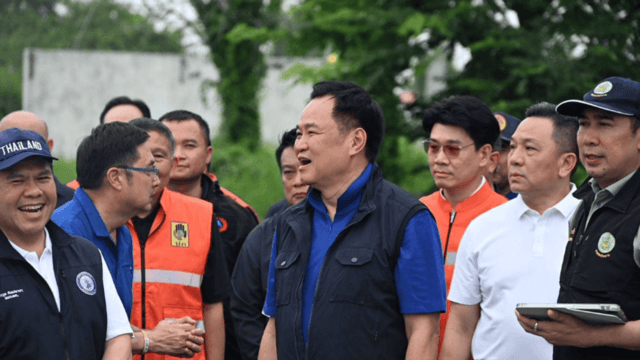
Former prime minister Thaksin Shinawatra, regarded as the ruling party’s patriarch and de-facto leader, addressed Pheu Thai supporters during campaigns across the North and Northeast. Meanwhile, rallies for People’s Party candidates were boosted by prominent politicians such as Thanathorn Juangroongruangkit and Pita Limjaroenrat, as well as key party figures.
As it turned out, Pheu Thai underperformed by winning in only 10 provinces, while Bhumjaithai-allied candidates did far better. The People’s Party, meanwhile, failed to mirror its national success, winning only one of the 17 seats it contested.
Eyeing national politics
Olarn Thinbangtieo, a political science lecturer at Burapha University, noted stronger ties between local and national politics at these PAO polls. Major political parties like Pheu Thai and the People's Party ran their own candidates and campaigned hard, while Bhumjaithai offered strong backing for “independent” allies.
Stithorn Thananithichot, director of the Office of Innovation for Democracy at the King Prajadhipok's Institute, added that the three major parties were eyeing local battlegrounds as a key to national power.
“The polls showed that PAO elections are not just local anymore, as major parties launched heavyweight campaigns in the hope of influencing national politics,” said the analyst.
He explained that controlling PAOs offers a platform for the winning parties to influence national elections.
For example, Pheu Thai’s victorious candidates can push their party’s policies at the provincial level, helping to secure votes in the 2027 general election.
He added that the People’s Party must examine why it won in only one of the 17 provinces it contested, attributing this to its lack of grassroots presence.
“It must find out how to build a strong network of supporters. In local politics, grassroots work is essential.”
Olarn said the opposition party needs to better understand how local politics works, especially the culture and nature of local power.
Winners and losers
He said the poll’s biggest winner overall was undoubtedly Bhumjaithai, with its allied candidates securing PAO chief seats across the lower Northeast, North, and South.
He expects this success, which mirrors gains in the Senate, to translate to a strong performance by the coalition’s No 2 in the next general election – leading to a potential upheaval in national politics.
“Keep an eye on Bhumjaithai. It will become the leader of the conservatives once Pheu Thai loses the trust of the elite,” he said. “Bhumjaithai is growing, with numerous senators on its side, and is now significantly expanding its local network.”
Olarn views Pheu Thai and Thaksin as the biggest losers in the PAO elections. The results, he said, pointed to Thaksin's waning influence in Thai politics. They also showed that Pheu Thai could no longer depend on the ex-PM’s popularity to win the next general election.
Pheu Thai lost the popular vote for the first time in the 2023 general election, beaten to top spot by the People’s Party’s predecessor, Move Forward.
“If Pheu Thai and Thaksin had retained their previous popularity, their candidates would have won all the provinces they contested – and by large majorities. So, relying solely on Thaksin may not be the answer,” Olarn said.
Pheu Thai candidates won in 10 out of the 16 provinces they contested, while independents linked to Bhumjaithai were elected in 14 provinces.
The People’s Party’s victory in Lamphun was its sole success among the 17 provinces it targeted. However, it marked the “Orange party’s” first PAO win since its predecessor, Move Forward, first began fielding candidates in the nationwide local polls in December 2020.
Move Forward had also failed to make an impression in snap PAO elections held last year after incumbents resigned early in a bid for re-election.
Observers said the People’s Party’s dismal performance came as a shock given its predecessor Move Forward's victory in the May 2023 general election, where it won 151 MP seats.
In the PAO chief polls, other political parties secured between one and four seats each through their “independent” candidates.
Only three provinces – Saraburi, Nakhon Nayok, and Pattani – witnessed victories by genuine independents with no apparent backing from a political party.
Local dynasties adapt
Olarn noted that in many provinces, local political dynasties adapted to the People’s Party challenge by focusing more on policies and countering vote-buying allegations.
“Analysts anticipated big losses for local political clans, but as it turned out, their candidates came up with new policy platforms during campaigns. They also worked hard to improve their reputations.”
The analyst said this strategy shift had secured victories for local dynasties at the expense of the People’s Party.
Blame on the EC
Olarn also pointed out that voter turnout was disappointing, despite increased public awareness of the PAO elections. He attributed this to the Election Commission (EC)’s poor management of the polls.
The academic noted that the EC was criticised for scheduling the elections on a Saturday instead of the traditional Sunday. Critics claimed this was an attempt to prevent the People’s Party from winning by suppressing voter turnout.
Only 58.4% of the 27.9 million eligible voters cast their ballots on February 1 – well short of the EC’s target of 65%. The previous PAO elections in 2020 saw a 62.8% turnout.
Olarn said the EC must investigate the unusually high number of spoiled ballots and “no vote” choices, which could indicate voter dissatisfaction with candidates or lack of awareness about the role and importance of PAO chiefs. A surprisingly high 1.15 million voters – 7.1% of the electorate – ticked the “no vote” box on ballot forms. Meanwhile 5.7% of votes (931,290) were spoiled, far exceeding the EC’s targeted limit of 3%.