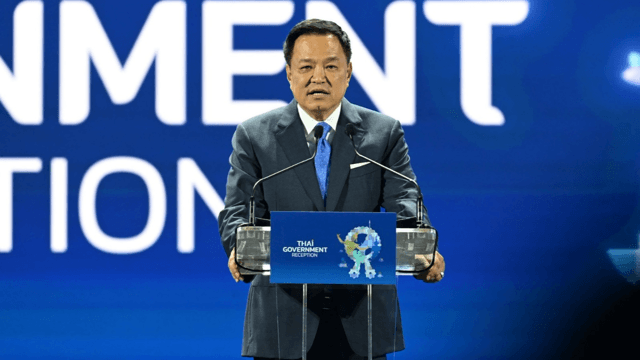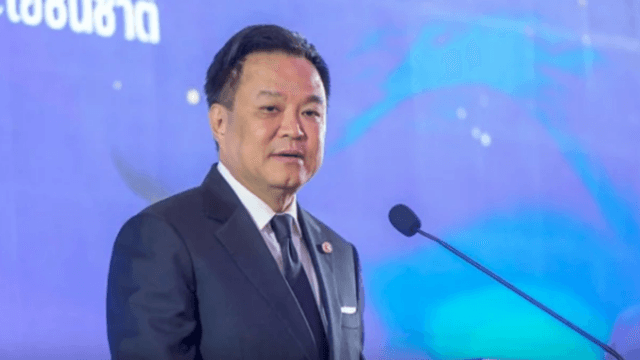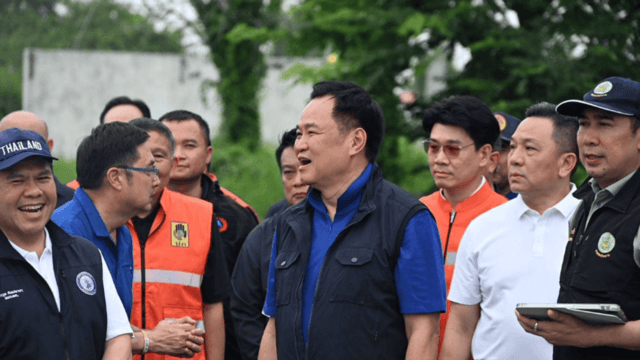



A minority government, led by Anutin Charnvirakul of the Bhumjaithai Party, is currently taking shape after the opposition People’s Party facilitated its creation without joining the administration. Parliament recently voted to allow an interim government to function for four months before dissolving the lower house.
The People’s Party engineered this maneuver without joining the government, to end the political impasse emerging from the Constitutional Court’s verdict to unseat prime minister Paetongtarn Shinawatra.
It was the second setback for the Pheu Thai Party after her predecessor, Srettha Thavisin, also met the same fate in the same court in August 2024.
Anutin has accepted the conditions set by the People’s Party for their support.
Political observers continue to debate the wisdom of the People’s Party's decision to offer support from outside.
Some believe the move risked strengthening the Bhumjaithai—a conservative populist party. Many question whether Bhumjaithai will keep its promise or try to engineer a strategy to stay in power longer than the agreed four months.
Thailand faces not only a political crisis, but also a serious economic slowdown. Some economists have described Thailand’s economic performance as “the lost decades”, referring to the sluggish growth of the last 20 years.
On the economic front, it may be almost impossible to achieve significant change in just four months, given the scale of the challenges. Still, there may be opportunities to shore up the economy and prevent further decline.
Trying to win confidence
Some clarity on the political situation has slightly lifted market sentiment: the Stock Exchange of Thailand Index rose 12.25 points, or 0.98 per cent, to close at 1,264.80 on September 5, the day Anutin received approval from Parliament to form a new government.
The rise, however, cannot be entirely attributed to domestic politics: analysts note that expectations of a US Federal Reserve rate cut had also boosted the market.
Anutin has invited outside experts to join the government, aiming to demonstrate a commitment to capable leadership. Ekniti Nitithanprapas, director-general of the Treasury Department, is set to become the new finance minister.
Ekniti is a veteran at the Finance Ministry, having previously led the Revenue and Excise Departments. Another notable name is Auttapol Rerkpiboon, former CEO of PTT, Thailand’s largest energy firm—known as a hybrid entity with both state ownership and public company operation.
The question of short-term stimulus
Observers are debating whether the new government should implement a short-term stimulus package to support the economy, which is likely to take a hit from Trump’s aggressive tariff policy in the second half of the year.
Conflicting narratives abound: on one hand, a short-term boost is needed to help people cope with rising living costs; on the other, the government has already run large fiscal deficits.
“I will not agree if the government launches a populist policy by giving free cash, as the Pheu Thai led-coalition did,” says Prof Praipol Koomsup, an independent economist.
“The government should instead support projects that enhance productivity, such as short-course training—for example, AI training to increase workers’ skills in global intelligence technology trends,” he suggests.
Leaders in the Bhumjaithai Party are discussing the possibility of bringing back the co-payment scheme, which supports consumers buying necessities with the government offering a limited matching amount.
The scheme was implemented between 2020-2022 by the Prayut Chan-o-cha government during the COVID-19 crisis. It proved popular and was considered effective in supporting lower and middle income groups during economic hardship.
“I would agree if the new government brings back the co-payment scheme, as it would help the grassroots population—low-income consumers and small businesses,” says Anusorn Tamajai, dean of the University of Thai Chamber of Commerce’s School of Economics.
Energy project
There have been frequent complaints about the high cost of electricity, but previous governments were unable to resolve this problem, facing criticism for policies favoring big businesses—particularly electricity generating plants—at the expense of consumers and other sectors.
“The government should complete a pending Power Development Plan [PDP],” says Prof Praipol, an expert in energy economics.
He suggests the PDP may need minor adjustments, such as improving the accuracy of future energy demand forecasts.
The previous national energy plan overestimated economic growth and energy demand, particularly for electricity.
This led to overinvestment in electricity generation under the public-private partnership scheme; the resulting burden has been shifted to households and businesses, who now shoulder higher electricity costs.
The government should continue to support rooftop solar panel installations with financial or tax incentives, according to Praipol.
He also suggests liberalizing electricity trade, which is currently monopolized by the state enterprise, Electricity Generating Authority of Thailand.
Boosting tourism
Supporting tourism could yield a significant economic win, as Thailand relies heavily on foreign tourist spending. Tourism revenue accounts for 12-13 per cent of gross domestic product.
Arrivals numbered 21.9 million in the first eight months of this year, down 7.16 per cent from the same period last year, generating about 1 trillion baht in income—a decline of 5.4 per cent, according to the Ministry of Tourism and Sports.
The Paetongtarn government in August launched the Tourist Digipay scheme, which allows foreign tourists to exchange cryptocurrency for baht and spend it in Thailand.
With regulations and facilities in place, the former government expected implementation in the fourth quarter and hoped it would encourage tourists to spend 10 per cent more.
It remains unclear whether the new government will pursue the scheme.
Observers suggest the scheme may facilitate crypto conversion but is unlikely to boost tourism.
“Due to red tape in the registration procedure, I don’t think it would help to boost tourism,” says Nares Laopannarai, president of the Thai Digital Asset Association.
Assoc Prof Nada Chunsom at the National Institute Development Administration shares this view, saying the scheme is unlikely to increase tourist spending by another 10 per cent, though it may create an optional channel for tourist spending.
Normalize border trade with Cambodia
All eyes are on whether the new government will quickly reopen the border with Cambodia for economic reasons, following a deadly military clash in July.
“To make the situation better is all right, but it’s too early to hope for normalization of border trade with Cambodia due to deepening conflicts,” says Praipol.
Speed up budget disbursement
Many economists are hoping the government will ramp up budget disbursement, which is vital for shoring up the economy. Fiscal deficits have grown in recent years and are projected to reach 4.3 per cent of GDP in the 2026 fiscal bill, which is pending in the Senate.
Government net revenue in the first 10 months of fiscal 2025 (Oct 2024-July 2025) was 2.25 trillion baht, missing the target by 37.6 billion baht or 1.6 per cent.
“The government must spend wisely and avoid creating more debt, as international rating agencies might downgrade Thailand’s sovereign rating due to shrinking fiscal space,” warns Anusorn.
Tariff negotiations with the US
Thailand and the US are still negotiating a trade deal after the US imposed a 19 per cent tariff on Thai goods. Thailand also faces the risk of a 40 per cent tariff rate on goods transshipped via Thailand (if other countries are allowed to export goods to the US via Thailand).
The deal remains uncertain, as a US Appeal Court recently ruled that most of Trump’s tariffs are illegal, says Praipol.