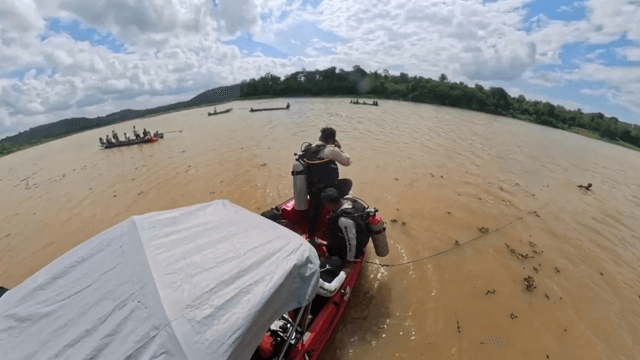
Thailand has been reeling under the onslaught of excessively heavy rains and flooding in several provinces in upper Thailand.
Tourist destinations such as Chiang Mai and Phuket are also affected, with consequences for the national economy.
The northern Chiang Rai province was hit hardest by flash floods and landslides due to the influence of super cyclone Yagi, which ravaged Vietnam and brought heavy rains to Myanmar and Thailand.
The Federation of Thai Industries estimated the economic cost to Chiang Rai and nearby provinces at between 25-27 billion baht from the first wave of flooding.
But soon after, flash floods occurred in Lampang and Chiang Mai provinces after tropical storm Soulik brought heavy rains to the northern areas.
Krungsri Research projects that the losses from flooding this year could be as high as 46.5 billion baht, or about 0.27 per cent of gross domestic product.
The magnitude of damage, however, would depend on the efficiency of the government in managing the disaster and how successful the private sector has been in protecting their factories in the industrial parks, such as by their capacity to drain water away or contain the damage.
Better preparations would ensure a lower impact than they had to bear during the Great Flood of 2011, the research house said.
It will also depend on how many storms develop in the Pacific Ocean and how many of them affect Thailand.
“About nine storms are expected to develop in the Pacific Ocean, but it is not certain yet how many of them will enter Thailand and influence weather in the country.”
“By historical standards, about 10 per cent will enter Thailand, but things can change this year,” says Seree Supratid, director at Rangsit University’s Climate Change Center.

Meanwhile, Adis Israngkura, an economist at the School of Development Economics of National Institute of Development Administration, says that it is hard to estimate the damage because severe flooding usually affects both cash flow and fixed assets of the victims.
“When people repair their homes or their business facilities, incomes would flow to suppliers and workers," he adds.
Spared by geographical location
Compared to Vietnam and the Philippines, Thailand is less vulnerable to the impacts of super typhoons.
For example, Hai-Phong, an industrial city in Vietnam, was directly hit hard by super typhoon Yagi, which made landfall in Quang Ninh province and Hai Phong City in Vietnam on September 7.
Citing Vietnamese authorities, the International Federation of Red Cross and Red Crescent Societies reported that nearly 190,000 homes were flooded, damaged or destroyed, at least 325 people were reported dead or missing, and an estimated 1.6 million people were affected overall.
The super typhoon was downgraded to a tropical storm when it reached the upper northeast and northern Thailand and Myanmar, bringing heavy rains.
“Compared to Hai Phong, Thailand’s Eastern Economic Corridor [EEC], the country’s industrial hub, is also less exposed to the typhoon due to its geographical location,” says Thon Thamrong-nawasawat, associate dean of Kasetsart University’s Faculty of Fisheries and a renowned marine ecologist .
Hai Phong is the biggest port city in northern Vietnam, the third largest city after Ho Chi Minh and Hanoi, and one of the most important industrial hubs of the country.
Thailand’s EEC area is less prone to flooding caused by rising sea levels as it is on a higher ground compared to Bangkok, which is just a meter above sea level.

Overall, Thailand’s geographical location has advantages when compared with the Philippines and Vietnam.
“Despite the country being naturally shielded from severe typhoons, Thailand has not been able to avoid heavy rains, including those brought by storms,” says Thon.
The Great Flood of 2011 exposed the vulnerability of the whole country, especially the central plains.
Following those floods, which brought the country to a standstill, multinational companies relocated their factories out of central provinces such as Ayutthaya.
Japanese investors changed their strategy from concentrating on Thailand to diversifying their investments by setting up production plants in other ASEAN countries as well.
Risks lie in the future
A better warning system would have reduced the losses, especially if officials could have evacuated people from risky areas before the storms, flash floods or landslides hit.
Looking into the future, people might need to find themselves new homes, away from disaster-prone locations, according to experts.
Seree and his research team have created the Urban Hazard Studio application that helps people with choosing where they want to buy their new homes in Greater Bangkok.
“Bangkok is only 1-1.5 metre above sea level, and faces the danger of being submerged by the rising sea. There are ominous forecasts of the sea level rising by a metre in the next 80 years due largely to rising global temperatures.”
“This estimate could double or even triple if ice glaciers in the North and South poles start to melt down,” Seree warns.
Severe flooding in Bangkok would be a disaster for the economy as the capital is the country’s financial nerve centre.
Former prime minister Thaksin Shinawatra had floated the idea of land reclamation and creating a dam to protect Bangkok from rising sea levels.
Many countries are trying out various strategies. Singapore has also been engaged in land reclamation while Indonesia has started to build a new capital, as Jakarta suffers from land subsidence at a fast rate while also facing the threat of rising sea levels.
“The challenge is how to fund such mega-projects, as they need large amounts of money,” says Thon.