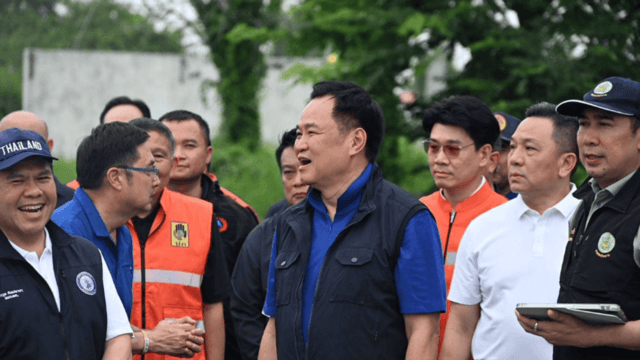



Newly appointed Prime Minister Paetongtarn Shinawatra, the daughter of former prime minister Thaksin Shinawatra, has not unveiled her economic policies yet but her father has done so, and it is realistic to expect the new government would work towards achieving Thaksin’s vision.
Thaksin spoke on a range of issues — from cash handouts to negative income tax — at a dinner talk hosted recently by Nation Group.
Short-term economic stimulus
Backing the economic stimulus proposal of the government, Thaksin said the 10,000 baht cash handouts should first be given to vulnerable groups numbering 13.5 million people and an estimated million people with disabilities, which would cost around 145 billion baht.
The scheme is a modified version of the controversial digital wallet scheme initiated by the Srettha Thavisin government.
The digital wallet scheme originally aimed to make digital deposits using blockchain technology that would also help people to learn new technology, but many people opposed the scheme, Thaksin said.
So, instead the government should give a one-time cash handout of 10,000 baht to vulnerable people in September, before the end of the current fiscal year. In the next phase, the government may implement the original digital wallet scheme giving digital money to another 30 million people in the next fiscal year (starting October), once the technology is ready. “Economic stimulus is necessary,” said Thaksin.
He suggested that the country’s fiscal and monetary policies should go hand in hand in order to lift the country out of its sluggish growth, while the Bank of Thailand (BOT) could still maintain its independence. His statement implied that the new government may put more pressure on the central bank for rate cuts, as Thaksin appears to be wanting to jumpstart the economy.
The Srettha government tried to get the BOT on board in its push for lower interest rates, but failed. The BOT governor had also opposed the original digital wallet scheme citing its huge cost, then estimated at around 500 billion baht. Many critics also said the digital wallet scheme would violate the fiscal discipline law, as the government would have to borrow more for boosting unnecessary short-term consumption.
The BOT’s Monetary Policy Committee kept the policy rate unchanged at 2.5 per cent at their latest meeting this month, arguing that the economy was on the path of gradual recovery and the rate was in line with overall economic conditions.
Tacking high household debt
Thaksin suggested that the new government urgently address the mounting household debt that has risen to 91 per cent of gross domestic product.
The Finance Ministry may consult with banks and asset management companies (AMCs) about debt buyouts. Thaksin’s idea is for AMCs to buy banks’ non-performing loans at discounted prices and then new creditors could provide some debt relief for those debtors.
For example, if banks set aside reserves against risk assets at 50 per cent of total loan value, AMCs could buy at 60 per cent, so banks would still have profits, according to Thaksin.
Idea of negative income tax
As part of efforts to increase government revenue and widen the taxpayer base, Thaksin suggested that the government introduce a negative income tax that would allow money transfers to low-income groups.
The idea was originally proposed by Milton Friedman, a Nobel Prize winner for Economics, in 1962. Those who support the negative income tax idea believe that it would increase the number of citizens filing tax returns.
Currently out of a population of 67 million, only around 11 million people file their annual tax returns and only around 4 million actually pay personal income tax.
“It is a good idea and the government can separately increase the value-added tax rate,” said Somchai Jitsuchon, a research director of inclusive development at the Thailand Development Research Institute (TDRI).
The government may use the poverty line as income threshold, which means those whose income falls below the poverty line would automatically receive cash transfers from the government, said Anusorn Tamajai, director of digital economy, investment and international trade research center at the University of the Thai Chamber of Commerce.
Those whose income is higher than the income threshold have to pay personal income tax.
Cheaper mass transit ticket
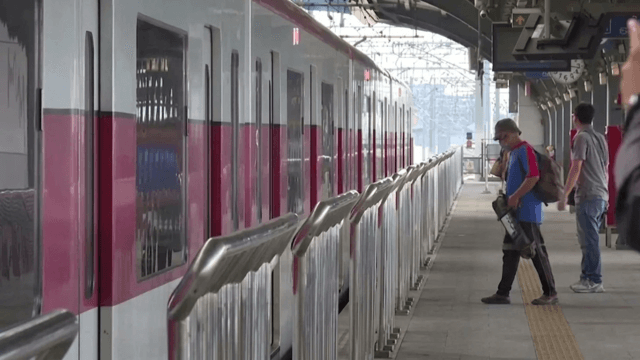
Thaksin wants the new government to implement the 20-baht ticket to travel by Bangkok’s transit trains as promised by the Srettha government. He said the government could expropriate transit lines from private operators, and hire them to provide train services.
In response to his idea, Sumet Ongkittikul, research director of transportation and logistics policy at TDRI, argued that it would be a difficult task to negotiate with private operators and to find funding for paying compensation to investors.
Legalise casinos
To legalize some of the country’s underground economy, Thaksin supports the idea of allowing the casino business. The investment in an entertainment complex would comprise many businesses including casino, sports facilities and a large concert hall with investments of even 100 billion baht.
Thaksin said that when he had previously proposed legalizing casinos, many people opposed it but now many are supporting it.
Those supporting legalization of casinos widely believe that illegal casinos lead to corruption among police and money outflows as Thais travel overseas for the experience.
Promote soft power
To strengthen Thai soft power, Thaksin proposed upgrading Thai kickboxing, known as Muay Thai. Boxing referees should be upgraded to world-class standards, comparable with those of FIFA, the international football association.
Fashion and Thai food, such as the Thai Kitchen of the World project, should be promoted.
He said his government in the past used to ask the Small and Medium Enterprise Development Bank of Thailand to give loans to Thais to set up businesses, such as restaurants, abroad. E-sports should be promoted, according to Thaksin.
Among his other proposals, Thaksin supports electric car manufacturers, and wants the government to ask Chinese manufacturers to make Thailand a hub for the manufacture of right-hand-drive cars.
Protectionism to save SMEs
Thaksin supports protectionist measures in order to save local industries. Currently, small and medium-sized enterprises are bogged down by intense competition from imported cheap Chinese products.
Thaksin is proposing a step-by-step way of imposing protectionist measures to create a level playing field. The local industries, however, also needed to restructure their production and try to find their uniqueness, he said.
Land bridge and sea reclamation
Regarding the ambitious land-bridge project in the South, Thaksin said some Thai investors were interested in investing but on a smaller scale than originally envisaged by the Srettha government.
Thaksin also has an idea of sea reclamation at Bang Khun Thian district in Bangkok and Paknam in Samut Prakan province. These projects would create new tracts of land and act as barriers to prevent flooding from rising sea levels, he said.
Many view Thaksin as the de facto prime minister due to his political influence in the ruling PheuThai Party which heads the coalition government. Therefore his vision is likely to guide the government under his daughter’s leadership.