


Hundreds of thousands of Thai public servants – including doctors, nurses, teachers, social workers and government staff – could soon have to work an extra five years before becoming eligible for a pension.
The government is considering extending the retirement age for civil servants from 60 to 65 to address workforce shortages driven by Thailand’s declining birth rate. Currently, about 1.7 million Thais are in the civil service and many are approaching 60.
Unsurprisingly, the proposal has drawn mixed reactions.
Proponents argue that tapping into the expertise of older civil servants will benefit the country and reduce the public budget.
Critics, however, warn the move could strain government finances while depriving the younger generation of job opportunities.
Study underway
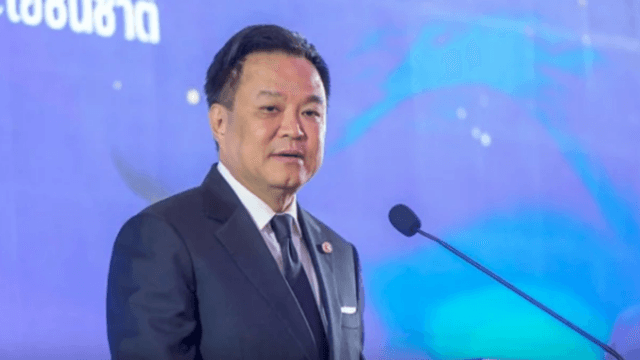
The Civil Service Commission, in collaboration with the Comptroller-General and the National Economic and Social Development Council, is currently studying the proposal, Deputy Prime Minister Borwornsak Uwanno revealed recently.
“The prime minister hopes to settle the issue during the tenure of this government," he said.
This means the study will have to be completed in the next month or two, since Prime Minister Anutin Charnvirakul has vowed to dissolve the House of Representatives by January 31.
The extension would affect hundreds of thousands of civil servants, but exclude the police force. Some government agencies already allow officials to continue working beyond 60 if they meet certain conditions.
For example, judges and public prosecutors can work until the age of 70, while university lecturers can continue until they reach 65.
Borwornsak argued the move would help ease the burden on public coffers.
“Raising the retirement age would allow the government to reduce its pension spending,” he said.
Retired civil servants are entitled to a monthly pension or a one-time lump sum payment. The monthly pension can be as high as 70% of the salary for long-serving employees.
Historically, when life expectancy in Thailand was about 70 years, the average pension payment period was roughly 10 years.
However, that period has now risen to around 20 years, as Thais live longer thanks to advances in medical technology and healthcare.
Careful review recommended
The Thailand Research Development Institute (TDRI) urges careful study of the proposal, warning that raising civil servants’ retirement age would have several possible downsides, apart from benefits. It cautions that the move could upset the workforce balance.
“Thais are employed across four main sectors – agriculture, the civil service, the registered private sector, and the informal private sector,” explained Nonarit Bisonyabut, a TDRI senior fellow.
Employers in the private sector offer early retirement programmes, encouraging a higher workforce turnover and more job opportunities.In contrast, people in the agricultural and informal sectors work far more years, usually until their bodies fail them.
Nonarit said these imbalances must be addressed, including in the civil service, but warned that raising the retirement age would not be an effective answer.
He points out that most civil servants would be reluctant to work beyond 60, since they would already be entitled to a stable retirement income.
For example, state school teachers and directors who reach 60 may be eligible for monthly retirement payments of 45,000 to 50,000 baht.
With a guaranteed and comfortable pension, they are unlikely to want to continue working, preferring instead to focus on other aspects of their lives – a choice reflected recently by a former judge who decided to retire at 62, citing fatigue, even though officials in his profession are allowed to work till 65.
“If the retirement age is extended, the labour market could end up being dominated by older workers with fewer opportunities for the new generation,” Noranit argued.
Thailand’s demographic upheaval
In 2023, Thailand officially became an ageing society, with more than 20% of its population aged 60 and above.
Longer lifespans and a record low birthrate mean the country is expected to become a super-aged society within the next decade, with one in three Thais over 60.
The resulting decline in the working-age population has triggered alarm bells over social and welfare support.
Retirement age in other countries
Sweden and the Netherlands have set the state pension age at 67.
The United Kingdom, meanwhile, plans to raise the retirement age from 66 to 68 by 2046.
Slovakia recently raised its state retirement age to 69, while Italy and Estonia are considering lifting the work ceiling to 71.
Finland, meanwhile, has linked its retirement age to changing life expectancy among the population to ensure it suits the demographic situation.
“But Thailand doesn’t have to follow this upward trend,” of developed nations, said Prof Pungpond Rukumnuaykit, an economist at Chulalongkorn University.
She added that so far, no developing country – Thailand included – has raised the retirement age for its civil servants.
Foreseeable negative impacts
Pungpond, an expert in demography, said demand for jobs in the Thai civil service has always been high, meaning it has never suffered a labour shortage that would justify raising the retirement age.
“Stop claiming we need to extend the retirement age to maintain adequate manpower in the field,” she said.
Pungpond added that the extension would not ease the national budget burden either, since the longer civil servants stay in their posts, the higher their pay.
She also questioned whether the move would improve efficiency, noting that productivity generally declines after the age of 50. “If civil servants work till 65 or 70, will our country still be competitive internationally?” she asked.
It’s inevitable!
Kevalin Wangpichayasuk, deputy managing director of KResearch, agrees that raising civil servants’ retirement age could have undesirable impacts, but says the change is inevitable.
“We need to prepare for it.
The limit should be raised gradually and only after prolonged planning,” she emphasised.
She insisted the move would be beneficial if accompanied by efforts on other fronts.
“Invest in human capital.
Produce graduates aligned with the needs of the future labour market, promote preventive healthcare to curb the country’s health spending, and improve government efficiency,” she said.
According to the World Bank, Thai government efficiency has seen little improvement over three decades since 1996, remaining around the 60th percentile among ranked countries – meaning more than 40% of governments perform better.