


The planned meeting between Malaysian Prime Minister Anwar Ibrahim and Myanmar junta chief Min Aung Hlaing in Bangkok on April 17 could generate headlines but deliver little in terms of concrete progress towards ending Myanmar’s protracted conflict, many observers believe.
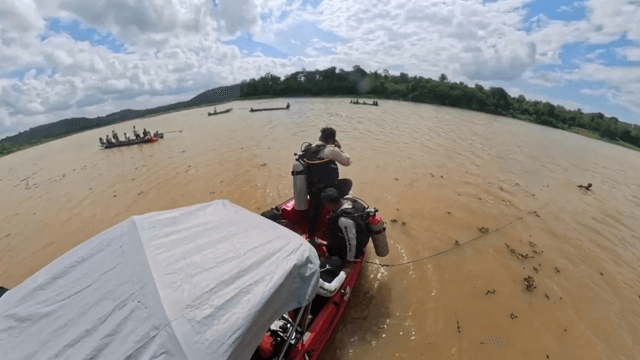
According to Malaysian media, Anwar would mainly discuss humanitarian matters with Min Aung Hliang, notably regarding the safety of the Malaysian rescue team dispatched to help Myanmar after the country was rocked by a strong earthquake on March 28.
The Malaysian premier, who currently holds the rotating chairmanship of ASEAN, said he would ask the junta chief to extend the unilateral truce after it expires on April 22.
Min Aung Hlaing announced a temporary ceasefire in his war-torn country from April 2 to April 22 to enable the delivery of humanitarian assistance to people affected by the magnitude 7.7 quake that has so far claimed more than 3,600 lives and injured 4,800 others as well as devastated major cities such as Mandalay and the country’s capital, Naypyidaw.
The truce likely did not take effect. The United Nations Human Rights Council reported that the Myanmar military, which is also known as Tatmadaw, has continued airstrikes since the earthquake.
Since the March 28 natural disaster, military forces have reportedly carried out over 120 attacks, UN rights council spokesperson Ravini Shamdasani said. More than half of them occurred after a ceasefire was due to have gone into effect on April 2, she added.
Most of the attacks involved aerial and artillery strikes, including in areas impacted by the quake. “Numerous strikes have been reported in populated areas, with many appearing to amount to indiscriminate attacks and to breach the principle of proportionality in international humanitarian law,” Shamdasani said.
Why in Thailand?
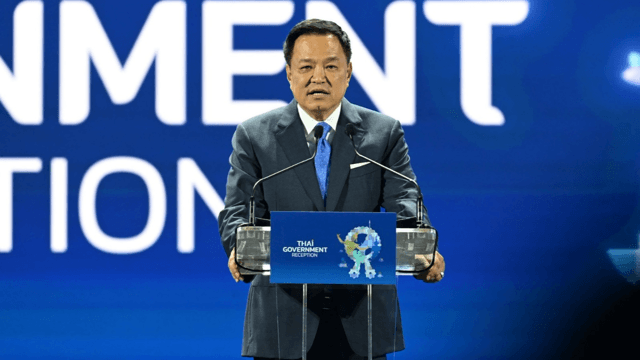
Anwar said his talks with Min Aung Hlaing would take place on the sidelines of meetings with Thai leaders to discuss the flood situation in southern Thailand, bordering Malaysia.
Opposition Member of Parliament Kannavee Suebsang, in a Facebook post on April 14, questioned why the Malaysian prime minister needed to meet with the Myanmar coup leader in Thailand, rather than in his own country or in Myanmar.
The Malaysian leader’s visit to Thailand has already been scheduled, so he should just complete his mission in Thailand, he said.
“If he wants to talk to Min Aung Hlaing, why not invite him to Malaysia officially after finishing his duties in Thailand? Is it because he [Anwar] fears Malaysian public opposition to an official visit by Myanmar’s military dictator? Would it affect his domestic approval rating?” Kannavee posed.
If the Malaysian prime minister is so eager to talk, he should fly to Naypyidaw and meet Min Aung Hlaing in Myanmar directly, he suggested.
Thaksin’s involvement
Tatmadaw chief Min Aung Hlaing has been barred from attending key ASEAN meetings since he staged a coup to topple the elected civilian government of Aung San Suu Kyi in February 2021.
The junta leader managed to visit China and Russia, key Myanmar allies, and has attended many non-ASEAN meetings. He joined the summit meeting of the Bay of Bengal Initiative for Multi-Sectoral Technical and Economic Cooperation in Bangkok on April 4-5.
On the sidelines of the summit, Min Aung Hlaing had the chance for a quiet meeting with former Thai prime minister Thaksin Shinawatra, who is also an advisor to ASEAN chair Anwar.
Thaksin reportedly urged Myanmar’s junta chief to hold peace talks with the resistance forces, emphasizing the need to end the violence in Myanmar through dialogue.
The ex-PM said he had communicated with global powers about Thailand’s hopes for a peaceful resolution, and had offered Thailand’s services to act as a mediator between the junta and Myanmar’s opposition.
This meeting was significant because it paved the way for Anwar’s planned talks, effectively serving as an ice-breaker. Thaksin later revealed that Min Aung Hlaing was receptive to his suggestions.
“He heeded my advice,” Thaksin said, though the Myanmar general indicated that multiple discussions would be needed before formal peace negotiations could commence.
Kannavee said Anwar could bring along his special advisor, Thaksin, and have him request court permission to travel abroad for the sake of building peace in Myanmar.
No roadmap for Myanmar peace
While Thaksin has made efforts to bring about peace in Myanmar, the Thai government led by his daughter Paetongtarn Shinawatra appears to have no clear plan to deal with the crisis and civil war in the neighboring country.
Thaksin’s half-baked peace plan has tasted failure in the past when ethnic armed organizations and even the Myanmar junta turned down his offer to mediate peace during the Songkran festival last year.
In October last year, Paetongtarn’s administration set up a low-key task force led by Foreign Minister Maris Sangiampongsa to deal with the Myanmar crisis.
A task force meeting at the end of January came up with a sketchy plan for border security management mainly focusing on public health service for refugees, but left the hot issue of the city in the hands of the National Security Council.
The Thai government had hosted a series of meetings with Myanmar, its immediate neighboring countries, and some members of the ASEAN on December 19-20 last year in Bangkok to exchange views on the situation and explore ways to implement the ASEAN Five-Point Consensus. The initiative has so far made no headway in achieving peace in Myanmar.
In his capacity as the foreign minister, Maris led a delegation that included Supreme Commander Songwit Noonpackdee to Naypyidaw on February 21-22, to discuss bilateral matters.
The Thai delegation sought cooperation from the junta in tackling cross-border crimes and environmental issues such as haze and floods. The minister also made a courtesy call on Min Aung Hlaing but details of their conversation were not revealed.
On April 5, Maris visited Myanmar with his Malaysian counterpart, Mohamad Hasan, to assess the need for humanitarian assistance after the earthquake.
While the government has said it wants to play a crucial role in making peace in strife-torn Myanmar, MP Kannavee criticised the lack of a concrete plan or a roadmap towards such a goal, and accused it of just paying lip service.
What the government has done so far has produced nothing but confusion, he said.
“If you [the government] aspire to be a peace broker, you must first have plenty of knowledge, intelligence, and experience,” he said. He suggested that the Thai government and the ASEAN chairperson bring all stakeholders to the table for substantive peace talks.