


Thailand is facing the diplomatic fallout of the Pheu Thai-led government’s decision to forcibly deport 40 Uyghurs to China. The country and officials deemed responsible for the repatriation have been slapped with sanctions by the United States, while the European Union is bristling, too.
US Secretary of State Marco Rubio announced on March 14 visa restrictions on current and former officials from the Thai government responsible for, or complicit in, the forced return of the Uyghurs from Thailand.
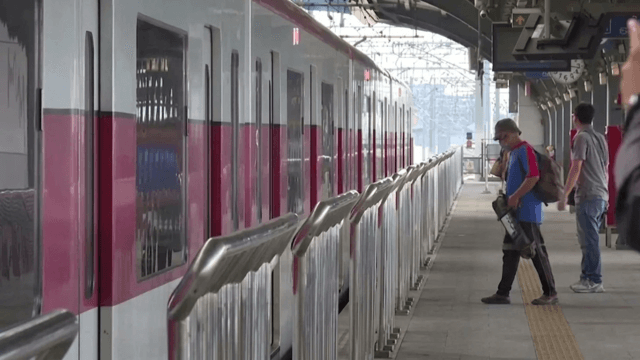
While the Thai authorities maintain that the detainees were sent back to China of their own volition, the suspicious manner in which the whole operation took place, in the early hours on February 27, transporting them from a holding facility in Soi Suan Phlu in Bangkok to Don Mueang Airport in trucks fully covered by dark material, makes the claims questionable.
Government officials responsible for the deportation of the 40 Uyghurs included Prime Minister Paetongtarn Shinawatra, Deputy Prime Minister Phumtham Wechayachai, Foreign Minister Maris Sangiampongsa, Justice Minister Tawee Sodsong and National Security Council (NSC) secretary-general Chatchai Bangchuad.
Rubio had consistently sent messages to Thailand expressing his concern over the forced repatriation of the Uyghur. He first raised the concerns during the US Senate confirmation hearing on his nomination as secretary of state in January.
Soon after the deportation in February, the secretary of state promptly issued a statement condemning the decision.
The action not only risks violating the UN conventions against torture and forced disappearance, but also runs counter to the Thai people’s longstanding tradition of protection for the most vulnerable and is inconsistent with Thailand’s commitment to protect human rights, he said.
Thailand and the US are long-time treaty allies with close cooperation in security and military affairs. Washington has always expressed concern, disappointment, and condemnation whenever the Thai partner suppresses democracy and violates human rights principles.
Visa restrictions targeting Thai leaders is a stringent action. Even General Prayut Chan-o-cha, who staged a military coup in 2014, faced diplomatic distancing but not formal visa restrictions.
The US is Thailand's largest export market, accounting for approximately 18% of the country's total export value. In 2024, Thailand's exports to the US were worth US$54.9 billion and imports from its fourth-largest source — valued at $19.5 billion — accounted for around 6% of total imports.
Thailand's trade surplus of $35.427, the 12th highest for the US, has come to the attention of the Donald Trump administration.
Pressure on free-trade talks
Prior to the US order on visa restrictions, the European Parliament on March 13 condemned the deportation of Uyghur refugees to China and urged Thailand to halt any further forced returns to countries where peoples’ lives are at risk.
Members of the European Parliament called on the European Commission to leverage free-trade agreement negotiations to press Thailand to reform the country’s lese-majeste law, release political prisoners, halt the deportation of Uyghur refugees, and to ratify all core International Labour Organisation conventions.
Thailand is in the process of negotiations to conclude the long delayed free-trade agreement with the EU. The two sides resumed talks in 2023 after the exit of the military-backed Prayut administration.
Former diplomat Pisan Manawapat told local media that the Uyghur issue could put pressure on the negotiations, as the EU has tied it with human rights and democratization in Thailand.
The fourth round of the trade talks held in Bangkok last November made some progress in various chapters of the pact.
Both parties are committed to concluding the FTA this year, with the next round of negotiations scheduled for March 31 to April 4 in Brussels.
Commerce Minister Pichai Naripthaphan said after a meeting with Maroš Šefčovič, the European Commissioner for Trade, Economic Security, Interinstitutional Relations and Foresight, on March 14 that the Uyghur issue would not affect the trade negotiations.
The EU is Thailand's fourth-largest trading partner after China, the US, and Japan, with a total trade value of $43.5 billion, accounting for 7.17% of Thailand's total global trade. Thailand's exports to the EU amounted to $24.2 billion.
Damage to diplomatic reputation
Opposition leader Natthaphong Ruengpanyawut of the People’s Party said the Uyghur issue had severely affected Thailand’s foreign policy and diplomatic reputation.
The government should approach foreign policy with careful consideration. It should not be a flexible, wavering policy like a "bamboo" diplomacy, but one firmly grounded in universal human rights principles, he said.
The government should thoroughly examine and assess every decision before taking any action, especially within the context of global geopolitics where two major powers are in competition, he added.
“Any action based on correct and principled grounds will shield Thailand from criticism or punishment by any side,” Natthaphong said.
Opposition MP Kannavee Suebsang said the Uyghur issue was an international political matter that could significantly impact broader politics if Thailand lacked a diplomatic stance aligned with international standards.
“In fact, we don't have to openly take sides with any particular country. We have a choice—to adhere firmly to the principles of human rights and humanitarianism. This will serve as our own shield of protection,” Kannavee said in his Facebook post.
China’s safety assurance
In response to the US sanctions, the Thai Foreign Ministry issued a statement on March 15 that said the Thai government’s decision was made after assurances from Beijing about their safety and they would continue to follow up on the well-being of the Uyghurs.
“Thailand has always upheld a long tradition of humanitarianism, particularly in providing assistance to displaced persons from various countries for more than half a century and will continue to do so,” the ministry statement said.
Vice Foreign Minister Russ Charnsongkram defended the government’s decision in his Facebook post, saying it had done the right thing for the sake of humanitarianism.
“Compared to what the US has done with Canada, its closest and best friend in the world, I don't think it's too surprising. I would also like to affirm that, from a humanitarian perspective, the Thai government's decision in this matter was the right one,” he said.
Visiting the Uyghurs in China
Deputy Prime Minister Phumtham would lead a 25-member delegation, including Justice Minister Tawee, NSC chief Chatchai, and selected media representatives to Xinjiang in China from March 18-20 to check the well-being of the Uyghur returnees, government spokesman Jirayu Houngsub said.
This visit aims to clarify concerns raised by the international community and to convey Thailand's straightforward and transparent efforts in addressing the issue, he said.
The mission was also a part of agreements between the Thai and Chinese governments to restore better living conditions and ensure rights and freedoms in the modern global era, he said.
“The Thai government has placed significant importance on this matter, conducting a detailed review process over several months before repatriating the Chinese Uyghurs to their homeland,” Jirayu told a press briefing.
“This was to ensure that the repatriation process guarantees safety and adheres to human rights principles.”