


Calls are growing for better protection of elephants at sanctuaries and tourist attractions across Thailand after two of the animals perished in Chiang Mai’s raging floodwaters this month.
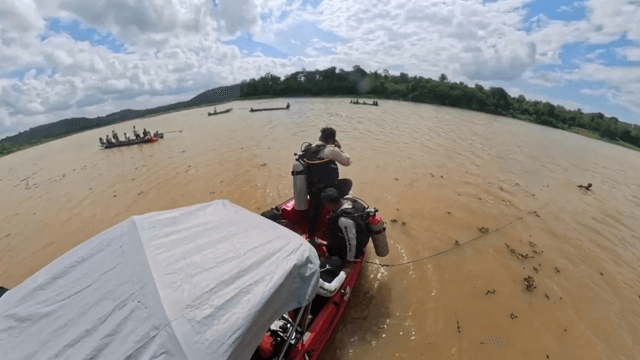
On October 5, two elephants were found dead in the Mae Taeng River in the northern province’s Mae Taeng district. Both were from the Elephant Nature Park, which lies about six kilometres from where their bodies were discovered. Park staff identified the drowned creatures as 16-year-old Fah Sai and 40-year-old Ploy Thong. The latter was blind.
The incident has added to longstanding concerns of animal welfare groups about the conditions in which many captive elephants in Thailand are kept.
“We need to prevent the recurrence of such tragedies in the future,” said Theerapat Trungprakan, president of the Thai Elephant Alliance.
He added that several organisations were now demanding that Thailand learn lessons from the drownings and set new standards to improve protection of elephants.
Current standards
Despite being a hub of elephant-based tourism in Asia, Thailand has no official agency responsible for overseeing the welfare of these giant mammals. The lack of oversight is especially surprising given that the elephant is the national symbol.
“The country only has the Livestock Development Department’s [LDD] Division of Animal Welfare and Veterinary Service, whose jurisdiction covers all kinds of animals,” Theerapat said.
Worse still, he added, government agencies handling animal welfare issues will only take action when someone files a complaint. And operators of elephant attractions are unlikely to complain to authorities, as doing so could expose them to investigation.
“The owner of the drowned elephants definitely won’t lodge a complaint,” Theerapat said.
The LDD imposed a new set of standards for elephant camps on August 19, including the need for a permit to keep pachyderms.
Permits are only granted to elephant operations that meet standards for the raising and care of elephants, ban torture, and minimise environmental impacts.
“We have reviewed elephant camps’ location, size, plans, etc. We even require camp operators to have a manual on how to take care of elephants that are pregnant, in labour, or disabled,” LDD director-general Somchuan Ratanamungklanon explained.
He added that to comply with the new standards, elephant camps must also deploy veterinarians, mahouts, and health checks for the giant creatures.
Somchuan emphasised that his agency’s goal is to ensure that all elephants in Thailand are free from hunger, discomfort, pain, illness, fear, and abuse, and able to exhibit natural elephant behaviour.
“Our standards are on top of provisions in the Act banning animal torture, which took effect in 2014,” he said.
As of last month, 164 out of 179 elephant camps in Thailand had obtained a permit. The rest are being assessed by authorities.
What happened at Elephant Nature Park?
Saengduean Chailert, president of the Elephant Nature Park, said her staff started relocating elephants to higher ground early this month after receiving a flood warning.
“Our elephants were relocated but were still not safe because the floodwater rose to submerge the entire village,” she said.
The drama began on October 4, when Saengduan called for help after realising that elephants at her sanctuary were at risk from high floodwaters. When outsiders arrived, they reported that about 10 elephants were trapped inside a heavily flooded, fenced enclosure.
It was impossible to unlock the gate to release the elephants because the lock was submerged deep in the muddy floodwater. None of the animals was chained, making it even harder to guide them to safety.
Saengduan said the torrential floodwater quickly rose to over 3 metres, sweeping away some of the giant creatures before her eyes.
The Elephant Nature Park’s refusal to use chains to control its residents is regarded as an ethical best practice, since elephants naturally prefer being unfettered. However, many blamed this decision for causing the deaths of the two female elephants.
“We don’t chain our elephants because we want them to live happily and roam freely at our sanctuary,” Saengduan said.
The park’s founder said its elephants will freely approach their mahouts or carers as soon as they hear their names being called.
“But on that dreadful day, the current of the flood was so strong. We just rushed to move as many elephants as possible to safety with no chance of communication,” she said.
When asked whether she would consider chaining her elephants in future, Saengduan firmly replied, “No”.
Most of the Elephant Nature Park’s residents were rescued from other camps and attractions where they suffered torture, she said. The sanctuary had banned the chaining of animals to allow their physical and emotional wounds to heal.
Elephants used for tourism
Kanchana Silpa-archa, adviser to the minister of social development and human security, said it was high time that Thailand systematically improved how elephants are used in tourism.
“Elephant camps should treat the animals ethically,” she said.
According to conservation group World Animal Protection Thailand (WAPT), the number of elephants used for tourism activities rose by 70% between 2010 and 2020.
“The quantity soared from 1,110, to 1,688 during that period,” WAPT’s chief campaigner Orakorn Thanachonlakorn said earlier this year.
She said 63% of elephants at the attractions lived in poor conditions, lacked freedom, suffered from a stressful environment, and did not receive adequate food.
“That’s why we often see news reports about elephants attacking tourists or falling ill,” she emphasised.
Edwin Wiek, founder of the Wildlife Friends Foundation Thailand, was quoted by Thai PBS as saying that some camps buy disabled or gravely ill elephants in the hope of spurring public sympathy and receiving financial support.
“In the past few years, the price of a disabled elephant has jumped from 400,000 baht to 1 million baht,” he said.
While Wiek understands that donations are needed to support the operation of elephant sanctuaries, he expressed dismay that some operators exploit disabled elephants to woo donors.
In Chiang Mai alone, more than 85 elephant camps attract a constant flow of tourists. Together, they are home to 838 registered elephants.