


A recent mine explosion along the Thai–Cambodian border not only cost a Thai soldier his leg, but has raised serious doubts about Thailand’s diplomatic ability to manage the peace process and safeguard its economic interests, while questioning ASEAN’s credibility as a mediator.
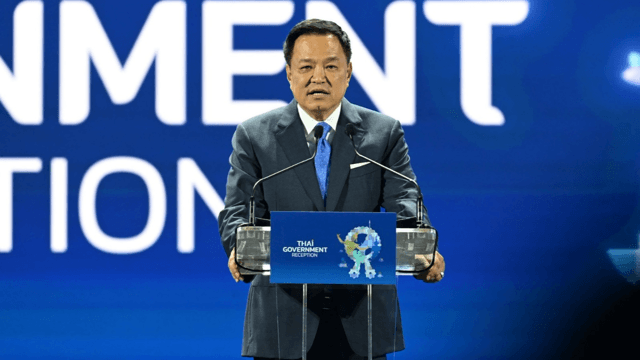
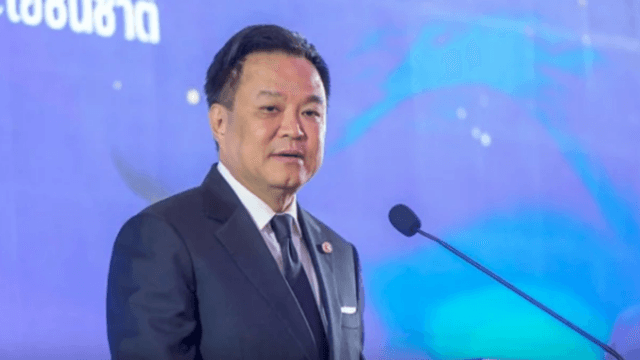
After the seventh casualty suffered by the Thai army in an anti-personnel mine explosion at Huay Ta Ma Ria in Si Sa Ket province on November 10, Prime Minister Anutin Charnvirakul immediately suspended the peace deal reached with Cambodia in late July to de-escalate the border conflict.
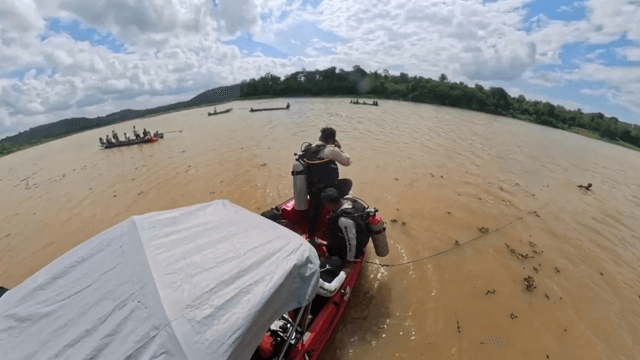
Field inspection by Thai authorities identified a blast crater 55 centimeters in diameter and 18 centimeters deep, containing fragments of a PMN-2 anti-personnel mine both inside the crater and in the surrounding area. They also found three additional PMN-2 anti-personnel mines, each roughly a meter from the crater.
Based on only a few pieces of evidence, the Thai military drew the sweeping conclusion that “the anti-personnel mines were planted after secretly removing barbed wire and entering Thai territory, targeting troops who regularly patrol the area.
Such actions demonstrate Cambodia’s insincerity in reducing tensions and reflect ongoing hostility between the two sides”.
Anutin acts tough
In a series of phone conversations with ASEAN chair and Malaysian Prime Minister Anwar Ibrahim and US President Donald Trump, Anutin vowed to suspend all actions under the provisions of the Joint Declaration until Cambodia acknowledges its non-compliance and its violation of those conditions, and issues a statement apologizing to the Thai people for the incident.
Anutin had signed the Joint Declaration with Cambodian counterpart Hun Manet in Kuala Lumpur on October 26, on the sidelines of the ASEAN Summit.
They pledged to honor the ceasefire agreement reached after the border flare-up in late July. At the time the border conflict erupted, the government of Paetongtarn Shinawatra was in power.
The five-day skirmish in July claimed the lives of more than 30 Thai soldiers and civilians, injured more than 300 people, and displaced more than 188,000 people in Thailand.
While Thailand blamed Cambodia for the recent mine blast, Prime Minister Hun Manet in a Facebook post condemned “the use of violence by the Thai side on innocent Cambodian civilians in Prey Chan village on the evening of November 12, which injured three innocent Cambodian civilians and killed one person”.
Unlike his Thai counterpart, Hun Manet called for an independent investigation into the incident and appealed for the participation of qualified international parties to uncover the truth and hold those responsible accountable, delivering justice to the victims.
Hun Manet also spoke on the phone with Anwar and Trump on the escalation of border tensions, reaffirming Cambodia’s commitment to resolving the border issue peacefully, in accordance with the spirit of the Joint Declaration.
Confusion over US trade talks
Washington reacted strongly to Anutin’s suspension of the peace deal. The US Trade Representative notified the Thai government that it wanted to suspend the trade negotiations on reciprocal tariffs until Bangkok returned to the ceasefire agreement.
There was confusion about the message from the US. The Thai Foreign Ministry, in an urgent press conference on November 15, expressed disappointment, arguing that security issues with Cambodia were a bilateral matter that must be considered separate from Thai-US trade, which was in their mutual interest.
Anutin later clarified in his Facebook post that the US had separated its trade negotiations with Thailand from the peace deal between Thailand and Cambodia.
Anutin said Anwar had called him again on the night of November 15 to confirm that Trump shared the same position as Thailand.
“Humanitarian demining is a critically important element of the Joint Declaration signed by Thailand and Cambodia,” Anutin said.
“He [Trump] has, therefore, urged the Thai government to expedite demining operations as quickly as possible, as landmines pose an extreme danger to people in both countries.”
“President Trump also asked Prime Minister Anwar to convey to me once again that the United States will not link Thailand’s suspension of the declaration to the ongoing trade tariff negotiations between Thailand and the United States,” Anutin posted on Facebook.
“The letter from the US Trade Representative announcing the suspension of negotiations with Thailand was issued before I spoke with President Trump on Friday evening, 14 November. Therefore, the information I have is more up to date,” he said.
Former vice foreign minister Russ Jalichandra blamed Anutin’s previous misstatement, which suggested Thailand never cared about Trump’s role in the peace deal.
These remarks, aimed solely at pleasing certain segments of public opinion without regard for their impact on the country as a whole, show Anutin’s lack of understanding of foreign policy context—a misunderstanding that has caused harm to the nation, he said.
Opposition MP Sirikanya Tansukun said the government should handle the peace and trade deals with care since the US was likely to link the two issues for leverage in the negotiations.
“I don’t even want to imagine the damage that could follow if Trump were to announce a new, higher tariff rate. Should we care? If we did not care, we would not have signed this declaration in the first place with Trump as a witness,” she said in her Facebook post.
“No one wanted the harm that befell the Thai soldiers, but this game can be played in many ways that allows us to hold the stronger hand,” she said. The prime minister should prioritize the national interest over protecting his own popularity riding the wave of nationalism, she suggested.
A media error?
Malaysian state-run Bernama news agency rushed to correct its report and expressed deep regret for the misinterpretation of Foreign Minister Mohamad Hasan’s statement on the anti-personnel mine laid on the Thai-Cambodian border.
Speaking to reporters in Bahasa Melayu, the minister said the ASEAN Observer Team (AOT) had reported to him that the anti-personnel mines were new, but the English version of the report said they were “not” new.
Such a news report ignited anger initially in Thailand for appearing to back Cambodia’s narrative, but the revision disappointed Cambodia for siding with the Thai story.
After the correction, Thai Army spokesman Winthai Suvaree claimed that based on a review of the AOT report, “it was stated that the anti-personnel mine was newly laid, which confirms that the earlier mistake [in the English version] was indeed the result of inaccurate news reporting”.
The Cambodian media outlet, Phnom Penh Post, demanded a clarification from the Malaysian foreign minister and Bernama, questioning “whether the minister misspoke or was misquoted, or whether other forces were at play behind the edit”.
However, Thai right-wing nationalists interpreted the roles of the US and Malaysia as interference in the conflict and biased in favor of Cambodia.
A group known as the People’s Movement for the Defense of National Sovereignty launched a campaign to show its patriotic force, urging symbolic participation by the public by displaying the Thai national flag on their vehicles and homes.
They called for a gathering on November 22 outside the embassies of Malaysia and the US in Bangkok to collectively demonstrate their determination to defend Thai sovereignty against what they claim to be US and Malaysian interference in the conflict between Thailand and Cambodia.