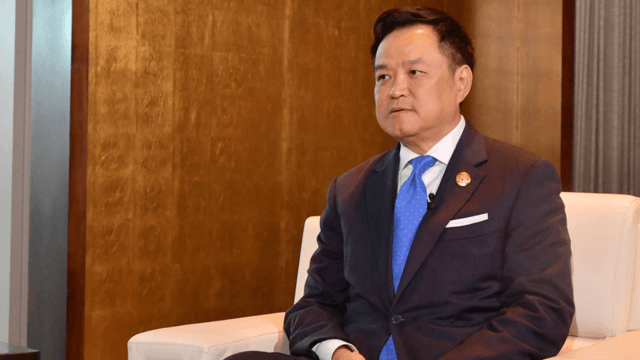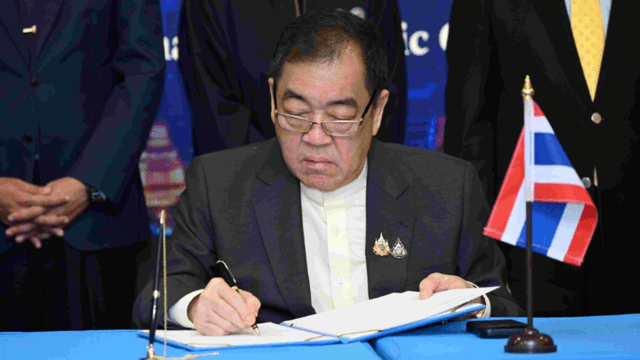


Six urgent measures to tackle toxic contamination of trans-boundary rivers have been proposed by the Northern Disaster Prevention and Mitigation Committee, according to Minister of Higher Education, Science, Research and Innovations Yodchanan Wongsawat.
The first measure advocates scientific identification of the sources of toxic contamination, using isotope analysis to examine the characteristics or fingerprint of arsenic.
Yodchanan said the government is coordinating with a Chinese scientific institute and Mae Fah Luang University to establish an advanced testing lab using the same standards as those used in China.
The second measure calls for the use of the “Sai Sai” sediment-trapping system, developed by the ministry. The system uses a four-step process to separate the sediments and toxins from the water.
The third measure is to provide clean water to affected residents, particularly those in the Mai Sai district in Chiang Rai, because the Sai River is a source of raw water for tap water production and can no longer be used due to contamination. Fang and Mae Ai districts of Chiang Mai are also affected.
The fourth measure calls for the securing of emergency water reserves. The Royal Irrigation Department has prepared water from three reservoirs while water distribution by trucks is also being arranged.
The fifth measure calls for the tightening of controls on mineral imports and exports through Thailand from Myanmar. This is intended to close legal loopholes and prevent Thailand from being used as channel for the unregulated mining activities in Myanmar.
The sixth measures concern the development of an agri-mapping system. Areas will be categorised into red, yellow and green in accordance with the levels of toxicity and these will be indicated on the agri-map and plants grown in these areas will be classified accordingly.
Tomorrow, Yodchanan will lead a brain-storming forum to hear views and recommendations from stakeholders and experts on the ministry’s plan to capture sediments and toxins in the border rivers.
He will also meet with the Chinese ambassador and chief of the joint working group on Myanmar next Tuesday, to discuss river pollution, and will head the Thai side of the working group’s discussions with Myanmar next Wednesday and Thursday.