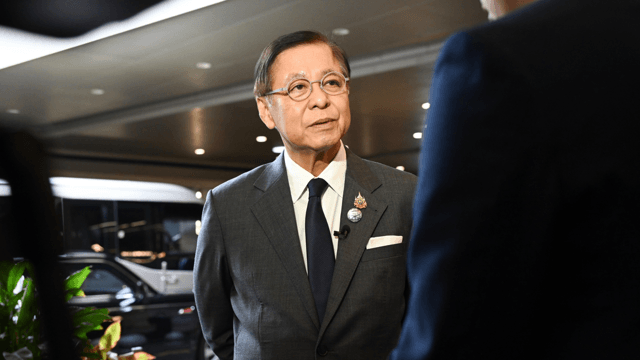



Thailand's push to add the fight against online scammers to the global agenda has gained widespread international traction, with United States President Donald Trump giving the issue special attention at the 33rd APEC Economic Leaders' Meeting, Foreign Affairs Minister Sihasak Phuangketkeow said on Thursday.
Speaking in Shenzhen, China, on the sidelines of the summit, Sihasak noted a clear continuity of key regional concerns carried over from recent ASEAN meetings to APEC, particularly amid mounting global challenges, shifting international rules and increasing protectionism.
“Digital economy, trade and investment require confidence,” Sihasak said, adding that “If we lack confidence in cybersecurity, problems will follow. That is why we have consistently emphasised that every country in the international community must cooperate to combat transnational crime, especially scams, an issue everyone has responded to."
According to the foreign minister, cyber fraud is no longer just a regional issue confined to Southeast Asia, where many syndicates operate, but has become a global priority affecting countries such as the US and members of the European Union.
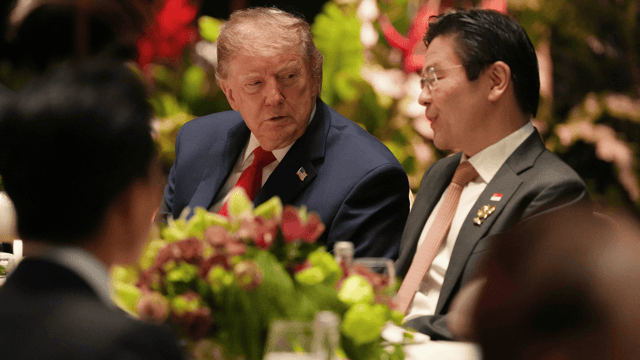
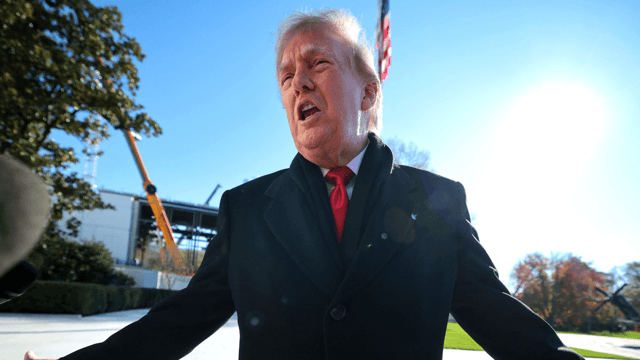
“US President Donald J. Trump also placed special importance on cracking down on online criminal networks," Sihasak said, adding that recent International Monetary Fund (IMF) talks also produced a blueprint aimed at strengthening financial system security against transnational crime.
Discussions in Shenzhen centred on keeping the Asia-Pacific Economic Cooperation bloc open, preserving regional free trade, promoting voluntary economic integration, without leaving any member behind, and bolstering economic resilience.
In addition to physical and regulatory connectivity, leaders placed heavy emphasis on digital integration and supply chain resilience, building on the recently signed ASEAN Digital Economy Framework Agreement and leading to the endorsement of a new ‘APEC Connectivity Blueprint’.
On artificial intelligence (AI), Sihasak noted that APEC economies favour international cooperation over rivalry, whether regarding current AI or future superintelligence, so that technological benefits remain accessible to the general public.
Furthermore, he said that the Ministry of Foreign Affairs will build on Thailand's proposal for ASEAN to formulate its own independent AI strategy, rather than aligning with any major power.
"We should have our own ASEAN strategy for AI development and focus on how we can maximise its benefits," he said.
Sihasak also underscored the inseparable link between national security and economic progress, pointing out that economic development cannot move forward without stability.
He described the high-level engagement among the leaders of China, Russia and the United States in Shenzhen as a welcome development for the global community, expressing hope that such dialogue will to help ease ongoing conflicts, including the situation in Ukraine, and foster a more stable environment for global economic growth.