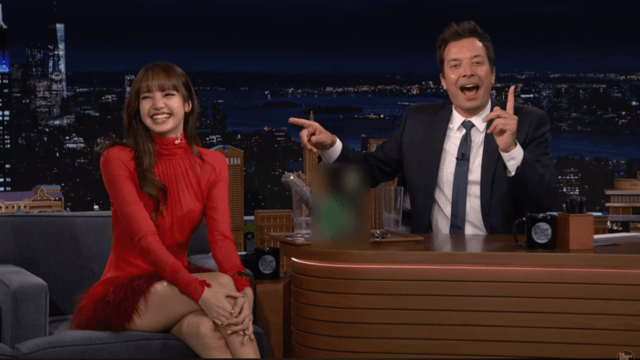
The tuk-tuk, Bangkok’s iconic wheels, coughs into life outside Hua Lamphong Bangkok Railway Station. Buses and cars come and go around the Hua Lamphong intersection. Adding motion and drama to the streets, motorbikes slip through the gaps and old shophouses curve around Rong Mueang Road. Bangkok is awake and busy — and, if you have watched LISA’s latest music video, some scenes may look familiar.

Released in September, SaWaDiKa turns Bangkok into a sprawling stage. However, this is not the Bangkok as you know it. No gilded temples and Buddha with merciful faces, luxury hotels or vibrant street food scenes. LISA moves through railway architecture, hectic streets, Muay Thai culture and contemporary art, mixing everyday Bangkok with fashion, choreography and unmistakably Thai references.
For fans, the video has created a new trail across the capital. And there may be no better way to follow it than by tuk-tuk, hopping between filming locations while collecting a few Bangkok photographs of your own.
9am — Old Bangkok takes the stage

Begin at Bangkok Railway Station, better known as Hua Lamphong, where the grand cream-and-yellow façade has watched travellers come and go for more than a century.
Opened in 1916, the station remains one of Bangkok’s great pieces of railway architecture. Step beneath its sweeping roof and the city briefly seems to belong to another age: old platforms stretch into the distance and sunlight falls through high windows.
But SaWaDiKa leads us outside.
Head towards Rong Mueang, where rows of old shophouses wrap around the streets near the station. Their faded façades, balconies, shutters and signs provide the sort of urban texture that the video repeatedly plays against LISA’s polished styling.
This is also where you should resist the temptation to simply copy a screenshot. Look along the curve of the street instead. Frame the old buildings behind a tuk-tuk. Wait for a motorcycle to cross the shot. Use Hua Lamphong’s arches or weathered shophouses as your backdrop.
The point is not to become LISA for five minutes. It is to see what her camera saw in Bangkok.
Then climb into the tuk-tuk.
11am — Bangkok puts on the gloves
From Hua Lamphong, the city changes quickly. Old commercial streets give way to the towers of Silom and Sathorn before the tuk-tuk turns into Soi Ngam Duphli, a neighbourhood with an intriguing place in Bangkok’s traveller history.
Long before Khao San Road became backpacker shorthand for Bangkok, Ngam Duphli drew independent travellers with inexpensive rooms, local restaurants and a community far removed from the city’s grand hotels.
SaWaDiKa, however, taps into another side of Thailand: Muay Thai.
For the video, a boxing ring was set up around the former Thammasat University women’s dormitory, turning an everyday corner of the neighbourhood into a pop-video arena. Yet on an ordinary morning, the attraction is considerably less theatrical. The abandoned dormitory draws curious visitors and urban explorers with its slightly haunting atmosphere and elegant interwar architecture — a reminder of an older Bangkok hiding behind the spectacle.
The best travel inspired by a music video begins with recognising the location; it becomes more interesting when you start noticing everything that never made the final cut.
For coffee and brunch, slip into Halfway – Brunch & Roastery, a stylish café carved out of part of the old dormitory complex. Raw concrete and bright orange steelwork give the place the look of a construction site caught mid-build — deliberately unfinished, as its name suggests. It’s a clever piece of adaptive reuse and a glimpse of Soi Ngam Dupli’s more contemporary side, where old Bangkok spaces are finding unexpected new lives.
1.30pm — Bangkok goes contemporary
Back aboard the tuk-tuk, head east towards Sukhumvit. Traffic thickens, towers rise and Bangkok seems to reinvent itself yet again.
Hidden down Soi Sukhumvit 40, DIB Bangkok provides the day’s sharpest change of scene.

The contemporary art museum occupies a transformed industrial building, where concrete, dramatic staircases, geometric forms and carefully controlled light create a world away from the worn shophouses around Hua Lamphong.
That contrast is precisely why it works in SaWaDiKa.
LISA’s Bangkok isn’t presented as something preserved in the past. Old architecture and traditional culture sit alongside contemporary art, fashion and design — sometimes within seconds of each other.
Allow time to wander through the exhibitions and cool down from the midday heat. Pay as much attention to the building as the art. For photographs, think geometry rather than celebrity imitation: staircases, shadows, corridors and expanses of concrete provide striking compositions.

Then find something to eat or grab a coffee. There is still one SaWaDiKa stop to go.
4.30pm — A street with a cinematic past
The tuk-tuk turns west again, crossing the city towards Yotse.
By late afternoon, the light has softened when we reach Soi Chaloem Khet 1, another old Bangkok streetscape chosen for SaWaDiKa. Here, weathered commercial architecture and narrow lanes provide the backdrop, but there is another layer to the neighbourhood.
The area carries memories of Bangkok’s old cinema culture, including the former Chaloem Khet theatre that gave the street its name. In a city where glass towers seem to appear overnight, places like this retain something increasingly precious: the scale and texture of an earlier Bangkok.
Late afternoon is made for photographing it.
Instead of filling the frame with yourself, step back. Let the façades dominate. Catch a passing motorcycle, an old sign or, ideally, the tuk-tuk that has been carrying you around all day.
By now, something about LISA’s choice of locations becomes apparent. None needs to shout “Thailand”. Collectively, however, they could hardly belong anywhere else.
And the day isn’t finished.
6pm — One more ride
As dusk settles over Yotse, climb into the tuk-tuk one last time and head out to Yaowarat – Bangkok Chinatown.

The journey is short, but in LISA’s universe you have travelled backwards two years.
Soon the old shopfronts of Yotse give way to gold shops, Chinese signs and the glow of Bangkok’s Chinatown. Pavements fill with dinner crowds. Woks flare beneath fluorescent lights. Tuk-tuks squeeze between buses and taxis while neon turns the street red, green and gold.
For BLINKs, this Bangkok needs little introduction.
Before SaWaDiKa sent LISA dancing across the capital, ROCKSTAR transformed Yaowarat Road into one of pop music’s most memorable Bangkok stages. The 2024 video introduced millions of viewers to Chinatown after dark, with LISA commanding an emptied Yaowarat beneath its blazing signs.
Of course, nobody has closed the road for you, and that’s better.
Follow the smell of charcoal towards grilled seafood, find a bowl of noodles or squeeze onto a plastic stool beside a street-food cart. If dinner isn’t enough, Chinatown’s surrounding lanes hide cocktail bars behind old shophouses and on upper floors, offering plenty of reasons for the night to stretch a little longer.
There is no need to recreate ROCKSTAR frame by frame. Walk beneath the signs, watch the traffic stream past and take the photograph when Bangkok gives it to you.
The day began by following LISA.
Somewhere between the railway station, the boxing ring, the art museum and these neon-lit streets, however, the location hunt became something else: a journey through a city constantly switching between old and new, polished and rough-edged, local and global.
Tomorrow there will be temples, palaces and riverboats.
Tonight, order another plate.
SaWaDiKa, Bangkok.