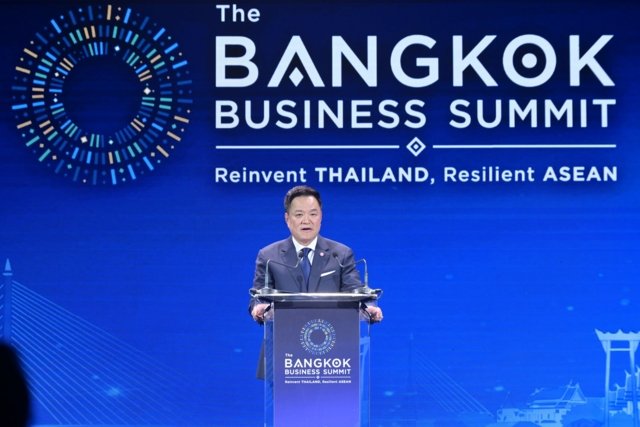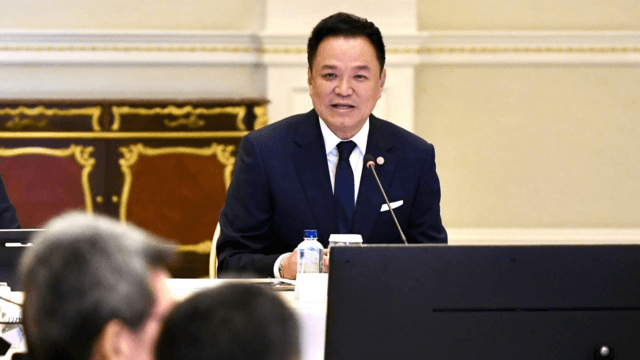



Cambodia must adhere to the letter of the agreement reached at the recent General Border Committee (GBC) meeting before Thailand will consider reopening any border checkpoints, said Sihasak Puangketkeow, who is tipped to be foreign minister in the new government.
While noting that the GBC talks were positive, he said it remains to be seen whether Cambodia will abide by the agreement.
“The safety of people living along the Thai-Cambodian border is a top priority and must be taken into consideration when determining whether to reopen,” said Sihasak, former permanent secretary for foreign affairs.
Sihasak has accepted Prime Minister Anutin Charnvirakul’s invitation to serve as foreign minister in the new government.
Meanwhile, Professor Dr. Puangthong Pawakapan, a lecturer on international relations at the Faculty of Political Science, Chulalongkorn University, said that reopening the border to allow the transport of goods to Cambodia would benefit Thailand.
In a Facebook post yesterday, she cited the call by the Japanese ambassador to Thailand for the Thai government to allow certain goods to be sent into Cambodia for Japanese companies operating there.
The Japanese envoy’s proposal was, however, heavily criticised by some Thai nationalists, who claimed that the goods would help strengthen Cambodia’s capabilities.
Puangthong explained that the goods needed by Japanese companies in Cambodia are not consumer products but industrial supply-chain products, under the “Thailand Plus” policy initiated in 2019 by the government of then Prime Minister Prayut Chan-o-cha.
That policy was intended to encourage foreign investors affected by the US–China trade war to invest in Southeast Asia, with Thailand positioned as the assembly hub for parts manufactured in neighbouring countries.
She said that, last year, the Thai government arranged for over 20 investors to visit special economic zones in Cambodia to seek partners for joint investment under the Thailand Plus concept.
She noted that the border closure does not only affect Japanese companies but also Thai companies operating in Cambodia, although “they are reluctant to speak out.”
Japan is not a party to the border conflict between Thailand and Cambodia, but invested in Cambodia under the Thailand Plus concept in the belief that the Thai government would provide support as promised.
That promise, however, was not fulfilled due to nationalist opposition, said Professor Puangthong.
She added that the acting defence minister, Nattaphon Nakpanich, appears to understand this problem and had proposed reopening the border, but his suggestion was opposed by Lt-Gen Boonsin Padklang, commander of the Second Army Region.
Thailand exports goods worth about 10 billion baht to Cambodia per month, she said, adding that the closure is hurting both Thai businesses and Thais employed in those businesses.