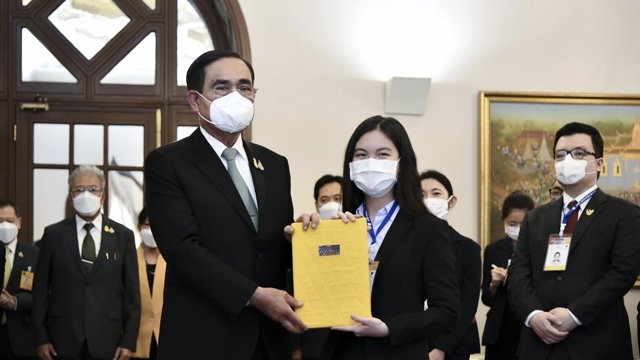


Prime Minister Anutin Charnvirakul and his cabinet delegation are due back in Thailand from the APEC summit in China on Friday afternoon to address mounting controversy over the newly signed Thailand-US Agreement on Reciprocal Trade (ART).
People’s Party deputy leader Sirikanya Tansakul has urged the government to release the full details of the agreement, calling it highly unusual that neither Bangkok nor Washington has published the text following the signing. She raised particular concern over the domestic pork and poultry industries, where farmers and consumers strongly oppose US imports.
There have been reports circulating that the US has proposed five conditions for greater access to its market in exchange for a 19% tariff rate on imports of Thai products to the US, which matches the rate imposed on Thailand’s competitors.
One of the conditions is opening of Thai market to US agricultural products and reduction of non-tariff barriers (NTBs), which would affect Thai farmers. For instance, US pork producers use chemicals to enhance red meat, a process which has been rejected by Thailand.
Then, there is an issue about amending the Thai labour law regarding the use of forced and child labour in some sectors, because Thailand has no measures in place to prevent its own importation of goods produced involving forced or child labour.
Another condition concerns the US urging Thailand to strengthen intellectual property protection. This may have impacts on Thailand’s Geographical Indication (GI) products.
Another sensitive issue is the US proposal to relax US ownership restrictions, particularly in the telecommunications sector. One US company mentioned is Starlink, which is operated by Elon Musk’s SpaceX.
Liberalising digital trade as proposed by the US is another controversial issue raised by the Opposition, as it could well affect the competitiveness of Thai companies and personal data protection.
The opposition noted that “Team Thailand”, led by Commerce Minister Suphajee Suthumpun, had previously set three red lines for the talks: rejecting chemically treated US red meat, safeguarding national security in digital trade and barring 100% foreign ownership in sensitive industries such as telecommunications.
After signing the US-Thailand joint statement on the ART, foreign Minister Sihasak Phuangketkeow is reported to have told Bloomberg TV that he is concerned over the potential consequences of the final agreement once it is actually signed.
“Everyone has to make sacrifices and compromises, but what else can we do”, he is quoted to have said.