


Roughly 150 billion baht (US$ 4.43 billion) is donated to charity foundations every year in Thailand, placing it among the world’s most generous countries. However, recent allegations of embezzlement at several high-profile charities have exposed regulatory loopholes that authorities are now scrambling to close.
The latest charity to hit the headlines is the Do Good Organisation founded and run by former beauty queen Panadda “Boom” Wongphudee.
Panadda has been charged with public fraud and money laundering for allegedly using over 500 million baht in donations to buy properties in Phuket and Pathum Thani, pay off her credit card, and purchase luxury goods. She and her husband were arrested on November 6 and remain in custody.
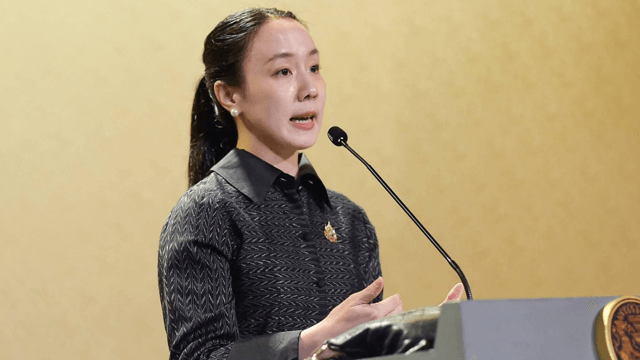
Another charity under the spotlight is the Watchdog Thailand Foundation. Current president and founder, Bhurita Watanasak, has accused her predecessor of siphoning roughly 13 million baht into personal accounts since 2019.
Multimillion-baht embezzlement allegations have also engulfed the Gun Jompalang Chuay Su Foundation and Khon Tuen Tham Foundation.
In response, authorities have stepped up scrutiny in a bid to ensure charitable donations reach their intended recipients.
Outdated laws, weak enforcement
The Interior Ministry is pushing for a review and update of the charity law, which is nearly a century old.
“We need to remove restrictions on punishing rogue foundations,” said Deputy Interior Minister Polapee Suwanchawee, adding that under the current law, his ministry cannot mete out punishment without a court order.
The ministry has also ordered an investigation covering Thailand’s estimated 17,500 legally registered foundations. Thai law defines a foundation as a non-profit organisation dedicated strictly to the public benefit, such as charity, religion, education, arts, science or social welfare.
Foundations must be registered at local administrative offices where their headquarters are located.
The Interior Ministry requires every foundation to submit an annual operational report and an auditor-certified balance sheet by March each year. Panadda’s Do Good Organisation had failed to submit these documents for several years and came under scrutiny after evidence indicating embezzlement was leaked to the media.
“We plan to seek a court order to annul this foundation,” Polapee said.
Thailand’s donation boom
Kasikorn Research Centre has recorded a 2% annual growth in Thai charitable giving since 2017, with annual donations rising from about 129 billion baht to 150 billion baht last year.
Thais’ main motive for donating, according to the Ramathibodi Foundation, is paying forward and the happiness they get from sharing. It said tax deductions were just a byproduct.
Individual donors receive up to a 10% deduction on their taxable income – or 20% if they donate to designated hospitals, schools and charities that come under royal patronage. Corporate donors get tax waived on up to 2% of their net profit. The Revenue Department publishes a list of certified foundations at https://www.rd.go.th/29157.html.
Starting from January this year, only donations made through the online (e-donation0 system are eligible for tax deductions.
Foundations seeking tax relief must register with the Revenue Department as a Public Charity Organisation. Once approved, all foundation income is exempt from corporate income tax.
Trust, but verify
Despite the scandals, most Thais (74%) still believe charities are essential for society, according to a recent survey by King Prajadhipok’s Institute. The November 6-9 online survey was conducted to assess public confidence in foundations and how they used donations. Respondents demanded more transparency, including full explanations of the purpose of raising funds, clear-cut budgets and performance reports to accompany each balance sheet.
More than half (57.3%) of the 2,000 respondents wanted foundations to show how they spent donations, with 19.6% saying the information should be vetted by independent auditors. About 8.8% of respondents said they should be able to track their donations.
When asked how a foundation could build public trust, 34.7% said charities should have provable operational outcomes, 26.2% said disclosure of balance sheets was key, and 24.4% pointed to the good reputation of foundation executives.