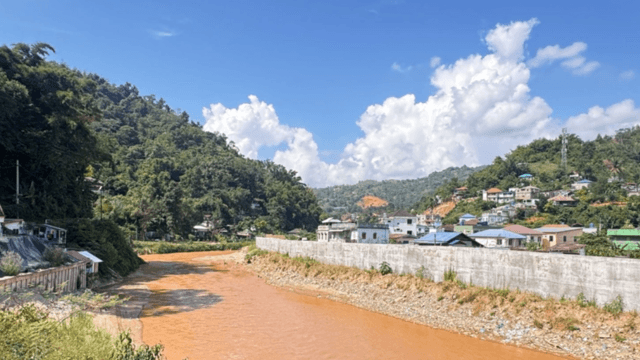



Civil society networks and farmers in the Mae Sai district of Chiang Rai province are set to submit a petition to the government this afternoon, demanding urgent action to address toxic water contamination and the lingering impacts of upstream mining following the devastating 2024 floods.
Prajak Kreuasri, representing the Sai Lom Joy community network and local farming groups, said the petition will be handed to the Mae Sai district chief for forwarding to Prime Minister Anutin Charnvirakul.
The primary demand calls on the Cabinet to visit Mae Sai in person to inspect the site and hear firsthand from affected residents regarding the transboundary pollution of the Sai River, which has severely disrupted household water consumption and agriculture.
To address immediate hardships, the network is requesting the deployment of Department of Disaster Prevention and Mitigation (DDPM) mobile water purification trucks to provide potable water.
They are also calling for alternative water sources, particularly groundwater wells, to support agricultural operations and municipal supply across an estimated 9,700 hectares expected to face severe water stress by December.
On food safety, Prajak urged the government to establish a soil and agricultural product contamination testing centre in Chiang Rai without delay, so local farmers can quickly verify the safety of produce.
On the diplomatic and policy fronts, the residents want the government to expedite joint Thai-Myanmar working group meetings to monitor water quality under agreed terms of reference.
They also propose the establishment of a national-level committee, comprising government agencies, academics and local citizens, to formulate and track long-term solutions.
Addressing flood prevention, Prajak noted that riparian community members favour the construction of permanent flood walls, rather than relocating residents, noting that recent temporary barriers proved effective during heavy flow.
Local residents strongly suspect that upstream mining operations have contributed heavily to sediment accumulation, shallowing the river and altering natural water flow, thereby amplifying flood severity compared to typical seasonal flash floods.
“Addressing mining activities and transboundary impacts must be prioritised by the government, alongside water decontamination and flood prevention, to relieve the suffering of local residents sustainably," Prajak said.