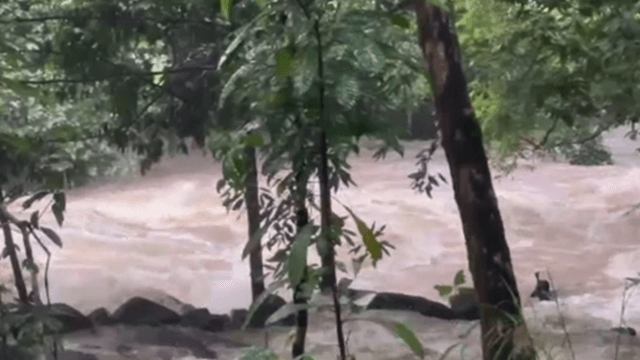



Tall, strong and excellent swimmers, it’s hard to imagine that elephants – Thailand’s national emblem – could succumb to floodwaters. So, when news emerged that two elephants had drowned in floods that struck Chiang Mai in October, shock and dismay rippled through Thai society.
On October 5, two elephants were found dead in the Mae Taeng River, six kilometres from their home at the Elephant Nature Park in the northern capital. Park staff identified the drowned creatures as 16-year-old Fah Sai and 40-year-old Ploy Thong. The latter was blind.
Few Thais had ever heard of the majestic creatures perishing in floodwaters.
Their deaths were sad news, as elephants have long been a cherished symbol of Thailand, from their days as formidable warriors defending the nation against enemies to their modern status as tourism attractions.
Chiang Mai is home to over 85 elephant camps, where over 800 of the creatures entertain tourists in various ways.
The country has celebrated National Elephant Day on March 13 every year since 1998.
Chronicle of a tragedy
In early October, floods inundated vast swathes of Thailand’s North. On October 3, Chiang Mai’s Mae Taeng River burst its banks and began overflowing into the surrounding area.
On October 4, staff at the Elephant Nature Park called for help after realising its animals were in danger from rising floodwaters. When outsiders arrived, they reported that about 10 elephants were trapped inside a heavily flooded, fenced enclosure.
It was impossible to unlock the gate to release the elephants because the lock was submerged deep in the muddy floodwater. None of the animals was chained, making it even harder to guide them to safety.
The park’s owner reported that the floodwaters surged rapidly to over 3 metres, sweeping away some of the giant creatures before her eyes.
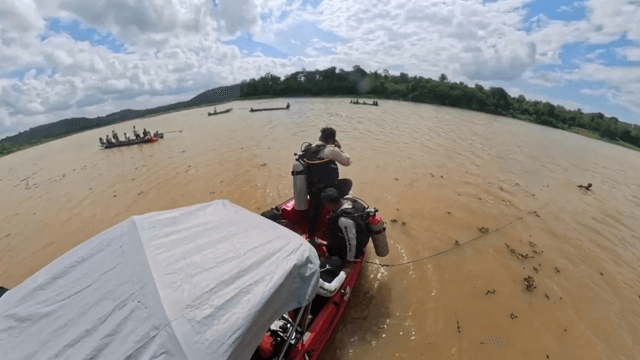
The Royal Thai Air Force even dispatched a spotter plane over the Mae Taeng River to search for the stricken elephants, but it failed to find any sign of Fah Sai and Ploy Thong.
The Elephant Nature Park refuses to chain its residents, allowing them to roam free according to ethical guidelines. However, many blamed this decision for causing the deaths of the two female elephants.
Critics claimed the park also had insufficient mahouts and delayed evacuating its elephants despite the rising danger.
Saengduean Chailert, the park’s founder and president, strongly denies the allegations. She explained that some mahouts at the facility had taken leave to protect their own homes from flooding without foreseeing that the disaster would also threaten the animals they looked after.
She also insisted the park had not stayed open to tourists as the floodwaters rose in Chiang Mai.
Saengduean has been targeted for widespread criticism partly because other elephant camps in Chiang Mai managed to save their giant residents.
Rescue operation
Although it was heartbreaking to lose the two elephants, over 100 of their fellow creatures at the park were rescued from the flood. Officials, rescue workers and mahouts from other camps rushed to the Elephant Nature Park in response to the call for help.
Boats were used to guide healthy elephants, with mahouts aboard, through high floodwaters to safety. Careful guidance was required as the elephants waded through flooded fields close to the Mae Taeng River.
One wrong step could have led to them being swept away. At some spots, ropes were used to mark safe zones.
However, one elephant was suffering with a leg injury and could not walk. Rescue workers helped the creature by attaching a buoy to ensure its trunk remained above the water, allowing it to breathe until the flood subsided to a safe level.