


Thailand’s deal on rare earths with the United States has triggered one big question among Thais: Will it bring economic opportunities or a new environmental crisis?
Earlier this month, Prime Minister Anutin Charnvirakul and US President Donald Trump signed a Memorandum of Understanding to cooperate on supply and investment of critical minerals.
While the deal was hailed as a development milestone by Thailand’s Department of Primary Industries and Mines (DPIM), numerous environmentalists warn it could add to the country’s existing pollution problems.
Environmental risks
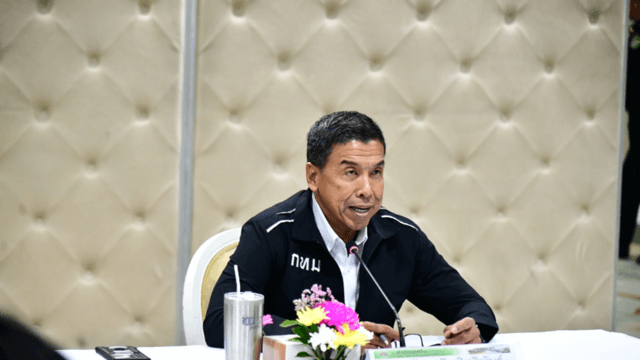
Lertsak Kongkamsak, chairman of the NGO Coordinating Committee on Development, said mining operations have a long history of harming the environment and public health in Thailand.
“Because of Thailand’s loose regulatory framework, pollution from mines has caused severe and lasting impacts,” he said.
Lertsak noted that the rare-earths MOU falls under Thailand’s mineral law, which he said prioritises investors over local communities. He added that regulators can also neglect their duty to protect the public, resulting in weak environmental and health governance.
“We are concerned that the MOU will drag Thailand into the global minerals supply chain, covering exploration, mining, extraction, processing and recycling. This could lead to Thailand becoming a processing country for the US.”
This scenario should raise widespread alarm given Thailand’s lax enforcement of its mineral law, Lertsak said, noting that heavy metals from mines have already caused serious pollution in Kanchanaburi’s Klity Creek and Tak’s Mae Tao river basin.
“Can you give me the name of one non-polluting mine?” he asked, highlighting the fact that mining by its very nature damages the environment.
Lertsak pointed out that the mineral law, in fact, had two main purposes: to promote mineral exploration and production, and to govern mining operations and prevent unwanted impacts.
“But the authorities seem to focus only on the first purpose. Governance of mines is flawed,” he said.
Is Thailand ready for rare earths?
Rare earths are a group 17 unusual metals essential to the manufacture of high-tech products like smartphones, TVs and electric vehicles, as well as defence systems.
However, mines use high concentrations of heavy metals to process rare earths, resulting in toxic waste and the risk of environmental disasters.
Thailand’s minerals management masterplans Nos. 1 and 2 make no mention of rare earths, Suttikiat Khotchaso of the EnLAWTHAI Foundation, a non-profit environmental and human rights watchdog, pointed out.
“If we still lack adequate information on rare earths or technology to deal with them safely, any rush to launch rare-earth mining and related operations may not comply with our laws,” he said.
Thailand among world’s top producers
Thailand ranked as the world’s sixth-largest producer of rare earth minerals last year, behind only China, the US, Myanmar, Australia and Nigeria, according to the United States Geological Survey (USGS).
Thailand produced nearly 13,000 tonnes of rare earths in 2024, a 261% jump from 2023 and more than 13 times higher than the output recorded in 2018.
However, Suttikiat said that much of this volume came from Thailand importing raw ores and processing them into rare-earth exports.
He highlighted the risks of large-scale processing, citing the toxic chemicals involved and the gaps in Thai environmental governance.
Government’s stance
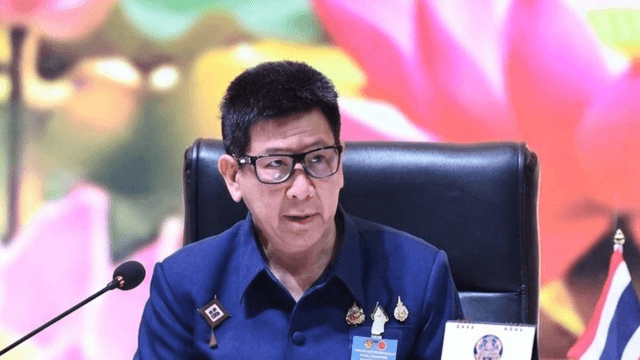
DPIM director-general Aditad Vasinonta defended the MOU, saying it would pave the way for Thailand to commercially develop its rare-earth reserves.
“It will create opportunities for exploration. If potential is found, any licensing of mines will be subject to environmental impact assessment (EIA)s or environmental and health impact assessment (EHIA)s,” he said.
If exploration found deposits that Thailand could not extract itself, the MOU could lead to technology transfer that would benefit the country, he added.
He also noted that rare earths were crucial for manufacturing electric vehicles (EVs).
“Thailand is aiming to become an EV hub. This technology is crucial to the automotive and clean energy industries,” he continued.
Becoming a green colony?
Dr Suebsakun Kidnukorn, a lecturer at Mae Fah Luang University, warned that Thailand could become a green colony under the rare-earths MOU.
Green colonialism refers to the ways in which rich, developed nations impose their environmental policies on poorer countries, exploiting their resources and communities.
“This MOU will worsen Thailand’s environmental problems,” Suebsakun said, calling for a national debate on the deal.
“This MOU and transborder pollution should be addressed at the national level. They deserve to be on the national agenda and political parties should include these issues in their election policies,” the academic said.
Thailand is set to hold a general election early next year, following PM Anutin’s promise to dissolve Parliament by January 31.
Suebsakun said technology transfers under the MOU are unlikely to allow Thailand to supply products using rare earths, but will want the minerals in their original form.
“So, Thailand may end up simply receiving pollutants,” he warned.
Thai mining crisis
Suebsakun said cadmium, lead and arsenic had already contaminated many of Thailand’s waterways, including the Mekong River, which flows through several of the region’s countries.
Research indicates much of the contamination comes from mines upstream in Laos and Myanmar. Satellite images show rare-earth mines in Laos, which are reportedly funded by Chinese state enterprises, while Myanmar hosts operations mining critical minerals.
Mines based in Thailand were also a source of environmental pollution, said Chutamas Srihattapadungkit, coordinator of the Project for Public Policy on Mineral Resources.
“The impact of potash mining on locals’ health and the environment in Nakhon Ratchasima are clear,” she said.
Soil and water around the mine in the northeastern province have become unusable due to salt contamination, causing severe damage to the ecosystem, she added.
“Local farmland has become infertile,” she lamented.
Citing problems caused by the potash mine, Chutamas said the MOU had sparked fears of worse to come. “People are worried about the damage that may ensue,” she said.