


The contamination of the Sai River with toxic substances, allegedly discharged from unregulated mining activities in Shan state of Myanmar, has not only damaged the economy and environment of Mae Sai district in Chiang Rai province, but has also turned the livelihoods of many riverside residents upside down.
Thai PBS reporters revisited a resident of the Tham Pha Chom community, in Wiang Pang Kham of Mae Sai district, called Kanya Kanwana, whose statements reflect the general bitterness and hardship felt since the major flooding in the district two years ago.
“The Sai River is the natural demarcation line between Thailand and Myanmar. It is the main river for communication. The villagers used boats and rafts for transport. The river also served as the main source of water for consumption or other uses, such as bathing, clothes washing and many daily activities,” said Kanya.
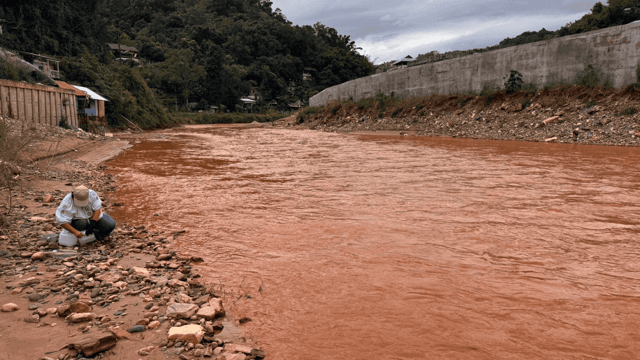
This is the river as Kanya remembers it, but it may be a fading image because, after the big flood two years ago, the river has completely changed and has never been clear again.
Kanya recalled that the water in the river used to be clear during the cold season, although it might be slightly murky after rain. Since 2024, however, the changes to the water have been evident.
She said that, after floodwater receded, mud and sediment were left behind, forcing many people to hire workers to dispose of the mud in their houses. The river’s water has become brownish almost every day, she said.
She recalled that she used to see fish swimming in the river when she sat in a riverside pavilion but, today, she cannot see any.
Initially, she thought the brownish water was caused by logging activities in the watershed area of the river or construction work in the upstream area. She added that she never thought the river was contaminated until tests by various agencies confirmed the presence of toxic substances.
Kanya admitted that she was shocked when she learned of the contamination and started to be concerned about her safety.
She said that tourism has also been hard hit, as people no longer visit restaurants and eateries along the Sai River.
As for herself, she said she will explore new businesses to make a living, after her old business was ruined by the major flooding. She added that even opening a small food shop to sell curry and rice is difficult because customers are concerned for their health due to the contaminated river.