


Foreign Minister Sihasak Phuangketkeow said the border conflict between Thailand and Cambodia can still be resolved through diplomacy despite the heightened tensions between the two countries.
Thailand has suspended the peace deal it made with Cambodia following a landmine explosion that injured two Thai army personnel on Monday. An exchange of gunfire also erupted across the border in eastern Thailand on Wednesday in which Cambodia claimed a Cambodian civilian was killed and three others injured.
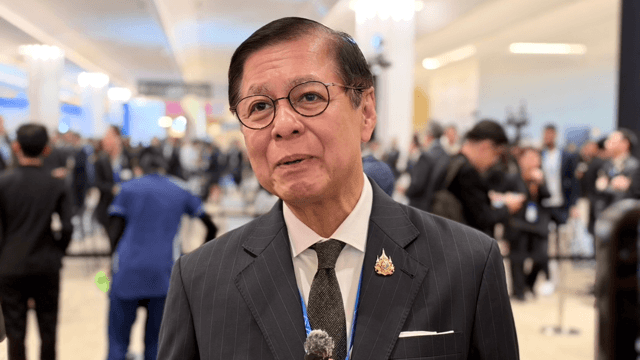
Speaking to Thai PBS in an interview, Sihasak admitted that the new round of confrontation between the two countries is a cause for serious concern but he believes peace is possible through diplomacy.
Sihasak admitted that many people may have lost faith in diplomacy because of what is happening, but he insisted diplomacy is still a very essential tool in resolving the ongoing dispute.
“The use of force will inevitably lead to violence and losses. Diplomacy is a much better choice to achieve what we want,” he said.
But he added that diplomacy is possible only when both sides are ready to sit down and talk.
“As a diplomat, I believe that peace is possible though things are difficult at the moment,” he said.
The foreign minister said Thailand is going on a diplomatic offensive to explain to the world why Thailand is suspending the peace agreement with Cambodia.
“We need to let the international community know the truth,” he said of the Foreign Ministry’s protest notes to international organizations to inform them of Cambodia’s breaches of the agreement.
Since the Cambodian side failed to honour the agreement, Thailand finds it necessary to suspend all activities related to the document signed, he said.
Sihasak said he was aware of the fragility of the border situation all along and that is why he has refrained from calling the document signed with Cambodia a “peace accord” as referred to by US President Donald Trump and Malaysian Prime Minister Anwar Ibrahim who brokered the peace talks.
“We choose to call it a pathway toward peace,” he said, explaining that peace is possible only when the parties concerned are sincere in honouring the commitments made on paper.
Sihasak reaffirmed Thailand’s desire for peace and he made the point to the US when it offered to facilitate the talks between Thailand and Cambodia.
“We told the US that what we wanted is real peace, not just a piece of paper,” he said.
Sihasak repeated the three conditions put forth by the Thai government that Cambodia need to meet before the peace process can resume. Cambodia has to show responsibility for the landmine incident, conduct a thorough investigation and coming up with measures to prevent a repetition of the incident.
On the role of the United States in the peace talks that led to the signing of the agreement in Kuala Lumpur, Sihasak said any peace deal has to come from an agreement between Thailand and Cambodia.
“Whatever good intention the US may have, at the end of the day, Thailand and Cambodia have to come an agreement,” he said.