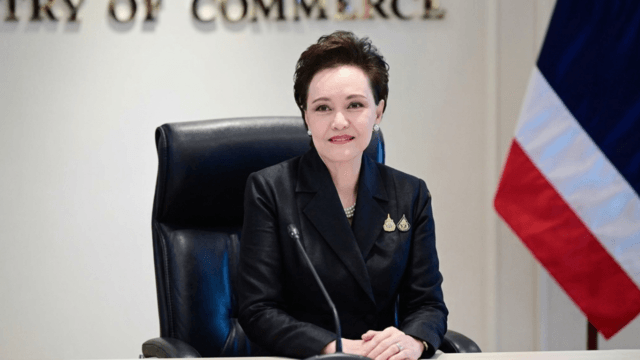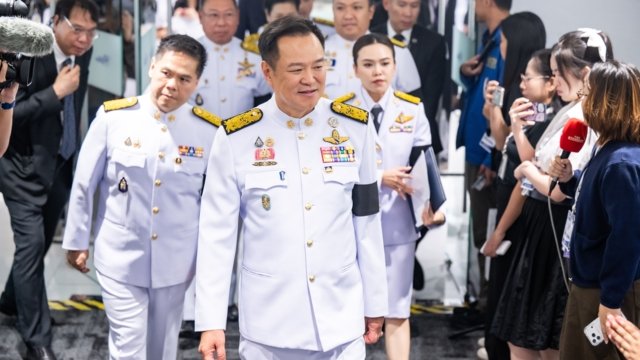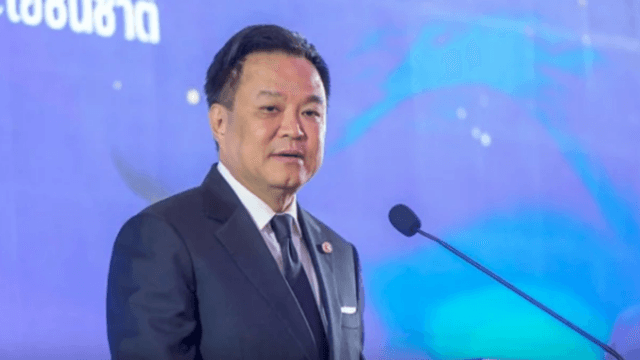



Commerce Minister Suphajee Suthumpun joins a team of technocrats Prime Minister Anutin Charnvirakul has tapped to run the country's key economic ministries.
Suphajee, 61, who was the chief executive officer of Dusit Thani, joins among others former Treasury Department director-general Ekniti Nitithanprapas, who is deputy prime minister and finance minister, and Auttapol Rerkpiboon, former president and CEO of PTT, who will take care of the energy portfolio.
Suphajee holds a bachelor’s degree in sociology and anthropology from Thammasat University and an MBA in International Finance and International Accounting from Northrop University, California, USA.
She spent over 20 years at IBM, becoming the company’s first female general manager in Thailand and later served as general manager of IBM ASEAN’s Global Technology Services Division.
She also led Thaicom as CEO and served as CEO of Dusit International from 2016. At Dusit Group, Suphajee introduced the “Balance - Diversify - Expand” strategy, reducing the group's reliance on the hotel business and expanding into property development, food and other sectors.
In the public sector, Suphajee was chairperson (2020–2024) of the Digital Literacy Subcommittee within the National Reform Committee on Culture, Sports, Labor and Human Resources.
The National Reform Committee, sponsored by the military-backed government, was created in 2017 following the 2014 coup. Her participation indicates strong political connections.
Challenges at the Commerce Ministry
As she steps into the Commerce Ministry, Suphajee faces formidable tasks: dealing with low farm product prices and high cost of living, border trade disruption with Cambodia and Myanmar, and the impact of the US trade policy.
“She could use her expertise in corporate management to run the Commerce Ministry,” says Aat Pisanwanich, an independent academic specializing in international trade and ASEAN affairs.
However, he points to her lack of direct experience with agricultural markets: “I’m not sure she understands the nature of farm products,” he says.
Major Thai farm products—including rice, rubber, tapioca, palm, and even durian—are experiencing price declines. While the durian season may be ending, the upcoming rice harvest will present a fresh challenge for the new government amid an unfavorable export market.
“Farm products are very cheap, but consumers in cities pay much higher prices due to the role of middlemen and monopolized logistics,” laments Aat.
“For example, farm longan prices are very cheap but consumers in Bangkok pay much higher prices,” he points out. Thai rice faces stiff competition globally from regional rivals India and Vietnam, as well as from the United States.
President Donald Trump has pressured trade partners to buy more US farm products. Thailand's new commerce minister and Cabinet will have to engage in detailed trade negotiations with the Trump administration over a tariff deal.
Normalize trade with Cambodia
Another pressing issue is the border closure with Cambodia, which has adversely affected both farm and industrial goods trade with Thailand's neighbors. Cambodia sits at the crossroads of trade routes between Thailand and Vietnam, so any disruption has broader impacts on Thai exports.
There have been reports that Japan has urged the Thai and Cambodian governments to reopen border checkpoints, as closures have disrupted Japanese investors’ supply chain in ASEAN.
However, reopening the border would require government consultation with the military, which currently holds the authority to close or open these checkpoints.
The military has been criticized for exceeding its authority by declaring martial law and closing borders without prior government approval, especially during the Paetongtarn Shinawatra administration.
Despite repeated calls to prioritize economic interests and exercise restraint, both the Thai and Cambodian armed forces opted for confrontation along the border, resulting in five days of clashes in July and the loss of civilian and military lives.
With a new Thai government in place, there may be an opportunity to restore the relationship with Cambodia and to prioritize economic considerations over security arguments.
“Restoring the border trade with Cambodia and Myanmar would be high on the agenda,” says Aat. Trade with Myanmar, meanwhile, remains disrupted by the civil war in that country.
Supporting farmers and fair trade
One of the most vital roles of the commerce minister would be to help farmers sell products domestically and internationally. Aat notes that Suphajee could look to the European Union fair trade practices for inspiration.
The EU’s Common Agricultural Policy supports fair pay and trading, and its “Farm to Fork” strategy aims for more sustainable food systems.
The Unfair Trading Practices Directive bans exploitative behavior, and new initiatives promote market access and financial support for small farms, encouraging competitiveness and sustainability.
Given the assumed brief tenure of the new government—likely just a few months—Aat suggests that extension of price subsidies for farm products could be the biggest impact they could have.
However, with her management background, Suphajee might also be able to lay the groundwork for longer-term reforms.
Challenging portfolio
The road ahead for Suphajee Suthumpun as commerce minister will be challenging, with immediate pressures on farm product prices, trade negotiations with the US and the urgent need to normalize border trade.
Drawing on her corporate experience and political connections, she may be able to stabilize the situation and pave the way for future economic growth. As Aat observes, the groundwork laid now could shape Thailand’s trade landscape for years to come.