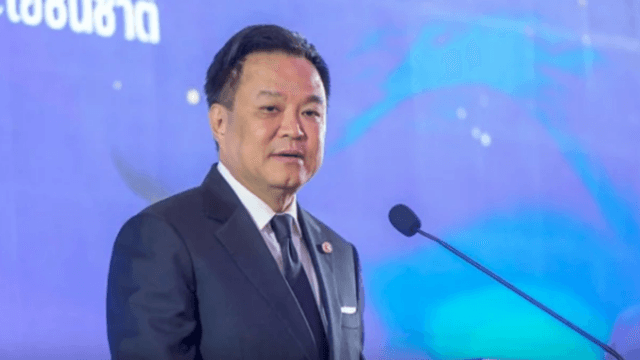



The Cabinet has approved, in principle, a proposal from the Labour Ministry seeking to allow displaced persons from Myanmar, currently residing in nine refugee camps in Mae Hong Son, Tak, Kanchanaburi and Ratchaburi, to work legally in Thailand for one year to ease the current labour shortage, said Labour Minister Pongkawin Juangroongruangkit.
The move was hailed by the United Nations High Commissioner for Refugees (UNHCR) as an important change of policy by the Thai government, enabling a mechanism for economic growth for the displaced people, local communities and Thailand.
To implement this proposal, the Cabinet has approved two edicts, one issued by the Labour Ministry and the other by the Interior Ministry, making it possible for the displaced people from Myanmar to take jobs which are not exclusively reserved for Thai nationals in all provinces.
In order to work outside the four provinces where the refugee camps are located, the Myanmar nationals must seek permission to leave those provinces and must obtain health insurance certificates from provincial health offices.
The Cabinet has, however, agreed to waive work permit fees to ease their financial burden.
Somchai Morakotsriwan, director-general of the Employment Department, said that they may coordinate with employers about their requirements for labour, because the numbers are limited to about 42,000, adding that the industrial, construction and agricultural sectors are facing a labour shortage.
Adisorn Kerdmongkol, coordinator of the Migrant Working Group, expressed concern over the brokerage system, as he suggested that those seeking work should be given a chance to state what kind of jobs they prefer and to choose their employers. For those who do not want to choose, the department should step in to find the jobs that fit the employers’ requirements.
Reacting to the Cabinet’s decision, the United Nations High Commissioner for Refugees noted that about 47% of the displaced people in the refugee camps were born in Thailand.
“It has been a long time, (such) that living in refugee camps is similar to endless waiting,” Tammy Sharp, UNHCR representative, is quoted to have said.