


Plastic is an indispensable part of modern life. But plastic is not biodegradable and when it isn’t properly disposed of and managed, it becomes an environmental pollutant.
One option that helps reduce this problem is to recycle the plastic and turn it into reusable materials. This approach can help reduce the demand for new plastic production, paving the way to sustainability.
A green network led by the Dow Thailand Group and Zero Waste Yolo Co., Ltd. is working to solve the problem by partnering with the Bangkok Metropolitan Administration (BMA) through the Bangkok Magic Hand project, which encourages the city’s residents to sort their plastic waste and donate it for recycling.

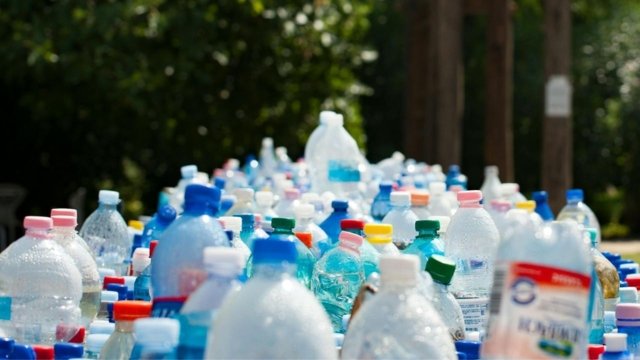
Plastic Waste//PHOTO Courtesy of Dow Thailand Group
They have set up drop-off locations for plastic waste at all 50 of Bangkok’s district offices and also provide special bins for non-recyclable plastic waste or “orphan plastic waste” as it is often called.
In addition, the network facilitates the segregation of donated waste at a waste sorting center in Bangkok, while helping create local employment opportunities for waste sorters.
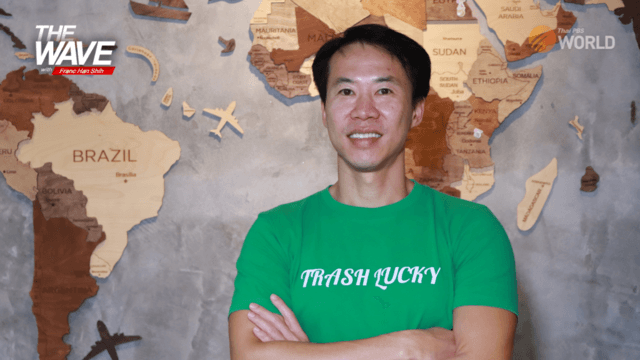
“We accept plastic waste that is clean, uncontaminated and dry,” said Getthip Hannarong, founder and CEO of Zero Waste Yolo Co. Ltd.
She urged residents to remove any food residue from their plastic waste, give it a rinse to clean it and let it dry before placing it in the recycling bins at any designated point, pointing out that the materials aren’t recyclable until they’re clean.
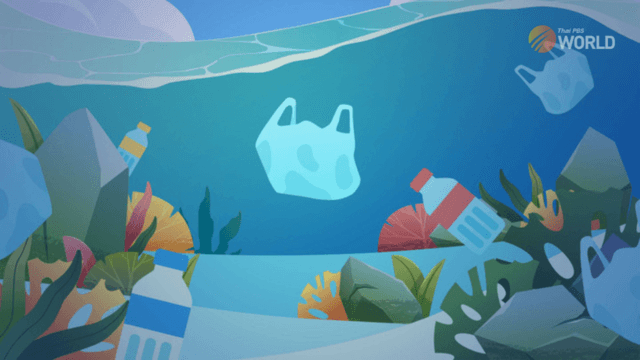
Thailand generates around two million tons of plastic waste annually. A mere 25% is recycled, with most ending up in the ocean.
According to the Pollution Control Department, the country ranks among the top 10 global contributors to marine plastic pollution.
Thailand has banned plastic waste imports over concerns about toxic pollution and health risks. A law banning imports of plastic waste came into effect on January 1 this year.
Not all plastics are the same
Getthip noted that not all plastics are equally recyclable and urged people to simply sort their plastic waste into three types; the most recycled polyethylene terephthalate (PET) plastic like PET bottles; flexible plastic bags and plastic film; and hard-to-recycle plastic waste like single-use containers, which have little value.

Clean, uncontaminated and dry plastic waste./PHOTO Courtesy of Dow Thailand Group
“We can recycle some plastic bags. The white ones like bread bags, rice bags and some flexible plastic packaging can usually be recycled. But most people don’t sort them,” she said.
She also calls on residents to sort orphan waste such as colored plastic boxes, single-use utensils, bottle caps, yogurt drink bottles, milk boxes and snack wrappers, all of which are difficult to recycle.
“We still need to keep sorting the hard-to-recycle waste even though there is no economic incentive to collect it,” she said, adding that sorting plastic waste the right way at points of collection allows for effective processing and recycling.
Where does your plastic go?
Getthip said her team works to deliver the donated plastic waste from 50 drop-off points of district offices, including one at Bangkok City Hall (Sao Chingcha) on Dinso Road and another at the Hall on Din Daeng Road to the Nong Khaem Waste Sorting Center in Bangkok’s Nong Khaem District.
Upon arrival at the center, the plastics are then separated manually by workers to ensure that they are suitable for recycling.
“We hire workers to sort the waste by hand. Most of them are housewives and older adults living in the nearby community. They have waste sorting skills,” she said, explaining that manual segregation can help improve recycling rates, while helping reduce the risk that potentially dangerous waste could affect humans and the environment.
According to her, good quality, clean plastic items are then sent to a recycling plant to be transformed under the circular economy, while some of the hard-to-recycle items are turned into alternative fuel.
“Some of the recyclable items are made into new materials. They can be used to produce garbage bags,” Getthip said.
The orphan waste is sent to Yolo’s facility in Nonthaburi’s Sai Noi District for upcycling to create new value-added products including pens, key holders, saucers, medals, and award plaques.
The upcycling prevents the materials from going to a landfill, she said.
Between 2019 and 2024, the enterprise worked with a leading Thai sustainable fashion brand that focuses on making the most of plastic waste by turning discarded bottle caps and yogurt drink bottles into fashionable items, including clothes and handbags.
An eco-friendly dazzling golden outfit Lisa Blackpink wore at the “FI Monaco GP 2024” was made of more than 1,800 pieces of bottle caps and disposable products, she noted.
Improving the quality of life
Manual selection of plastic waste at the Nong Khaem Waste Sorting Center helps generate job opportunities for people residing in the Nong Khaem Garbage Community, the home of scavengers, garbage collectors and sorting workers.

Ubon Phothikran earns an income from sorting plastic waste.
Ubon Phothikran, 55, who has been hired to sort recyclable and non-recyclable materials from waste at the center noted the job helps generate income and enhance the quality of her life.
“Now, I’m able to work and stand on my own feet and afford the things I need. I think I would have enough money to pay my house rent debt in the next few months,” she said, adding that she also earns extra money from the sale of high-quality, clean plastic bags and recovered materials she finds from the sorting process.
Earlier, she depended on her son for financial support after an operation.
“I had to work until I dropped, collecting things people left for sale, and received just 500 baht. Working at the center, I can make enough to live,” scavenger-turned-sorting worker Ubon said.
Former construction worker Petcharee Boonyo said working at the center has helped her cope with depression and generate income.
“Work keeps me busy. It prevents me from overthinking and distracts me from depression. At work, I can chat with other workers. It helps improve my mood,” she said, adding that the on-and-off work on construction projects and the heavy workload made her feel stressed, burned out and depressed.
She noted that the job has given her peace of mind and reduced her anxiety, while improving her financial status.
“I feel a sense of purpose. I owed money to loan sharks but now I am able to clear my debts,” she said.

Petcharee Boonyo, scavenger-turned-sorting worker.
The Nong Khaem Model: Bangkok’s first Material Recovery Facility (MRF)
Over the past few years, the amount of plastic waste dumped at the Nong Khaem Waste Sorting Center has continued to grow, but its current waste management capacity is limited.
Currently, the center has the capacity to treat up 3-3.5 tons of plastic waste per month, with plastic input sources from various locations including the donated plastic waste through the Bangkok Magic Hand project, the Won Project, sustainable plastic projects under the circular economy concept, and other green projects.
In an effort to handle the growing amount of waste, the green network has pushed forward with the development of a Material Recovery Facility (MRF), which will serve as a community-based waste management center that receives, sorts and prepares recyclable materials for reuse.
The facility is scheduled to be Bangkok’s first MRF, with a capacity of over 40 tons per day.
Thailand’s first MRF is located in Rayong’s Ban Chang District. This specialized plant was developed in 2023 in a collaboration between Dow Thailand Group, Thailand Institute of Scientific and Technological Research (TISTR), the Program Management Unit for Competitiveness (PMUC), the Plastics Institute of Thailand, the Ban Chang Sub-district Municipality, Bang Chang District Office, and the Rayong Provincial Office.
The plant aims to divert waste from landfills, promote waste segregation and the circular economy, create local employment opportunities for sorting, processing and management staff, and encourage community participation.
The Dow Thailand Group is a member of the Thailand Public Private Partnership (PPP) for Plastic and Waste Management, the so-called PPP Plastics.
The partnership was formed between ministries and private organizations in 2018. Led by the Thailand Business Council for Sustainable Development and the Plastic Industry Club of the Federation of Thai Industries, it has worked with various sectors to drive the sustainable management of plastic waste.