


Nothing proves politicians’ worthiness and the state apparatus’ effectiveness better than a natural disaster. When real sufferings warrant urgent action, anything else goes out the window.
Two developments over the past few days have caught attention. First, Defence Minister and Deputy Prime Minister Phumtham Wechayachai announced a Bt3 billion relief budget was on its way for flood victims having cut through political, parliamentary and bureaucratic headaches. Then the Federation of Thai Industries came out to seek tax exemption for businesses hardest hit by floods.
Both developments are contentious. Is Bt3 billion pledged by a government that had vowed to spend more than 100 times more on free cash takeaway for people who suffer a lot less or do not suffer at all an appropriate amount? Is this a good time to seek tax exemption for corporates when ordinary flood sufferers are too busy being starved to get organised representation for their plights?
Now is a testing time for any government. With massive flooding comes prioritisation that cannot afford to be wrong. Digital Wallet must give way, and so must charter amendment or any egoistic showdown with the central bank.
For too long, being politically good has been associated with rhetoric or things too abstract to understand. It has been tied to economic numbers that the man on the street cannot really comprehend, or “changes” that nobody has been able to see.
Governments must be judged by meaningful helps they dispense in times like this. If they can alleviate hardships of people losing their cars, furniture and home, it will matter a lot more than, say, allowing casinos to open legally or altering some laws that only experts or activists “understand” and are divided over in the process.
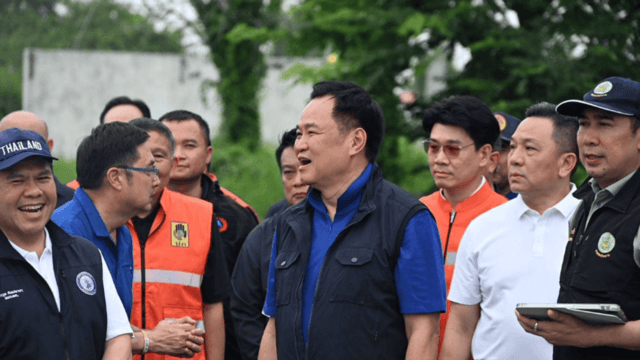
Politics has to redirect itself, even if doing so will take away the traditional gains that politicians hope for. Forget about reform, if politicians have to wade through floodwaters for the camera in order to show that they have done something.
Forget about reform, if state money set aside for needy people is nowhere near state money intended to boost a political party’s popularity.
There are many things the Paetongtarn government can do apart what has already been done or decided. Thailand Post’s free delivery of donated items
not weighing more than 20 kilograms per parcel is a noble offer, and other state agencies or enterprises should follow suit.
With careful identification measures, state trucks can go door to door in unaffected neighbourhoods to collect donations. This will properly underline the government’s role as facilitator and provider. In other words, prospective donors will be facilitated and flood victims will be provided with what they need.
Announced measures are good, but there can be a lot more. After all, every state agency has a role to play.
The Interior Ministry can produce quick data of affected populaces. The Commerce Ministry must seriously guard against hoarding and shortage of essential supplies. Even the Foreign Ministry can set up provincial centres to help foreigners in trouble.
In a true reform, government leaders sit in a war room making sure immediate help covers as many people in need as possible and is as speedy as possible. In a true reform, soldiers are wholeheartedly supported and encouraged by every single politician.
And in a true reform, there is no politicisation of victims. Judgement has to be based on what really counts, and that is how much assistance has been given and how fast. Realistically and reasonably.
Many will lose traditional interest if they do so. But genuine reform requires doing away with the deep-rooted bad traditions.
In the aftermath of natural disasters, no relief work can be fast enough. But helpers can do the best they can. And who have the biggest “legal” responsibility? Everyone getting paid with tax money, of course.
The “moral” obligation falls upon everyone. This is another matter entirely, but it is also very crucial to national progress and civilization. Some countries absorb one disaster after another not because they are rich or scientifically advanced, but because their citizens grew up knowing when to cast aside politics and help others without wanting anything in return.
Flooding comes and goes, of course, but there is no better measurement of an administration’s merit. If a government cannot help those in truly dire conditions needing immediate aid, it certainly cannot be trusted to deliver anything long-term.
The current flooding is wreaking havoc on the innocent, yet it is also staring everyone else in the eye asking a very important question: What do you do now?