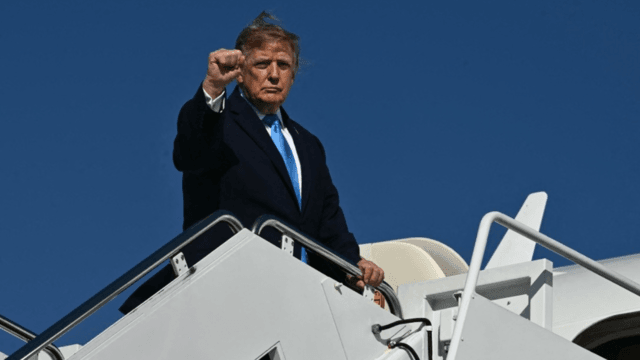



Photo: AFP
First the court cases. Then the assassination attempts (some of them suspected). All these came amid the impression that the entire American status quo was doing everything within its power to stop Donald Trump.
Adding the usual anti-incumbent sentiment, lopsided media content and justified questions about how much public appearance Joe Biden has made exactly over the past four years, it was simply too much for Kamala Harris.
Some say it must have something to do her wits compared with Trump’s. The period between their debate and the election day was too long, enabling a tough, negative scrutiny to eat into the resurgent optimism and enthusiasm that greeted her replacement of Biden, they point out.
This could be correct, but only partially.
Trump won at her expense for myriads of reasons. The usual Republican-Democrat divide which has been there forever is, of course, a factor, but he should thank the Democrats and the White House for turning the traditional and harmless polarity into something genuinely volcanic.
The rivals were perceived as going out of their way in an attempt to block his return. Many thought, rightly or wrongly, that it went far beyond a normal democratic contest. Yet the congressional and legal sieges in fact helped his campaign greatly, better than 100 “Make America Great Again” billboards combined.
Electoral politics feed on perceived victimization. That is ancient knowledge. Thailand, the Philippines and many other countries knew it. America, apparently, has just learned it.
To be fair, consequences of using legal means to go after political enemies are a lesson that is hard to learn. Even in countries no stranger to such practice and well aware of backlash, it is still tempting although nobody can pull it off perfectly.
Then, the bullet, which allegedly came from a lone, hateful gunman acting on his own. It scratched Trump but struck the Democratic heart squarely. Biden, who had just emerged from a damaging TV debate with Trump, wouldn’t stand a chance.
It had to be Harris. Biden’s unprecedented, mysterious and controversial withdrawal from the presidential race was the Democrats’ last throw of the dice.
Harris’ youthful image took away the We-have-a-senile-president contempt that had used to be the Republicans’ formidable campaign weapon, and turned the table on them because Trump was old himself. She boosted the Democrats’ hope, but only for a while.
What the Democrats failed to grasp was the apparent fact that Harris performed “well” in her debate with Trump because it was compared to the previous debate in which Biden had bombed. Hers was not a stellar performance if Biden’s incoherence was not taken into account.
And while her debate may have repaired some of the Biden damage, her unexpected nomination at the same time reinforced the perception that the Democrats were unfairly trying to “block” Trump at all costs.
Having made the mistake of making Trump look like a victim, the ruling Democrats compounded it by keeping national divide on fire. Extreme political divisions guarded Trump against character questions that he faced in abundance.
In extremely-divisive politics, character flaws go out the window. People don’t use normal moral standards to judge candidates. They take sides. They ignore shortcomings of those they support, and amplify misdeeds, no matter how small, of the opposite camp.
It did not matter how inspiring or wonderful Harris’ speeches were, Trump was more effective with just two brief sentences: “I have been persecuted” and “I took a bullet for our nation.”
There were two pictures of Trump. One as a dictatorial male chauvinist who didn’t like abortion. The other as a bloodied cowboy with one fist in air shouting “Fight!” Which image prevailed? The answer came on November 5.
Another thing that the Democrats did not seem to realise is the fact that the more they attacked Trump, the more eventual pro-Trump voters shied away from pollsters.
Those voters were not going to change their minds, but they were embarrassed to tell anybody else that they were supporting someone demonised by the government and big-name media outlets.
This phenomenon resulted in misleading popularity polls that the Democrats must have believed and loved. They started to suspect the polls only when it was too late.
It happened once in Thailand when much-maligned incumbent Bangkok governor Sukhumbhand Paribatra was re-elected in 2013 in an unexpected landslide. He appeared to be heading for an embarrassing loss but the race
suddenly became a proxy and his “lacklustre” performance in office was completely overlooked by voters who were too shy to tell pollsters they supported him.
After the attempt on Trump’s life in July, there were calls for the hate rhetoric to be toned down. Everybody obliged for a week or two, but then Biden withdrew, Harris replaced him as the candidate and the normal service resumed.
Looking back, Trump’s comfortable win earlier this week owed a lot to his rivals’ miscalculating, misjudging and mistiming. He could have still won without the bullet, the impeachment attempts and the criminal conviction, but he would have had to work harder to complain about the economy, lambast the costly support for Ukraine and criticise the immigration policy.
As it turns out, he didn’t have to do much on those issues. His abortion stance and other “dictatorial” tendencies did not weigh much on a lot of people’s minds on the voting day, either. It was a proxy battle, and outcomes of proxy battles are never determined by usual flaws.
With hindsight, the Democrats should have let him “Trump” his way to November 5 uninterrupted and seen what happened.