


The Chiang Rai provincial administration has launched a publicity campaign, urging people in the province to avoid using water from the Kok and Sai rivers due to arsenic contamination from unregulated gold mining in Shan state of Myanmar.
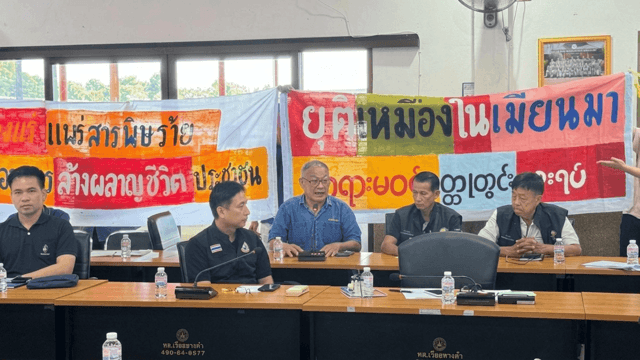
Meanwhile, a non-governmental environmental advocacy organisation, the Ecological Alert and Recovery Thailand, has called on the government to hold urgent talks with Myanmar about regulating the mining activities by Chinese investors, warning that Chiang Rai could become the biggest waste land in the country.
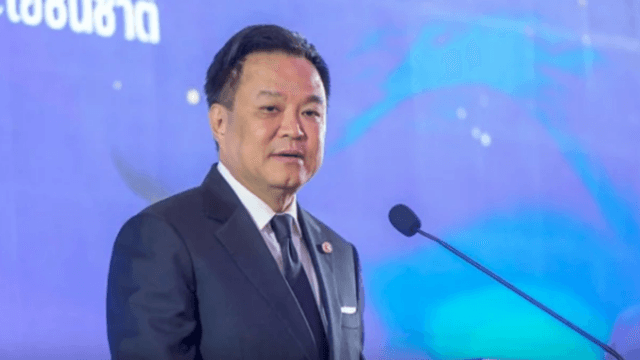
Chiang Rai governor Charin Thongsuk said that tests of water samples taken from Chiang Saen district, where the Sai River converges with the Mekong River, show a high arsenic content of 0.19mg/litre, which is above the standard level.
He said that the test results are a clear indication that the arsenic in the water does not dissolve, despite the long distance from the location of the mining activities.
He assured, however, that tap water in Mae Sai district is safe for consumption, even though
the source of the raw water is the Sai River.
Fishermen in the province have expressed serious concerns over their future, as consumers have stopped buying fish caught in the Sai and Kok rivers.
Suraphol Worapatthratorn from the Natural Disaster Research and Forecast Institute at Mae Fah Luang University, suggested that tests for arsenic contamination should also be conducted on farm products, to determine whether they are contaminated or safe for consumption.
Penchome Sae Tang, director of Ecological Alert and Recovery Thailand, noted that the contamination of the Sai and Kok rivers by the gold mines could only be resolved at the source of the problem, which is in Myanmar, as she urged the Thai government to hold talks with its neighbour to address the problem.
She said that China, too, should be involved in the talks, as all the mining companies are Chinese owned and most of their operations have been banned by the Chinese government, forcing them to relocate to Shan state, which is controlled by the Myanmar government and ethnic armed groups.
She disclosed that there are about ten gold mines in Shan state and all of them are open-pit mines, which do not have ore dressing facilities.
She suggested that the Thai government must be fully prepared to hold talks with Myanmar, which means having adequate information from relevant agencies regarding damage to the economy and the health risks associated with arsenic contamination.
Rehabilitation is very costly, said Penchome, citing the case of KIitty mine in Kanchanaburi province, adding that the Pollution Control Department has spent more than 600 million baht to clean up the KIitty stream, which is small compared to the Sai and Kok rivers.