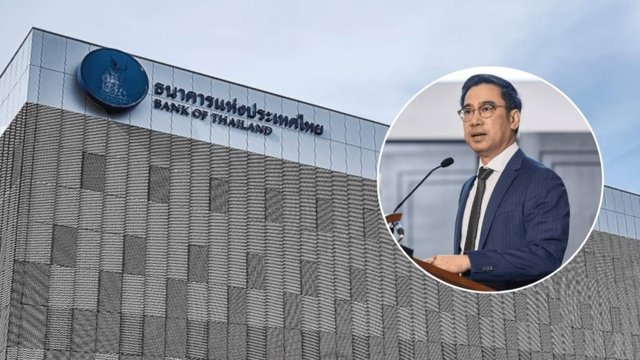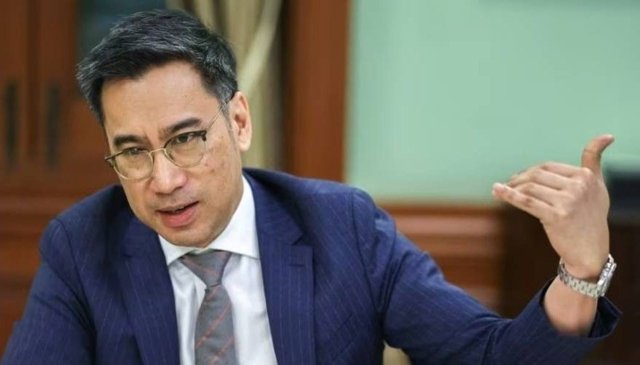



His Majesty the King has appointed Sethaput Suthiwartnarueput, the former governor of the Bank of Thailand (BOT), as an advisor to the Privy Purse Bureau, effective October 1.
At 60, Sethaput moves on from a distinguished five-year term as BOT chief to a new role with the royal asset agency, continuing his successful journey that started with academia and economic crisis management.
Academic excellence and early career
Sethaput’s educational background is as remarkable as the trajectory of his career growth. He graduated with a BA with Highest Honors in Economics from Swarthmore College, US. He continued his studies at Yale University, earning both a Master of Philosophy in Economics and a Ph.D. in economics. His early career began in New York, where he worked as an analyst at McKinsey and later as an economist at the World Bank.
The defining moment
The Asian financial crisis of 1997, triggered by the collapse of the baht, dramatically altered Sethaput’s career path. Sommai Phasee, then director-general of the Fiscal Policy Office, and then Finance permanent secretary MR Chatu Mongol Sonakul, recognized the pressing need for fresh expertise in crisis management. They proposed to the finance minister the recruitment of Sethaput and Veerathai Santiprabhob—who was then serving as an economist at the International Monetary Fund (IMF)— to strengthen the ministry.
“We had to create the Fiscal Policy Research Institute to accommodate the two whose compensation was much higher than that of ministry officials,” recalls Sommai, who later served as finance minister. Sethaput and Veerathai were appointed co-directors of this newly established research arm, working closely with the IMF on the emergency rescue package.
Transition to the private sector
After his tenure at the Finance Ministry, Sethaput joined the Stock Exchange of Thailand (SET) as senior vice president. He later moved to the Siam Commercial Bank (SCB) Group, serving as managing director and head of research at SCB Securities Company, a group subsidiary. Between 2009 and 2011, Sethaput served as executive vice president at SCB, helping to steer the bank through challenging economic times.
Navigating turbulent waters as governor
The pinnacle of Sethaput’s career arrived with his appointment as governor of the central bank by the General Prayut Chan-o-cha administration. Political uncertainty and pressures from successive governments regarding interest rate policies posed challenges. Despite demands from former prime ministers Srettha Thavisin and Paetongtarn Shinawatra to lower interest rates, Sethaput stood firm, maintaining the central bank’s independence.
Over his five-year term, Thailand saw four different prime ministers. Throughout, Sethaput encountered challenges and criticism—particularly regarding the timing of rate hikes and cuts. Nonetheless, under his leadership the BOT preserved its reputation for independence. The country managed to keep inflation relatively benign, even during the COVID-19 pandemic, and maintained ample international reserves as a buffer against financial shocks.
Leadership reflections
Sethaput has been candid about some shortcomings in communication. Reflecting on his tenure, he admitted: “Sometimes I could not do well in communication with the market. For example, when we issued guidance on responsible lending, it was misinterpreted as the central bank making an aggressive move, leading to commercial banks tightening lending. That was not the case; we did not demand that banks tighten lending.” His remarks highlighted the delicate balance required in monetary policy signaling.
He also lamented the public’s focus on short-term economic issues. “Economic stimulus may boost growth in the short term, but after that growth slows back to its potential path due to unresolved fundamental issues such as declining industry competitiveness, low investment and a dwindling labor force.”
On the subject of household debt, Sethaput was notably pessimistic. “Should household debt suddenly go away now, many people would borrow again because their income cannot catch up with spending.” He explained that inadequate income was the real issue, and that debt restructuring or assistance measures alone could not effectively tackle the high household debt.
Privy Purse Bureau
Originally founded by King Chulalongkorn, the Privy Purse Bureau became the country’s largest landlord over the years. After the 1932 revolution and Thailand's transition from absolute to constitutional monarchy, the 1936 Crown Property Act replaced the Privy Purse Bureau, separating the King’s personal assets from public assets.
In the 1960s, the Bureau began investing in property development and other businesses. A significant legal change in 2018, during the junta-installed government, blurred the separation between royal and public assets by placing both under royal discretion.
In June 2025, the Crown Property Bureau was officially renamed the Privy Purse Bureau after the passage of a new bill in the House of Representatives in May. This name change restores a historic term, intended to honor tradition, as the Privy Purse was historically responsible for managing the King’s property. Importantly, the fundamental management structure established by the 2018 law remains unchanged.
By Thai PBS World’s Business Desk