


The man appointed as the finance minister of the new government has a stellar track record as a senior official at the Finance Ministry and is widely respected.
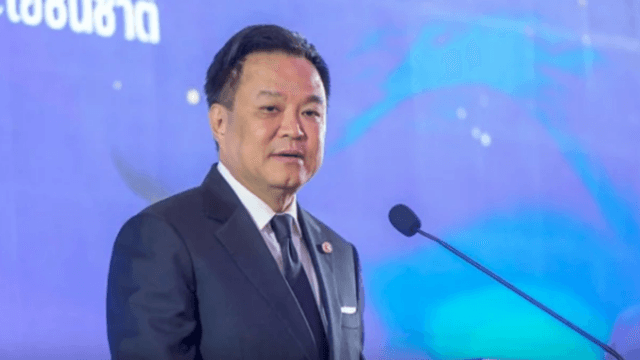
Ekniti Nitithanprapas, 54, currently serves as director-general of the Treasury Department and is set to join the Anutin Charnvirakul government as finance minister.
He was in line to be appointed as finance permanent secretary, the highest position in the civil service at the ministry.
Ekniti has decades of experience at the Finance Ministry, serving as the chief of both the Revenue Department and the Excise Department, two of the three primary tax collection agencies.
During his tenure at the Revenue Department—the largest tax collector—he upgraded the IT system and, in 2019, launched the PIT Digital Services, which made annual tax filing much easier for taxpayers via online channels.
He also served as chief of the State Enterprise Policy Office, which supervises and facilitates public-private partnership projects.
Ekniti's experience extends to the private sector and state enterprise affairs. He was formerly chairman of Thai Airways International, chairman of state-owned Krungthai Bank, board director at Siam Commercial Bank, chairman of Export-Import Bank of Thailand, and chairman of the National Credit Bureau.
He is currently chairman of Dhanarak Asset Development Co, a company owned by the Treasury Department, and board director at PTT Exploration and Production Plc.
Overseas experience
Ekniti also served stints abroad, particularly related to taxation. He was a senior advisor at the World Bank in Washington, DC, and served as Thailand’s Financial Attaché responsible for the United Kingdom and European Union.
He is a member of the Governing Board of Tax Inspectors Without Borders, a joint initiative of the Organization for Economic Co-operation and Development and the United Nations Development Programme, which supports developing countries’ efforts to improve their tax systems and increase revenue collection.
For his contributions, Ekniti was awarded the Digital Government Award in Asia & Oceania from the Asian-Oceanian Computing Industry Organization, an international federation of ICT associations from 24 member economies in the Asia-Pacific region.
He also received the Thailand Digital Transformation Award from the Thai government.
Sommai Phasee, a former finance minister and senior official at the Finance Ministry, is giving Ekniti his vote of confidence.
“Ekniti is a capable civil servant and has a clean reputation. I’m absolutely confident in him to be the next finance minister.”
Solid academic background
Ekniti has an excellent educational background in economics. He obtained his bachelor’s degree in economics with first honors from Thammasat University.
He received a government scholarship to pursue a master’s degree in economics at the University of Illinois at Urbana-Champaign and received another government scholarship for PhD studies in economics at Claremont Graduate University.
Challenges as finance minister
Amid Thailand’s prolonged economic slowdown and persistent fiscal deficits, it will not be easy to serve as finance minister. Currently there are discussions about short-term economic stimulus.
The new government may consider reviving the co-payment scheme, previously used during the COVID-19 pandemic under Prayut Chan-o-cha. Under this scheme, several million people received a limited matching fund from the government when purchasing necessities from small businesses.
If the new government brings this scheme back, it will be the finance minister’s duty to secure loans and funding to implement it.
Financial resources are limited, as the outgoing coalition government led by the Pheu Thai Party has already implemented stimulus measures and previously even distributed free cash through the digital wallet scheme.
“I would back the new government if it decides to bring the co-payment scheme back, and I think Ekniti could find a way to seek funds to finance the project cost of about a few billion baht,” said Sommai.
A major task will be tax reform. The government needs more revenue to finance expanding welfare spending and public investment projects, as Thailand is becoming a fully-fledged aging society, while tax revenue has not kept pace with spending needs.
The government should increase the value-added tax (VAT) rate to 8 per cent from the current 7 per cent. A one percentage point hike in the VAT rate would increase tax revenue by 60 billion baht, according to Sommai.
“The poor have paid little VAT. For example, no VAT is applied on farm products. We will get a lot from VAT collection when foreign tourists spend in Thailand,” Sommai says.
A VAT hike is a must as the country's finances have almost reached a dead-end, he said.
Despite support from many economists, governments have fought shy of raising the VAT rate, fearing it would cost the support of voters.
Thailand’s 7 per cent VAT rate is one of the lowest in the world, far lower than the over 20 per cent rates in the European Union.
The EU’s average standard VAT rate is 21.8 per cent, nearly seven percentage points higher than the minimum standard VAT rate required by EU regulation, according to Tax Foundation Europe. Japan and Singapore have also raised their VAT rates in recent years.
“I think Ekniti could explain to the public the justification for a VAT hike,” adds Sommai.