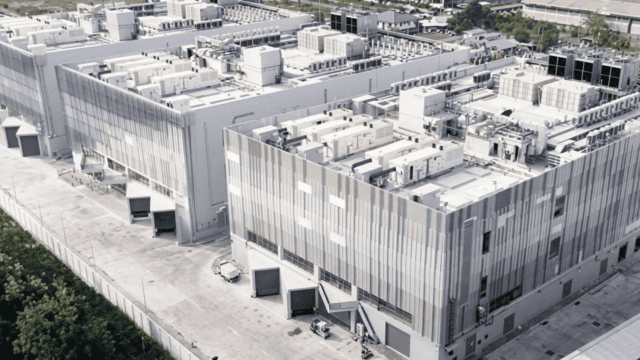



The Thailand Data Centre Association (TDCA) has explained that the widely reported 30,000-megawatt (MW) figure for data centre electricity demand in Thailand represents preliminary bidding requests, rather than actual future consumption. The actual forecast usage over the next five years will be closer to ± 3,727MW.
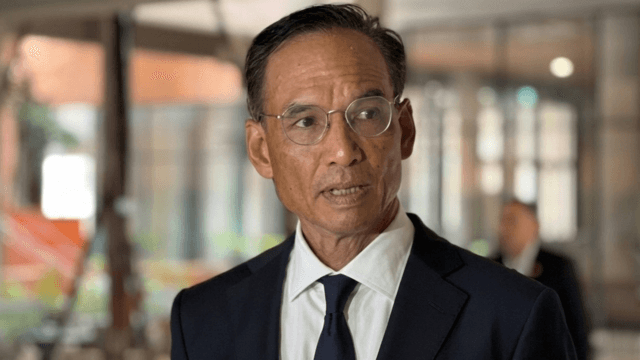
Supparat Sivapetchranat Singhara Na Ayutthaya, vice chairman of the TDCA, noted that Thailand’s data centre sector is expanding at 27.2% annually, outpacing the Asian average of 24% and the global average of 15%.
This rapid growth has, perhaps predictably, triggered public and policy concerns regarding utility capacities, particularly power and water consumption.
Addressing these anxieties, Supparat placed the figures into a global context. The United States, the world’s largest data centre market, uses roughly 29,000MW, while China uses around 8,500MW.
"It is unrealistic to expect Thailand’s actual consumption to reach 30,000MW based solely on preliminary request filings," Supparat said, adding that the projected 3,727MW draw over the next five years is roughly equivalent to a quarter of all vehicles in Thailand converting EVs.
To avoid regulatory bottlenecks, the TDCA recommends that the government categorise data centres into five distinct operational groups, before issuing new regulations.
These include Government Data Centres, Financial Services Data Centres, Telecommunications, Cloud and Enterprise and AI Campuses.
Facilities in the first three categories are typically located in urban centres, to optimise latency and speed, whereas AI Campuses are expected to concentrate in the Eastern Economic Corridor (EEC) due to higher utility needs.
The TDCA urged authorities to target regulations specifically at AI Campuses, rather than imposing blanket measures that could inadvertently harm general business users.
The private sector supports establishing a central "Data Centre Board" to streamline regulatory oversight, which is currently shared across multiple government bodies.
“Clear rules are crucial,” Supparat emphasised, warning that regulatory uncertainty could drive global investors to rival markets in Southeast Asia.
Regarding power tariffs, the association stated that moderate electricity price increases are acceptable if they remain competitive relative to neighbouring nations.
Furthermore, the TDCA proposed that profits generated from state electricity sales to data centre operators be reallocated to subsidise household electricity bills, potentially reducing domestic costs by up to 20%, or roughly 141 baht per household per month, without relying on direct government subsidies.
Beyond raw infrastructure, the association advocated for the building of a domestic AI supply chain, encouraging Thai manufacturers to transition from original equipment manufacturing (OEM) into full technology owners.
Developing adjacent industries, particularly back-up Uninterruptible Power Supply (UPS) systems, where Thailand already possesses a strong manufacturing base in automotive, battery, power systems and chemical engineering, could create approximately 19,900 high-skilled engineering jobs.
The TDCA urged the government to offer revolving credit mechanisms to help domestic suppliers meet global data centre standards, enabling exports and lifting the value of the domestic digital sector from US$3.5 billion to $7.7 billion.
Regarding safety concerns over fuel storage tanks for emergency generators, the TDCA has offered an assurance that on-site power reserves are strictly regulated, standard practice for 24-hour critical infrastructure and subject to rigid legal safety certifications.