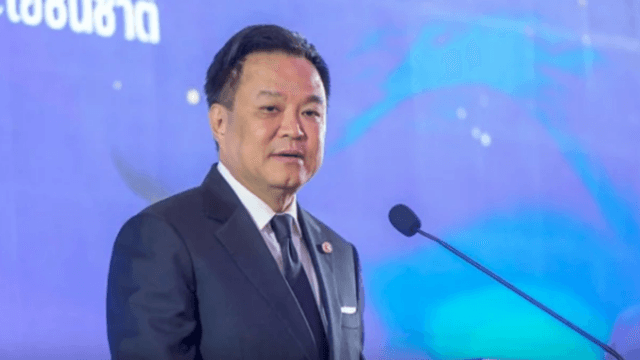
Vittaya Arkompituk has been chosen as acting president of the National Anti-Corruption Commission (NACC), the agency tasked with leading Thailand’s fight against graft in all sectors of society.
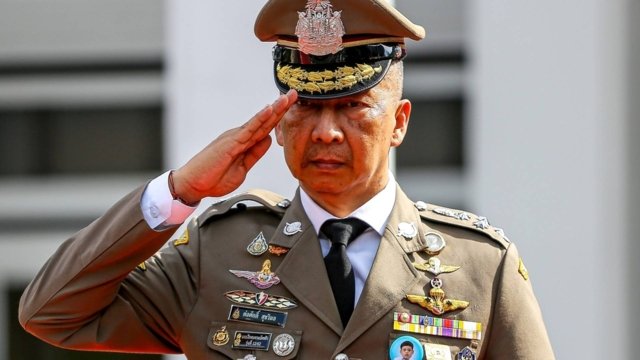
Vittaya replaces Police General Watcharapol Prasarnrajkit, who reached the mandatory retirement age of 70 on September 9. The six incumbent anti-graft commissioners voted 5:1 for Vittaya – the most senior among them at 69 – to take over the helm.
Vittaya’s appointment was viewed as a victory for the agency’s “old-timers” over their rivals from the police force. It may also have been a reward for Vittaya’s long service, with his nine-year term due to end in late December.
Despite his acting role, Vittaya has full authority as NACC president, with the power to launch investigations, transfer personnel, and issue orders or regulations.
He takes over high-profile probes into the alleged involvement of a deputy police officer in online gambling, alleged bribery by PTTEP officials in a Rolls Royce contract, former Department of Special Investigation chief Tharit Pengdit’s alleged unusual wealth, bribery cases involving the Royal Thai Air Force and Department of Highways, and investigation of 44 former Move Forward MPs after the party’s disbandment by court order in August for promoting changes to the lese majeste law, Article 112.
The new chief is assuming office at a time when Thailand is still struggling in its fight against corruption.
Last year, the kingdom scored 35 out of 100 on the Corruption Perceptions Index (CPI), ranking a lowly 108th among the 180 countries surveyed by Transparency International.
Thailand’s scores have ranged between 35 and 38 for the past decade, reflecting deep-seated problems of graft that infect both the public and private sectors.
Awaiting full-fledged chief
According to the 2018 Act covering the NACC, if the president retires or is unable to perform his/her duties, an acting president must be selected.
A permanent successor must then be appointed by a majority vote of at least seven out of all nine NACC commissioners.
The appointment of the incoming NACC commissioner, former Supreme Court vice president Passawat Kanoknak, was approved by the Senate in August last year but is still awaiting royal endorsement.
In the meantime, Vittaya will remain as acting NACC chief until he reaches the retirement age of 70, according to NACC secretary-general Niwatchai Gasemmongkol.
Niwatchai said last Wednesday (September 11) that the three long-vacant NACC seats must be filled as soon as possible, as the agency’s work had been impacted by the reduction in commissioners.
Controversial amendment
Vittaya, appointed under the previous 2007 Constitution, almost lost his seat on the NACC when the new charter of 2017 set stricter qualifications for membership of independent agencies.
The current charter prohibits former members of independent agencies from serving as NACC commissioners unless they vacated their previous post at least 10 years beforehand.
Vittaya left the State Audit Commission, an independent agency, less than a year before he joined the NACC in 2015.
However, Vittaya and other commissioners unqualified under the current Constitution managed to keep their seats after the NACC law was controversially amended in 2018 to allow all of them to continue in office until retirement.
The amendment was challenged in the Constitutional Court, but the court ruled in March 2018 that the revised clause did not breach the new charter.
Long service at NACC
Vittaya has served the anti-graft agency on and off for over 40 years. He first joined in 1982 when it was known as the National Counter-Corruption Committee (NCCC) and was overseen by the prime minister.
He arrived after completing a bachelor's degree in political science at Ramkhamhaeng University and a master’s in public administration at Pathumthani University, followed by a stint as a community development officer at the Interior Ministry.
The NCCC was made independent and renamed the NACC in November 1999 under the “People’s Constitution” of 1997.
Vittaya rose through the ranks at the NACC Office – the bureaucratic side of the agency – to become director of its intelligence and special affairs bureau in 2008, assistant secretary-general in 2011, and deputy secretary-general two years later.
After his retirement at 60, he joined the State Audit Commission, before rejoining the NACC in December 2015 – this time on its board of commissioners.
In November of that year, the post-coup National Legislative Assembly approved the nomination of Vittaya and four other candidates as NACC commissioners, including Watcharapol, who went on to become NACC president.